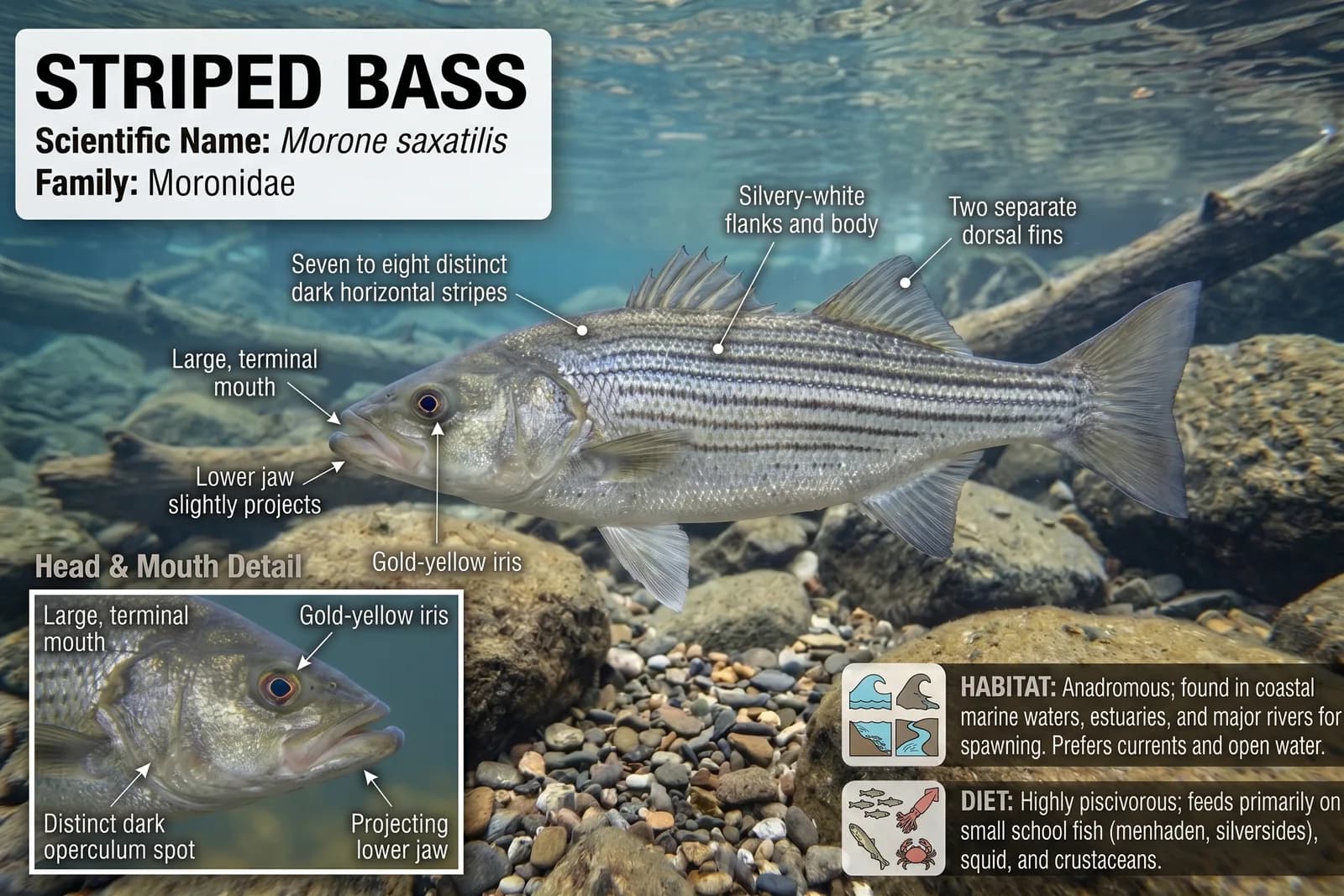
Striped Bass
Morone saxatilis · Moronidae
Also known as: Striper, Rockfish, Linesider
A migratory, hard-pulling gamefish and the premier inshore target of the US East Coast.
- Typical size
- 2–9 kg (5–20 lb)
- Max size
- Trophy 'cows' exceed 23 kg (50 lb).
- Water
- Brackish
- Best season
- The spring and fall migrations (the 'run').
Identification
Silvery, streamlined body with seven or eight dark, unbroken horizontal stripes along the flanks.
Habitat & Range
Coastal surf, estuaries, and bays; anadromous, running up rivers to spawn. Landlocked populations thrive in reservoirs.
Native to the US Atlantic and Gulf coasts; introduced to the Pacific coast and many inland reservoirs.
Diet & Feeding
Baitfish (menhaden, herring, sand eels), squid, crabs, and worms.
Spawning & Reproduction
Spring, running up freshwater rivers to release eggs into the current; the eggs drift and hatch downstream.
Spawning timing by location
Spawning tracks water temperature, so the calendar shifts with latitude and elevation. These break striped bass timing down by state and water body.
- The World Record Striped Bass
Greg Myerson's 81 lb 14 oz striped bass ended Albert McReynolds' 29-year reign in August 2011. The fish measured 54 inches. Under the 28–31 inch coastal slot that has applied since 2024, a striper that size must go back — and a weight record requires a fish on certified scales. That tension is why IGFA keeps a second kind of record.
How to Catch
Fish moving water — tide rips, inlets, and current edges — especially at dawn, dusk, and after dark.
Best techniques
- Surfcasting
- Live-lining bait
- Trolling
- Jigging & plugging
Lures & baits
- Live/cut bunker & eels
- Bucktail jigs
- Swimming plugs
- Soft plastics
Best season: The spring and fall migrations (the 'run').