Fish Species Encyclopedia
A working field guide for beginner and experienced anglers — how to identify each fish, how big it grows, where it lives, what it eats, when it spawns, and how to catch it. Use the search to jump straight to a species.
34 species
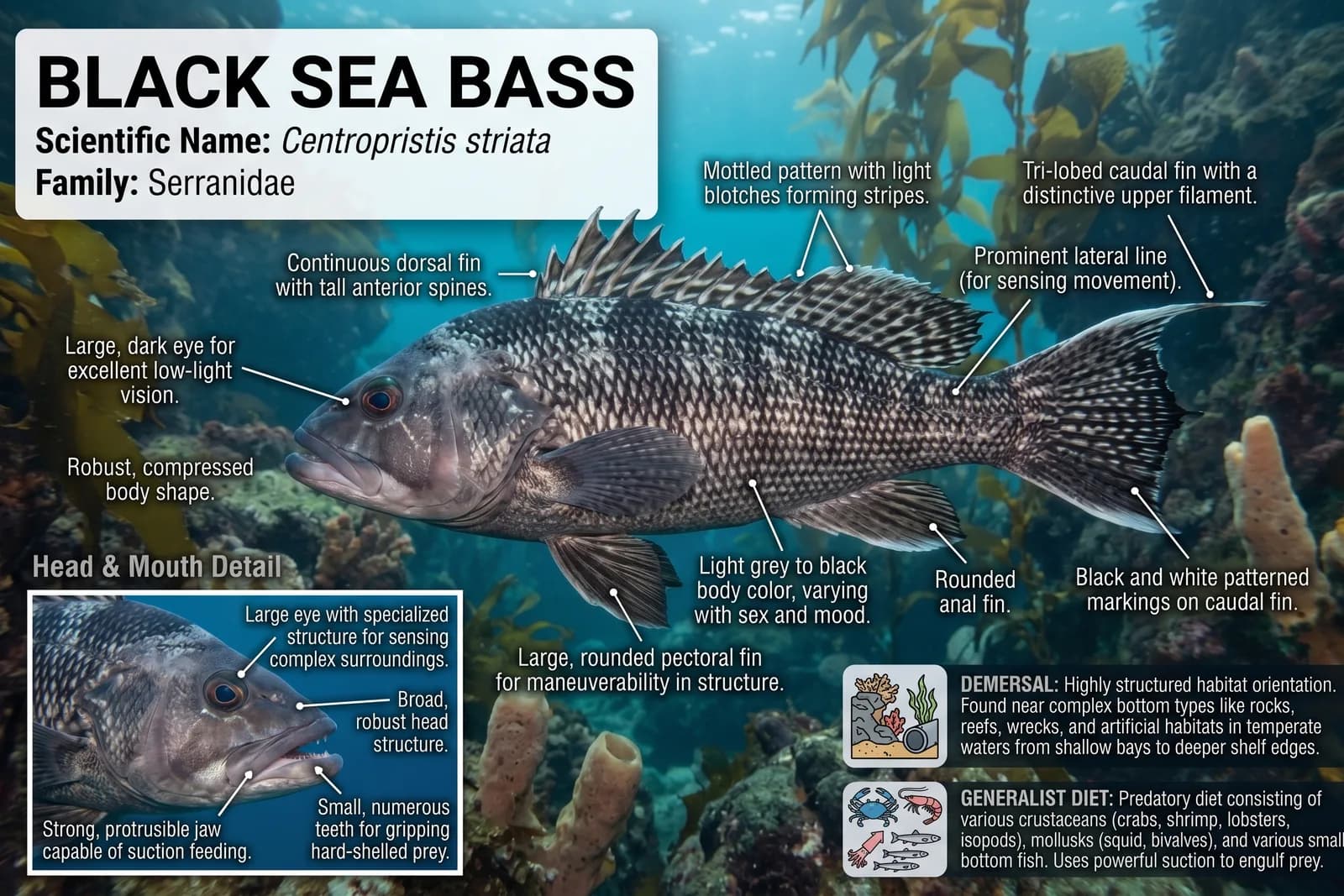
Black Sea Bass
Centropristis striata
A structure-loving bottom fish with a genuinely unusual life history: NOAA describes black sea bass as protogynous hermaphrodites, meaning most start out as females and become males as they grow.
Typical size: Most keepers are 1-3 lb
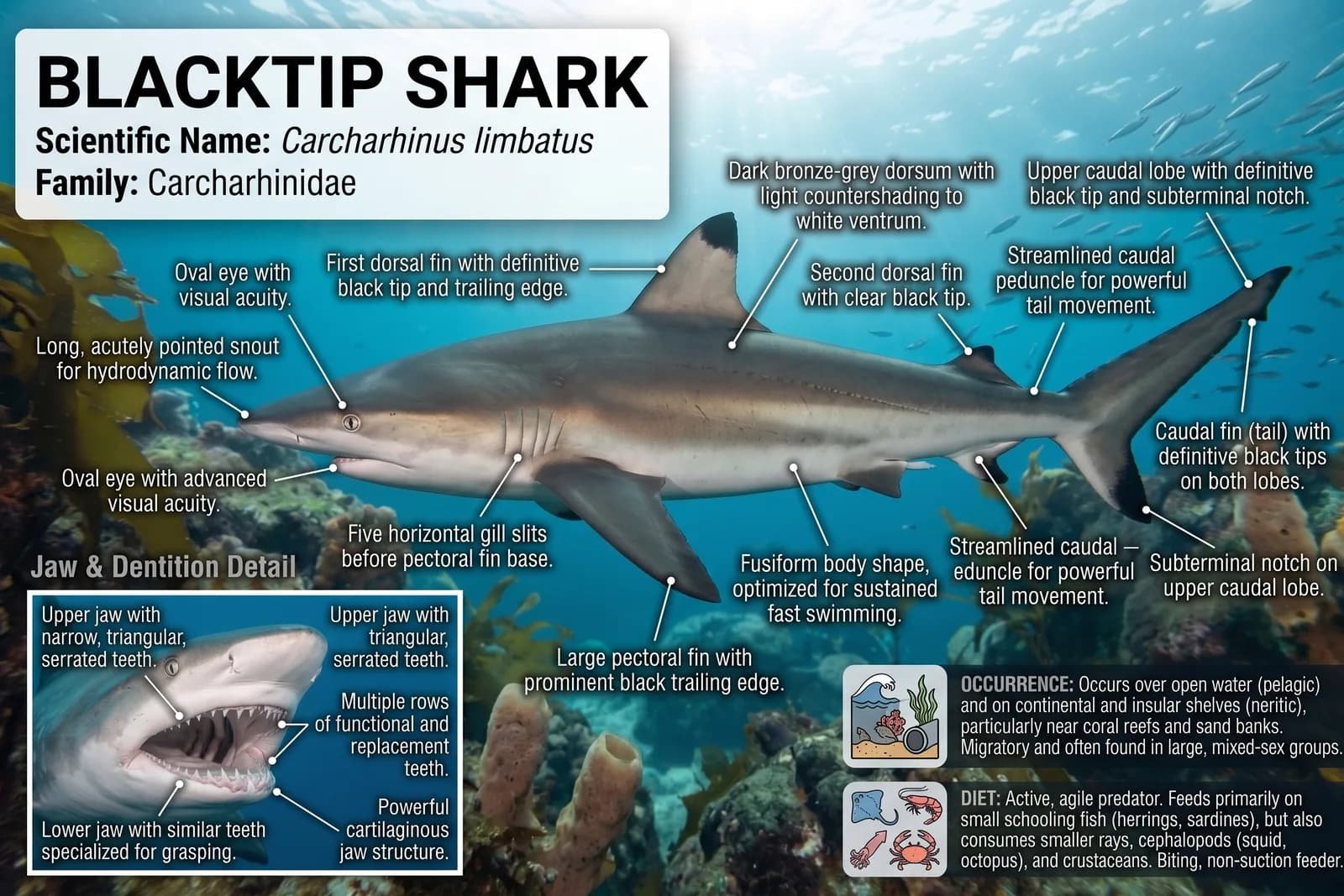
Blacktip Shark
Carcharhinus limbatus
One of the most commonly encountered coastal sharks for US surf and inshore anglers, and a fishery with real federal paperwork attached. NOAA requires an HMS permit with a shark endorsement before you may fish for sharks recreationally.
Typical size: Commonly 4-5 ft
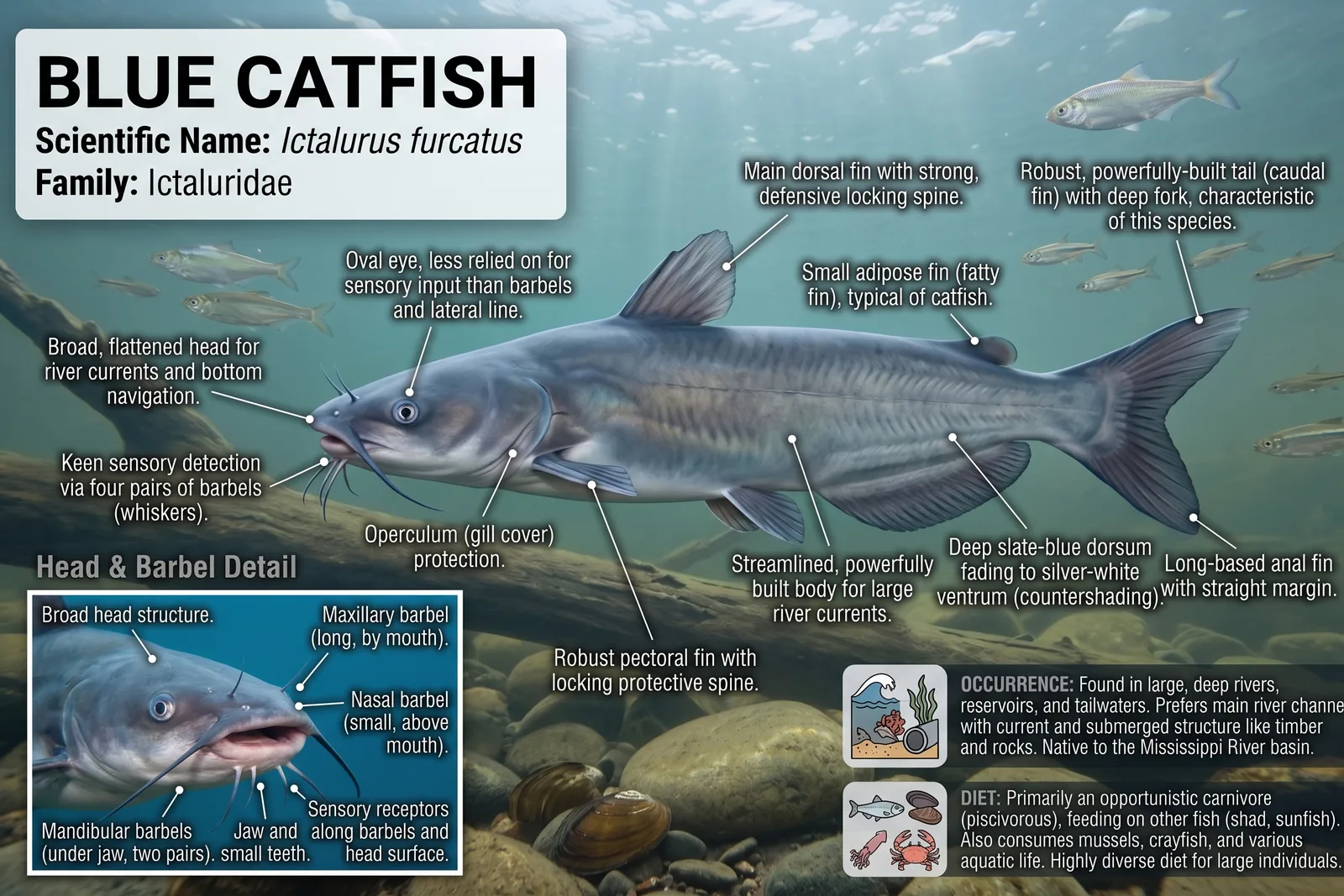
Blue Catfish
Ictalurus furcatus
The largest catfish in North American fresh water, and the one whose spawning is least well documented — the figures agencies publish for it are usually borrowed from channel catfish.
Typical size: 5–30 lb
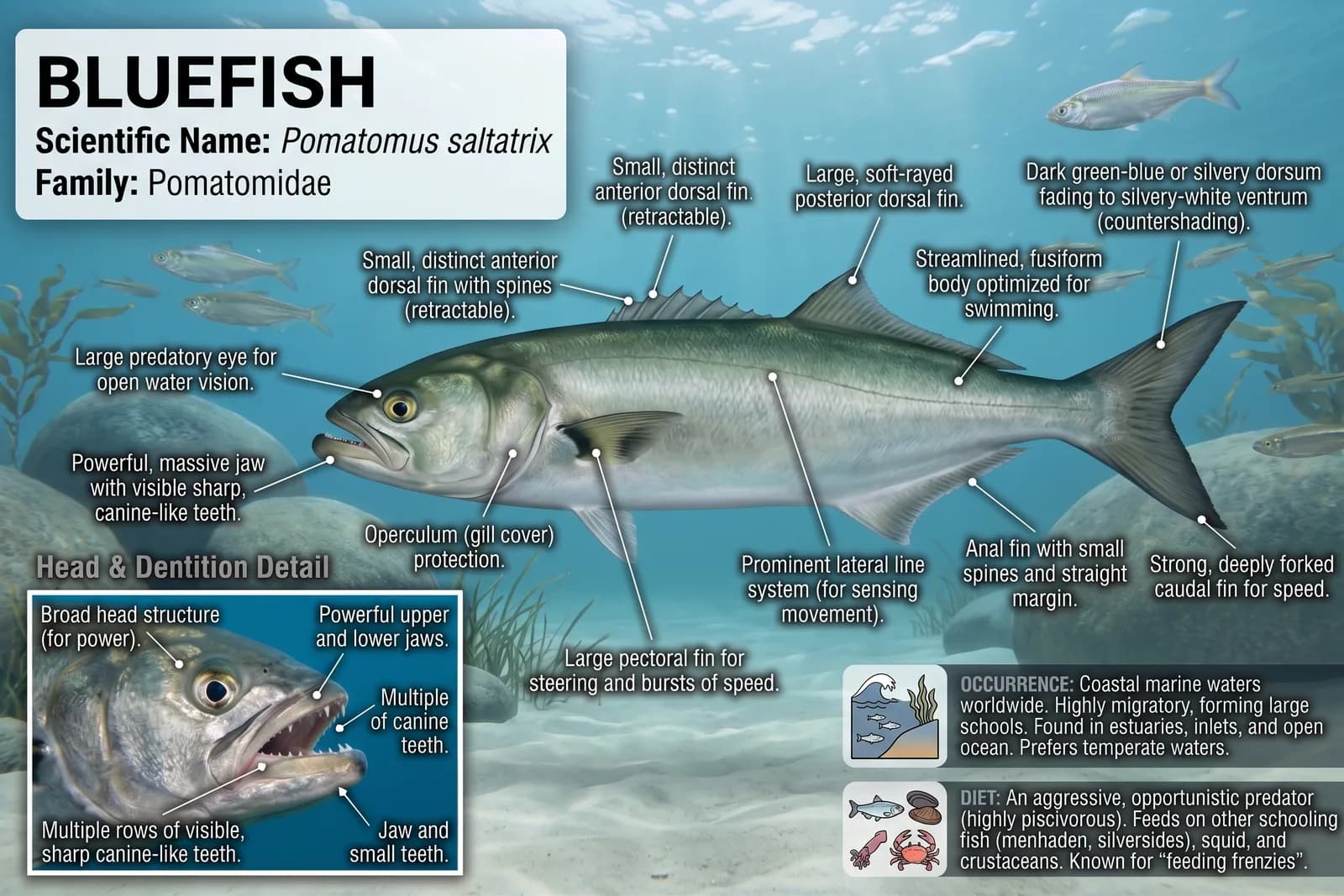
Bluefish
Pomatomus saltatrix
A fast, aggressive schooling predator with genuinely dangerous teeth. NOAA describes the bluefish blitz, where large schools attack baitfish near the surface and churn the water like a washing machine.
Typical size: Most rod-caught fish are 2-10 lb
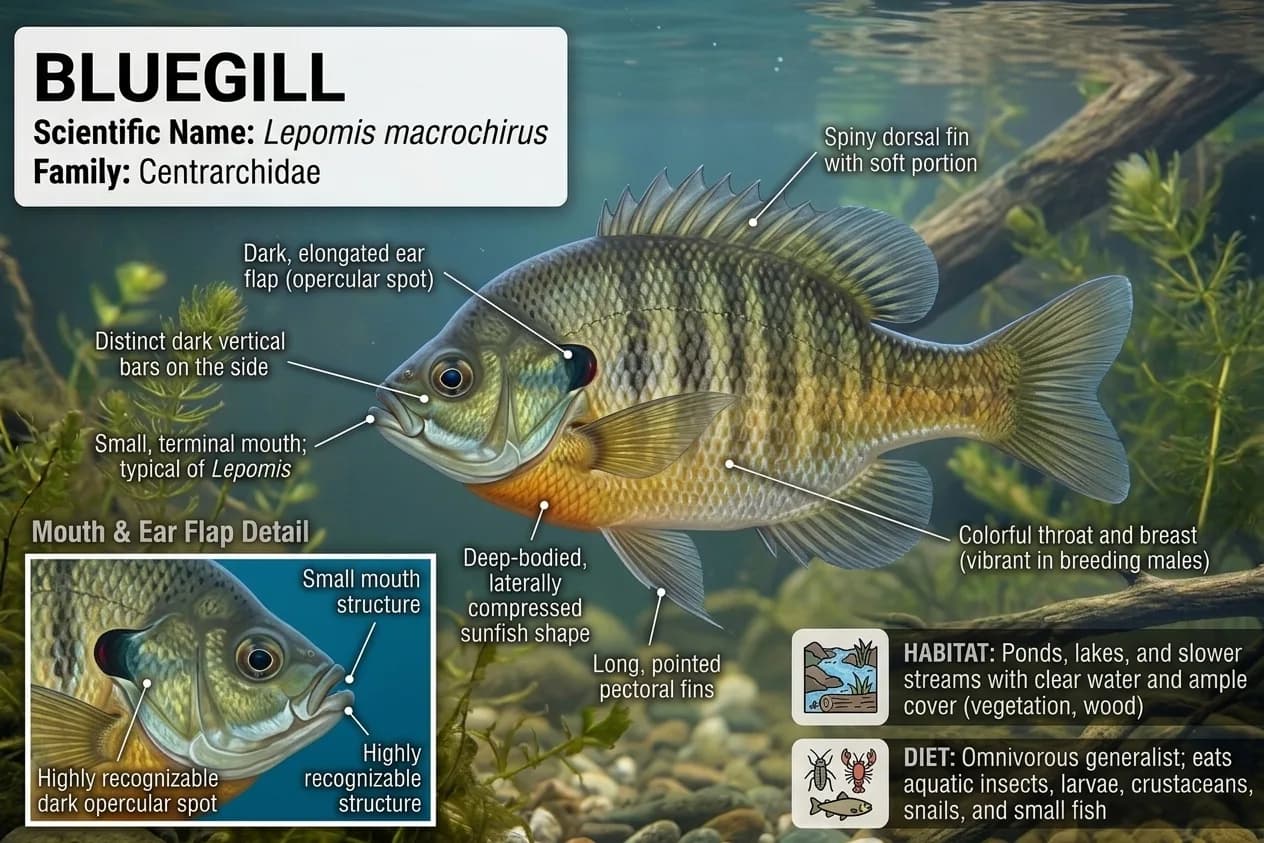
Bluegill
Lepomis macrochirus
The most widely distributed panfish in North America, and a colonial nester whose beds are the most reliably findable spawning structure of any freshwater gamefish.
Typical size: 15–23 cm (6–9 in), 100–250 g
Bonefish
Albula vulpes
The grey ghost of the flats, and one of the few US saltwater fish you may not keep at all. FWC has managed bonefish as a catch-and-release fishery since 1 September 2013.
Typical size: Most fish are 3-5 lb
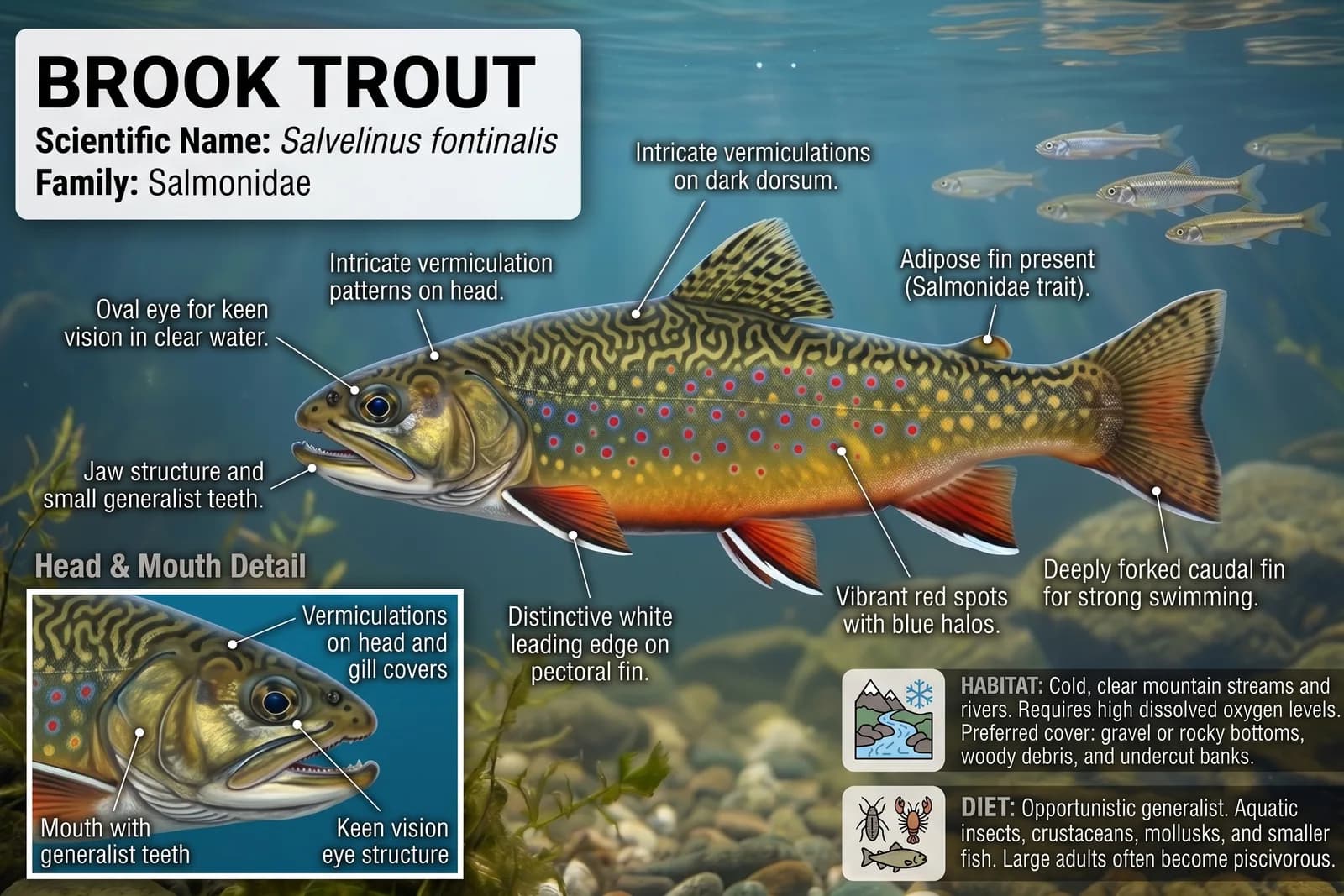
Brook Trout
Salvelinus fontinalis
Not a trout at all but a char, and the native coldwater fish of eastern North America. Brook trout spawn over groundwater upwelling rather than at a particular date, which is what makes their redds findable.
Typical size: 15–30 cm (6–12 in), often much smaller in headwater streams
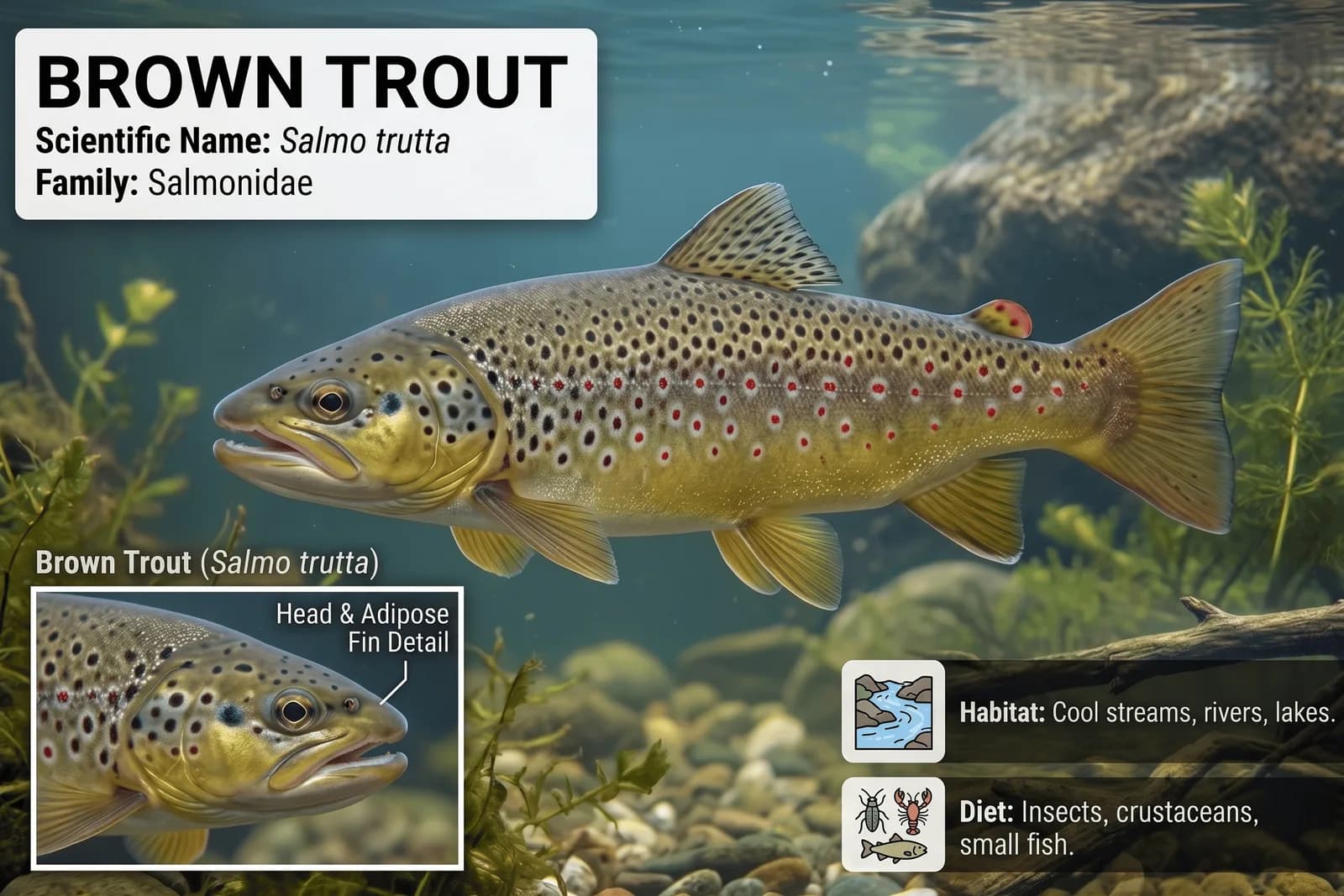
Brown Trout
Salmo trutta
An autumn-spawning salmonid, wary and structure-oriented, and the species most likely to produce a genuinely large stream trout in North America.
Typical size: 0.3–2 kg (1–4 lb), 25–50 cm
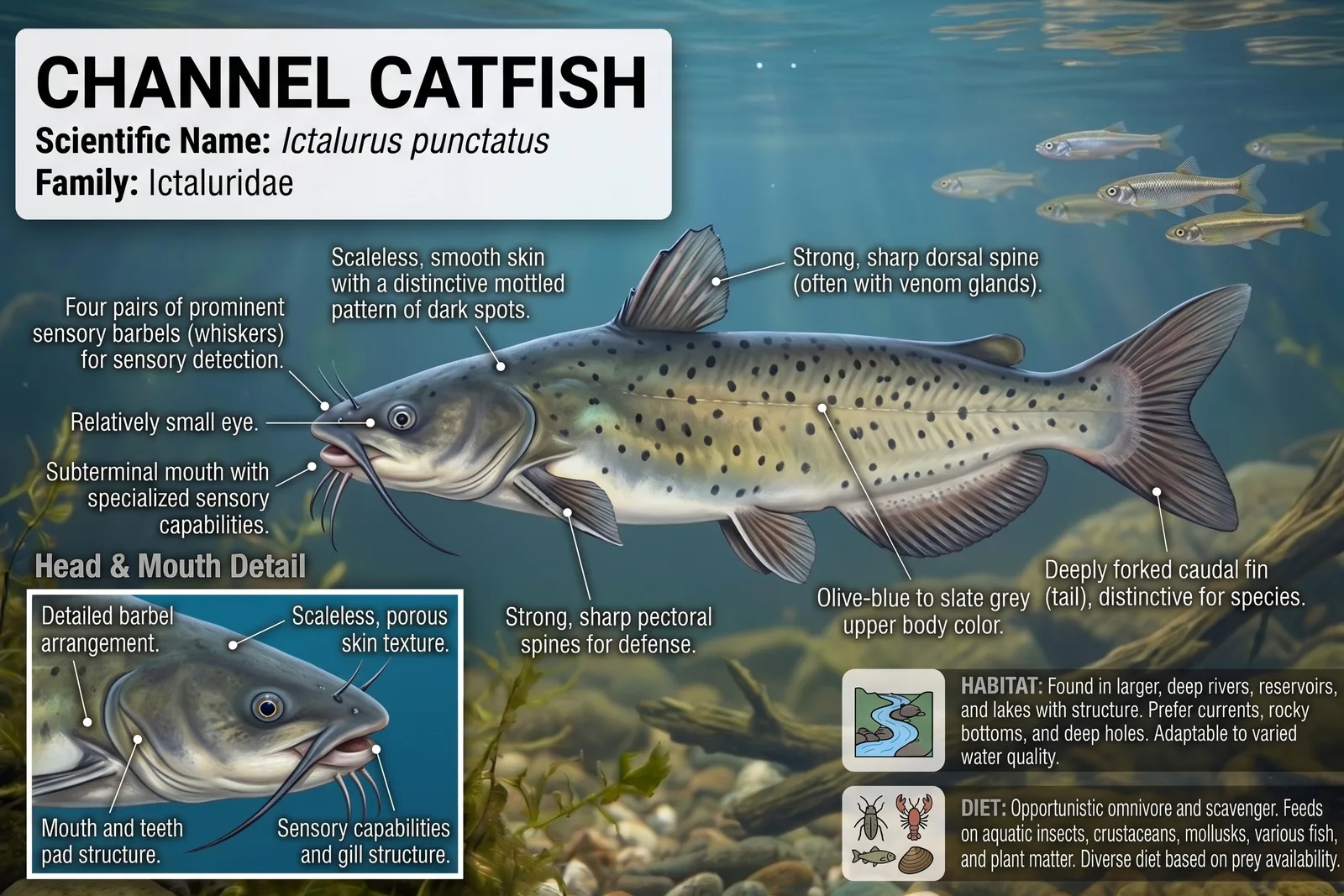
Channel Catfish
Ictalurus punctatus
The most widely stocked catfish in North America, and the one that spawns first — roughly a month ahead of flathead, which is why a single “catfish spawn” date is always wrong somewhere.
Typical size: 1–5 lb, 12–24 in
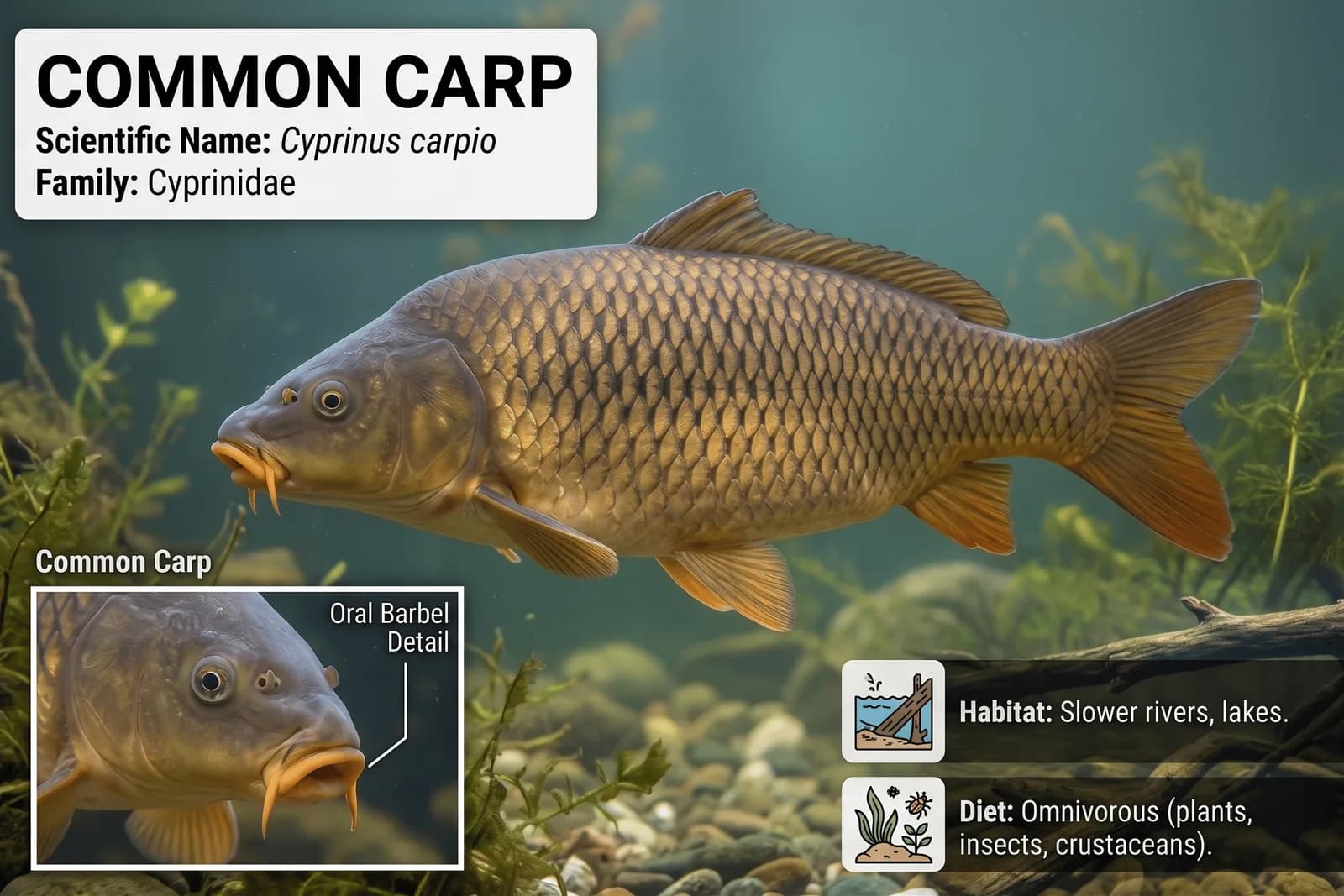
Common Carp
Cyprinus carpio
A powerful, intelligent, widely distributed coarse fish — the backbone of European sport angling.
Typical size: 2–7 kg (4–15 lb)
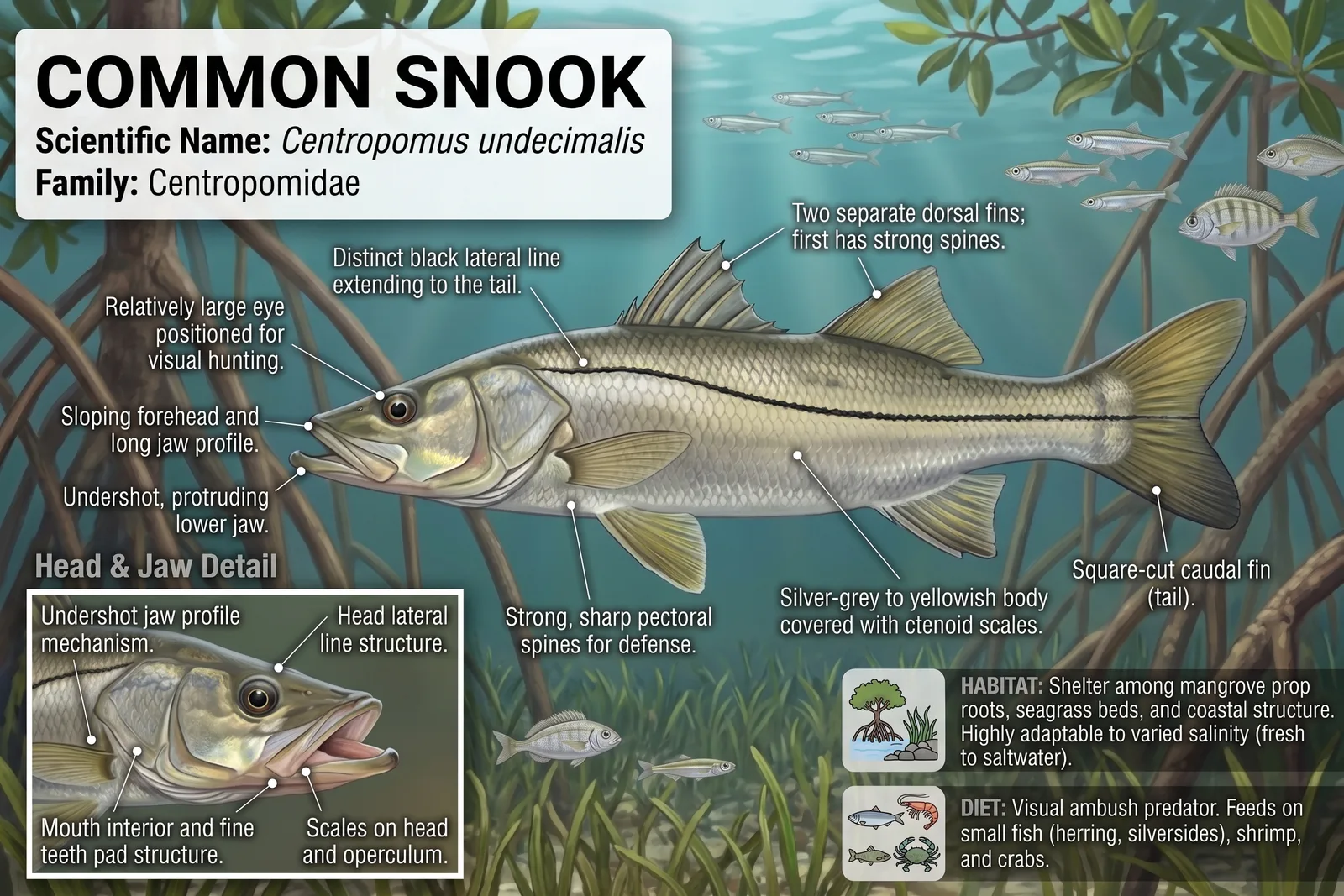
Common Snook
Centropomus undecimalis
A summer spawner that aggregates in passes and river mouths on the new and full moon — which is exactly what makes it easy to overharvest, and why Florida closes the season through the spawn.
Typical size: 24–32 in, 5–12 lb
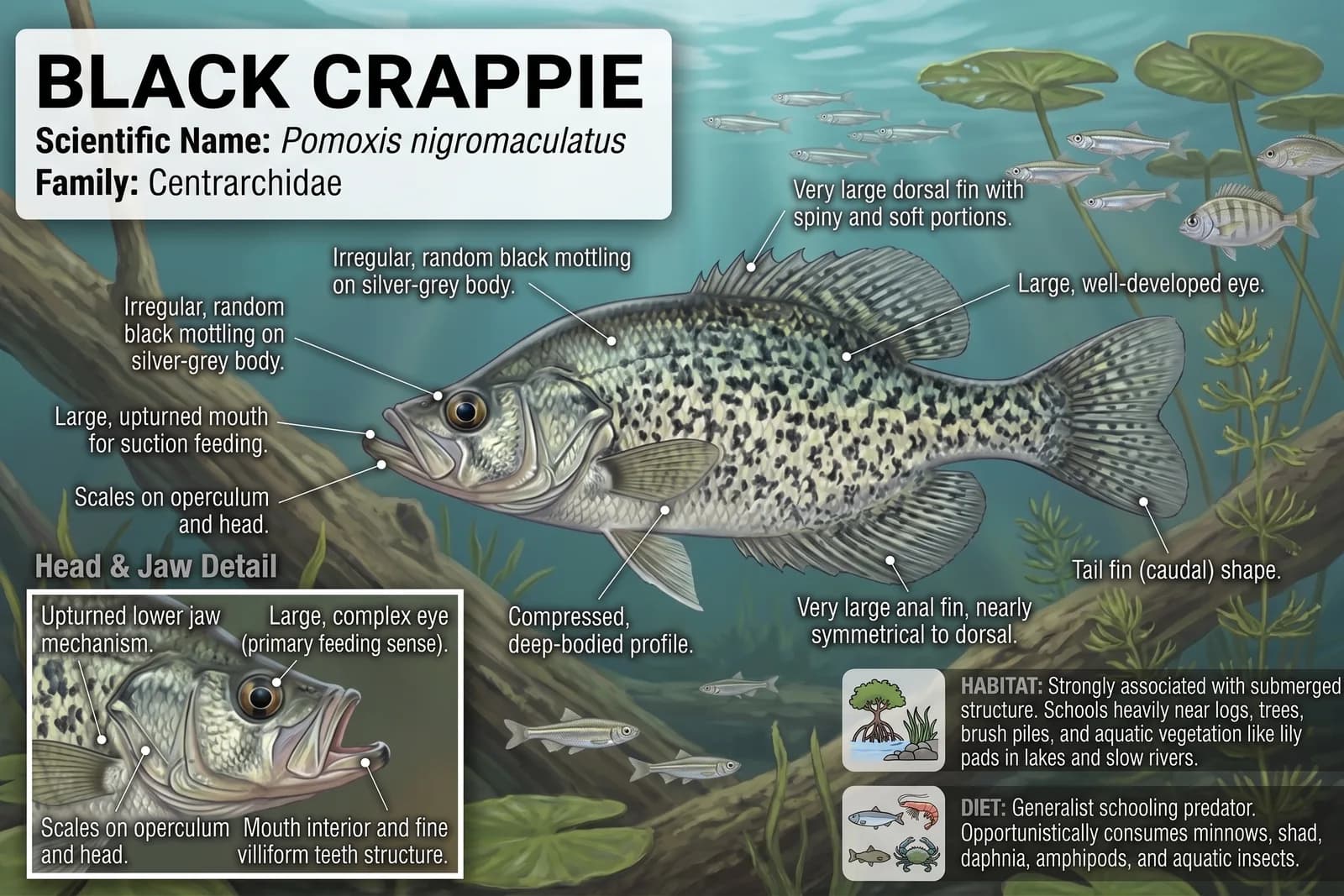
Crappie
Pomoxis spp.
Two species under one name, and the fish whose spawning temperature state agencies disagree about more than any other — published figures span 55°F to 68°F, and they do not all mean the same thing.
Typical size: 20–30 cm (8–12 in), 250–500 g
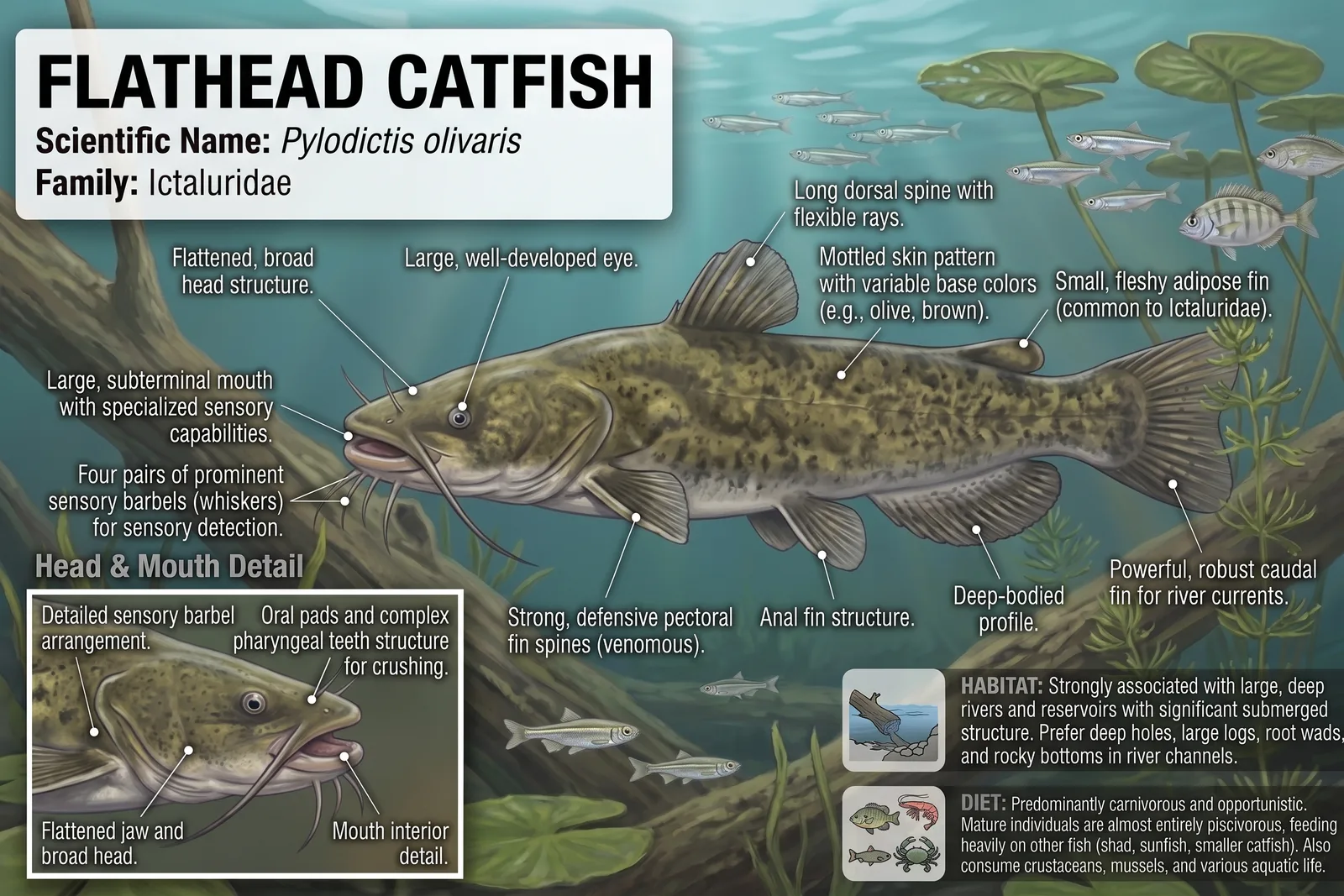
Flathead Catfish
Pylodictis olivaris
The live-bait specialist of the family, and the last of the three to spawn. Flatheads stop feeding while actively spawning, which makes the early-July lull biological rather than bad luck.
Typical size: 5–30 lb
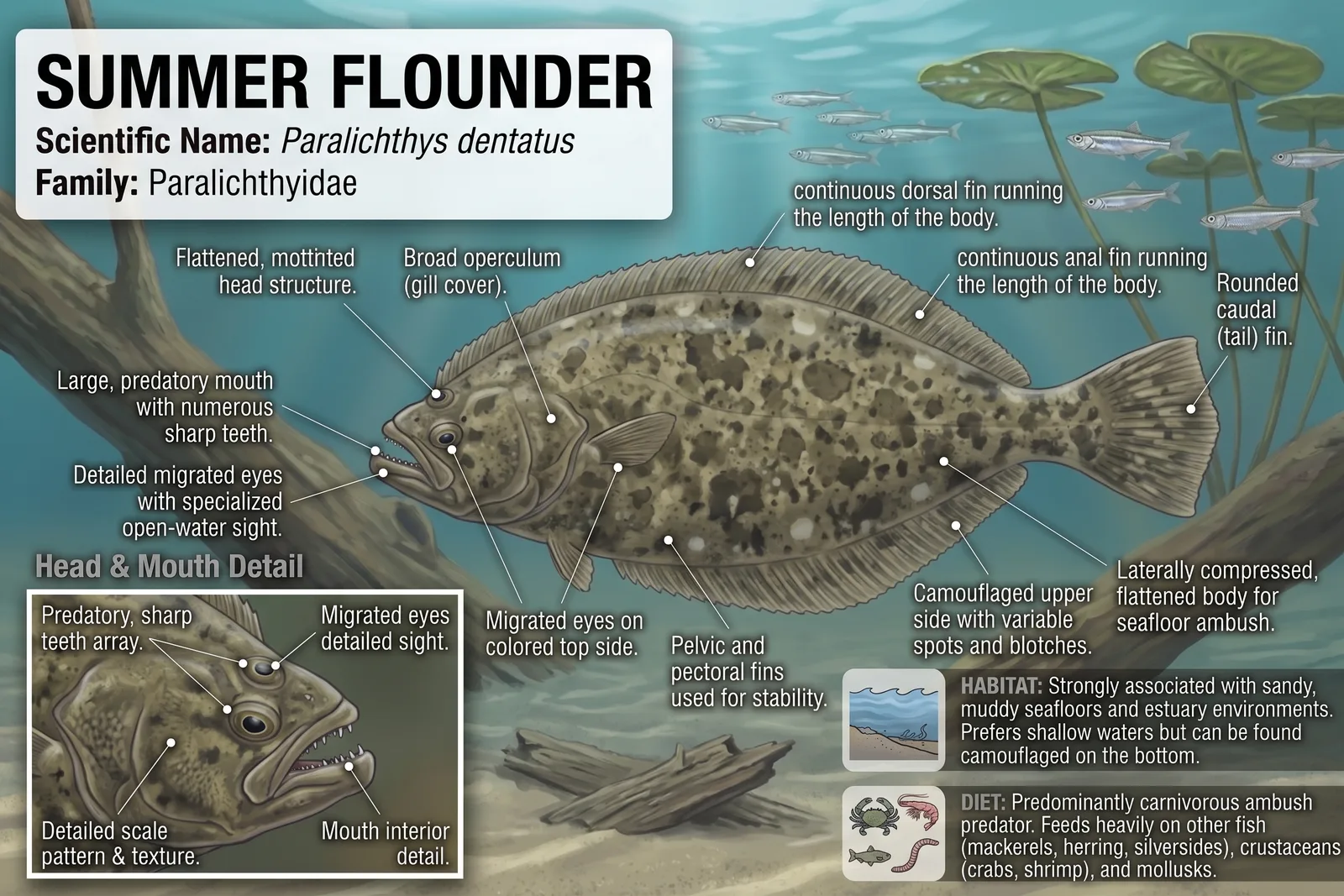
Flounder
Paralichthys albigutta
A flatfish that lies on the bottom with both eyes on its left side, ambushing prey that passes overhead. Florida regulates several flounder species together — Gulf, Southern, summer and fringed — under one set of rules.
Typical size: 14–18 in, 1–3 lb
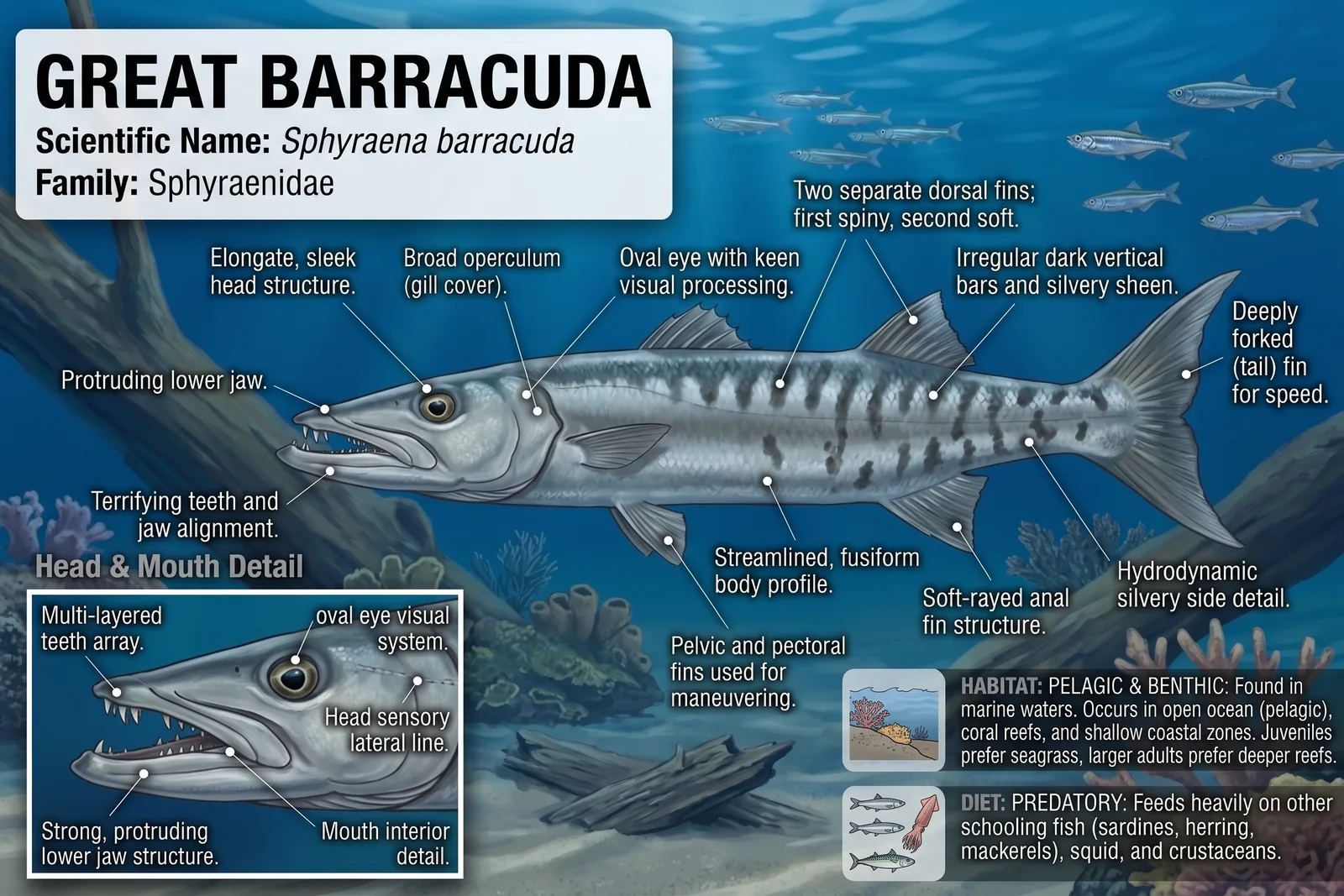
Great Barracuda
Sphyraena barracuda
A top reef predator built entirely for speed, and one of the few sport fish that comes with a genuine food-safety warning attached.
Typical size: Most fish encountered are 5-20 lb
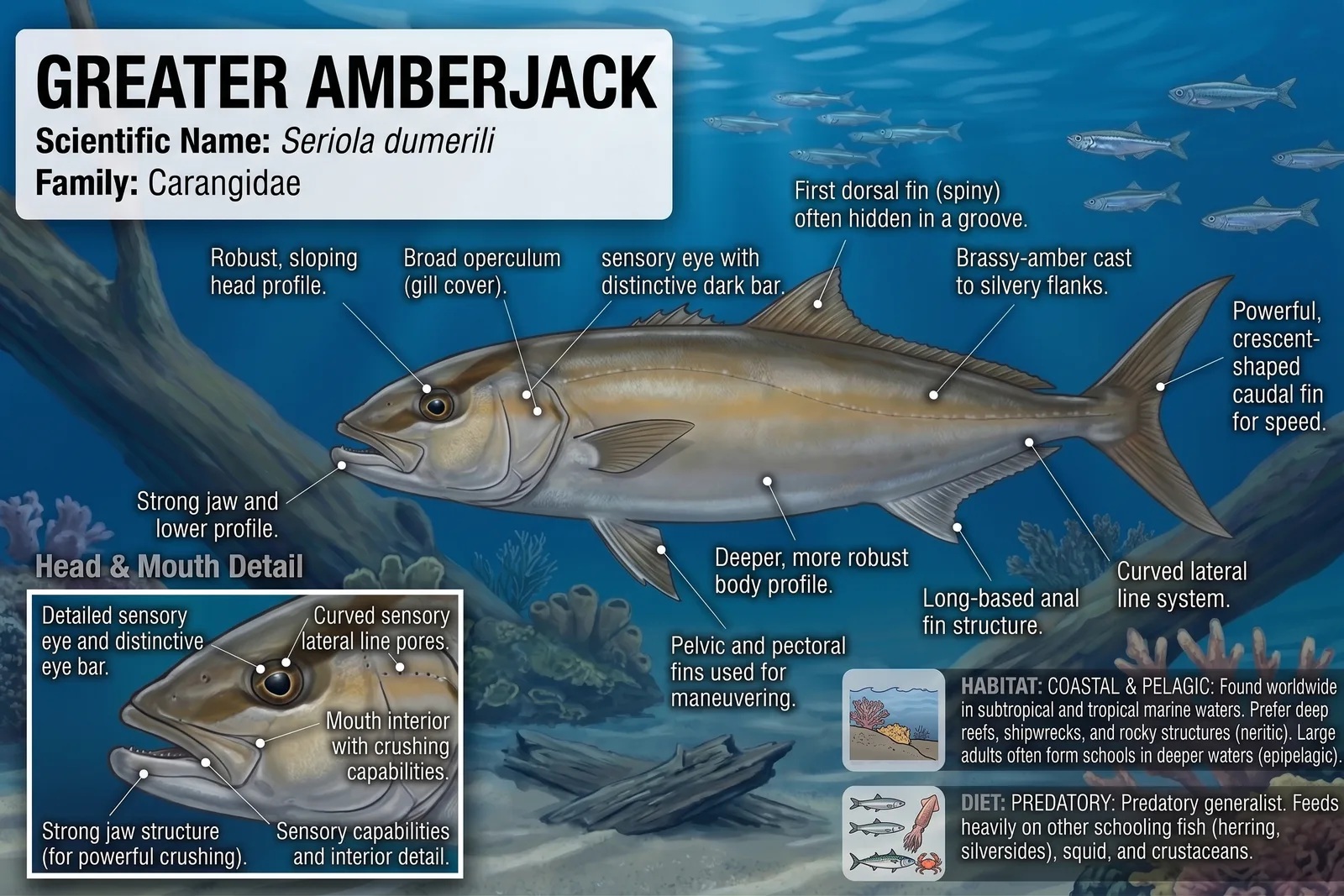
Greater Amberjack
Seriola dumerili
A powerful reef and wreck predator that fights straight back down into structure. NOAA records them up to 6 feet and 17 years old.
Typical size: Adults commonly to about 40 lb
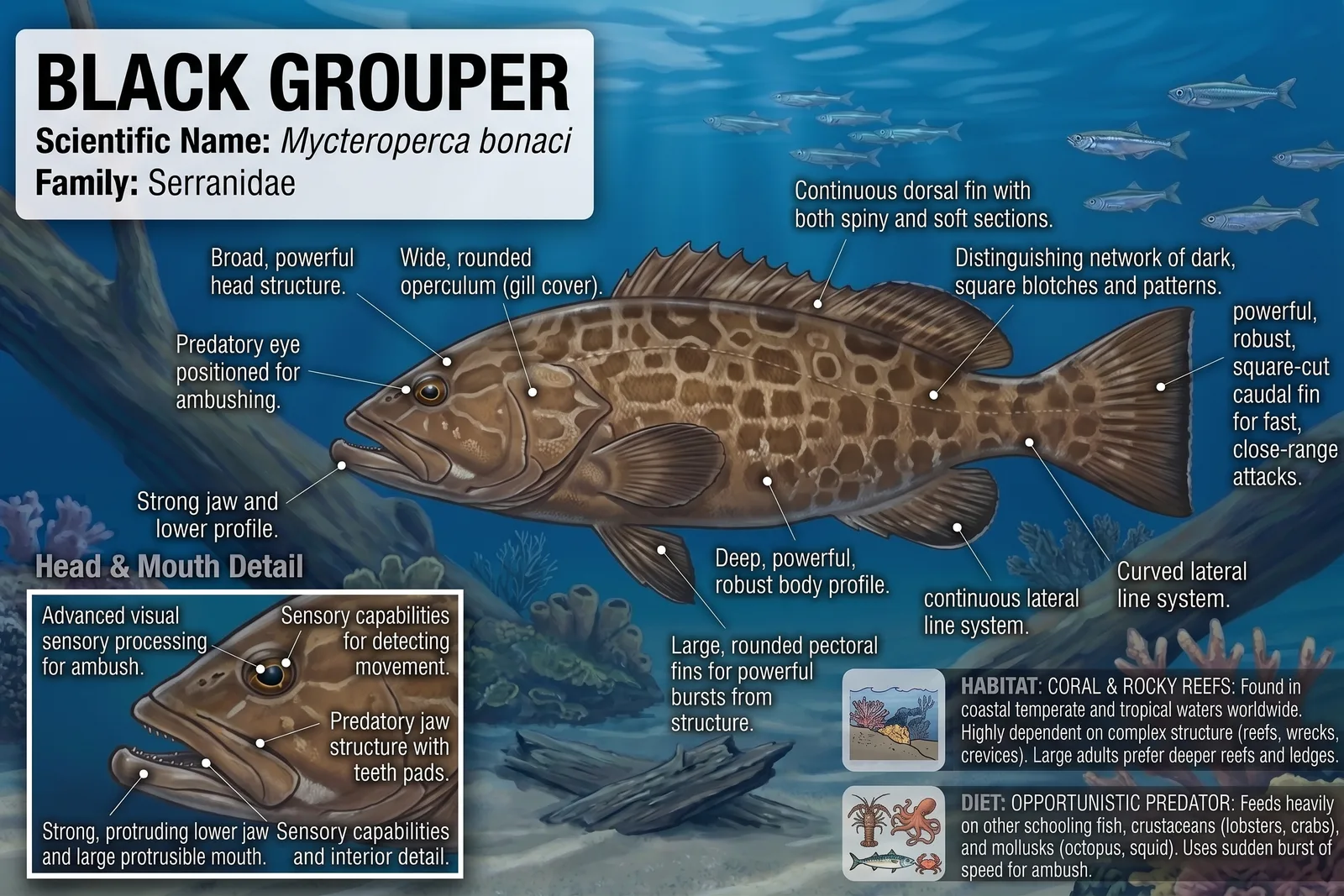
Grouper
Mycteroperca microlepis
A heavy-bodied reef predator that lives on structure and tries to get back into it the moment it is hooked. Florida manages more than a dozen grouper species together under aggregate bag limits that differ between the Atlantic and the Gulf.
Typical size: 24–34 in, 8–20 lb for gag and red grouper
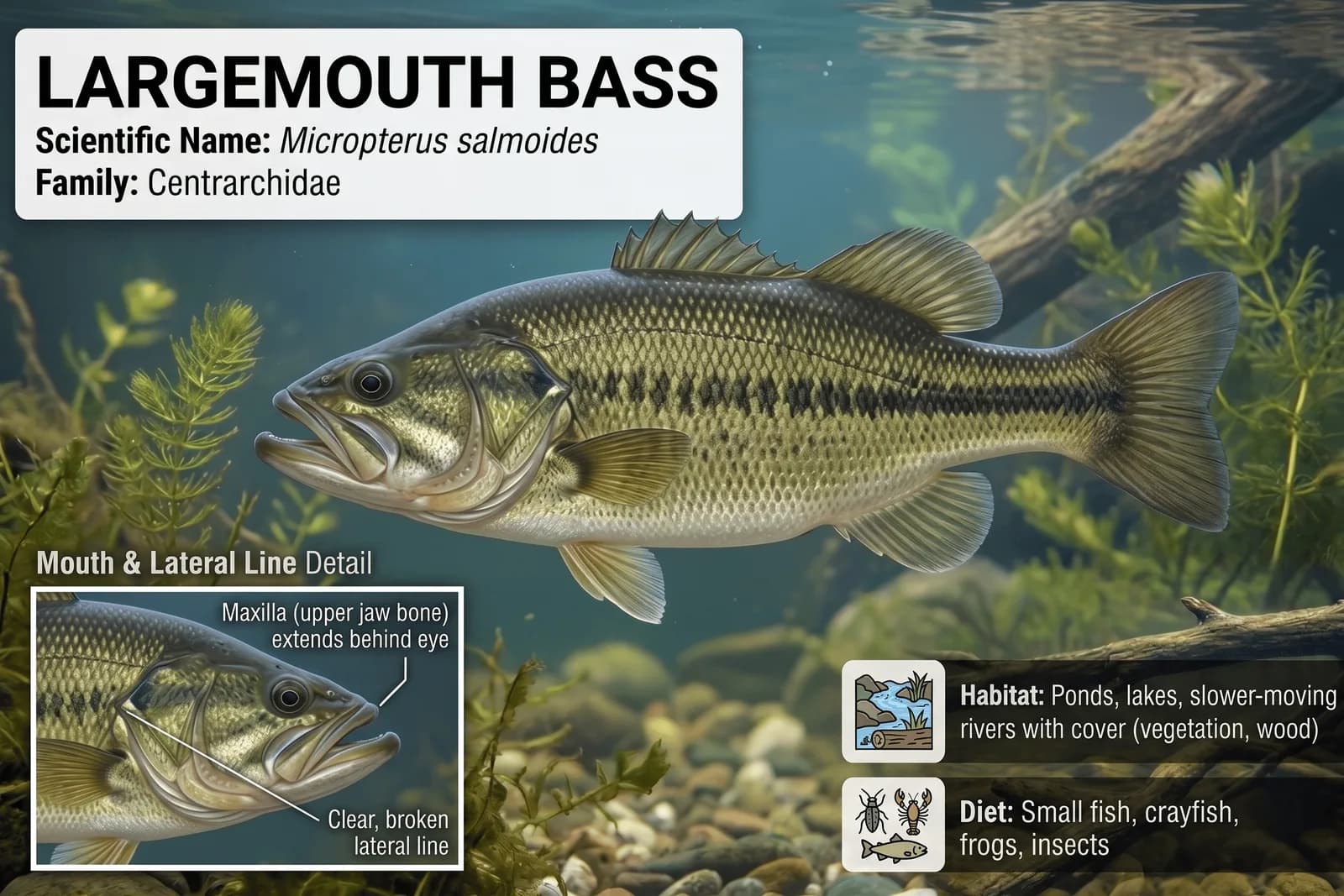
Largemouth Bass
Micropterus salmoides
The most sought-after freshwater game fish in North America — an ambush predator that lives in cover.
Typical size: 0.5–2 kg (1–4 lb), 30–45 cm
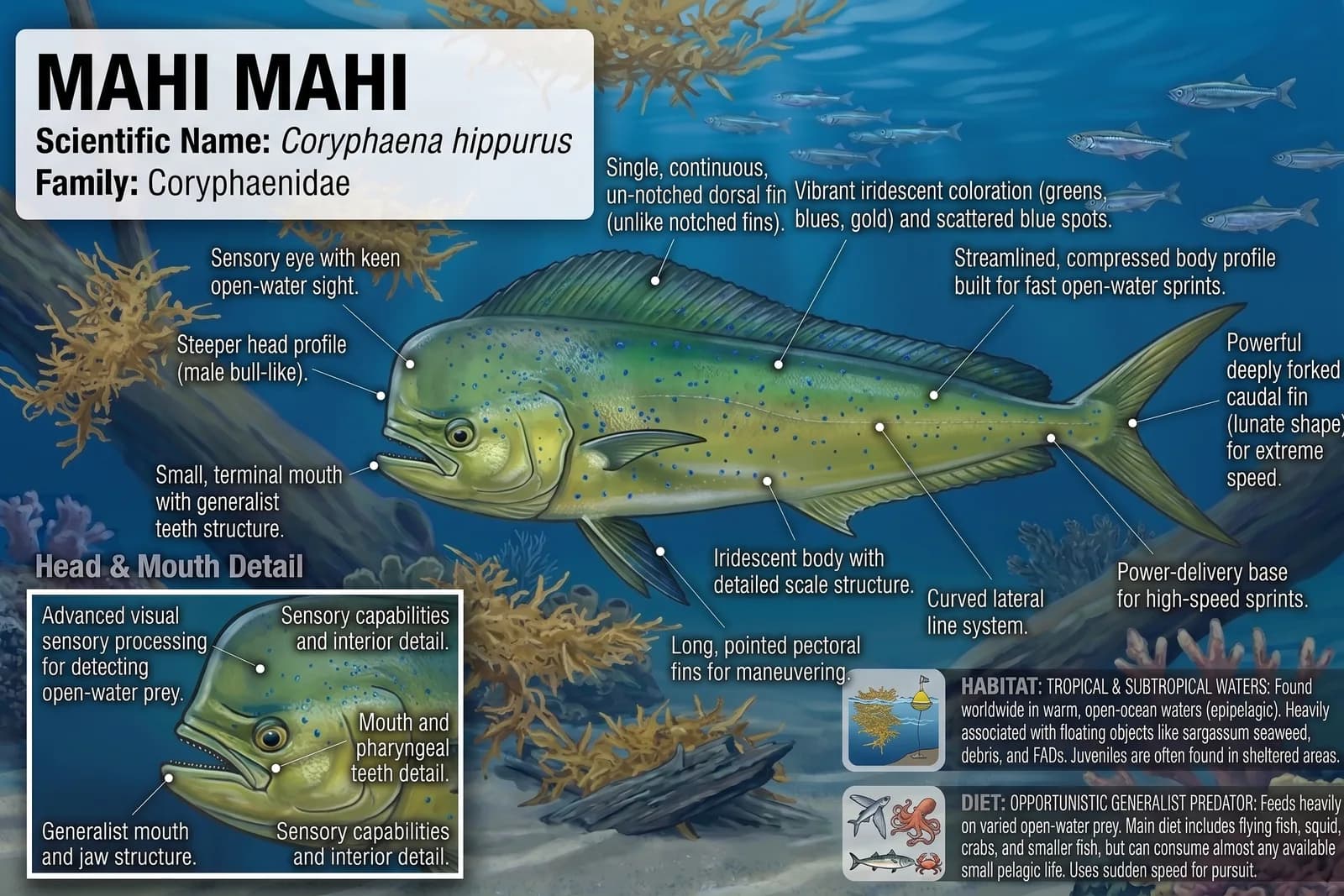
Mahi Mahi
Coryphaena hippurus
One of the fastest-growing fish in the ocean and among the most spectacular to look at. NOAA notes the brilliant colouring fades almost immediately after harvest.
Typical size: Most rod-caught fish are 5-25 lb
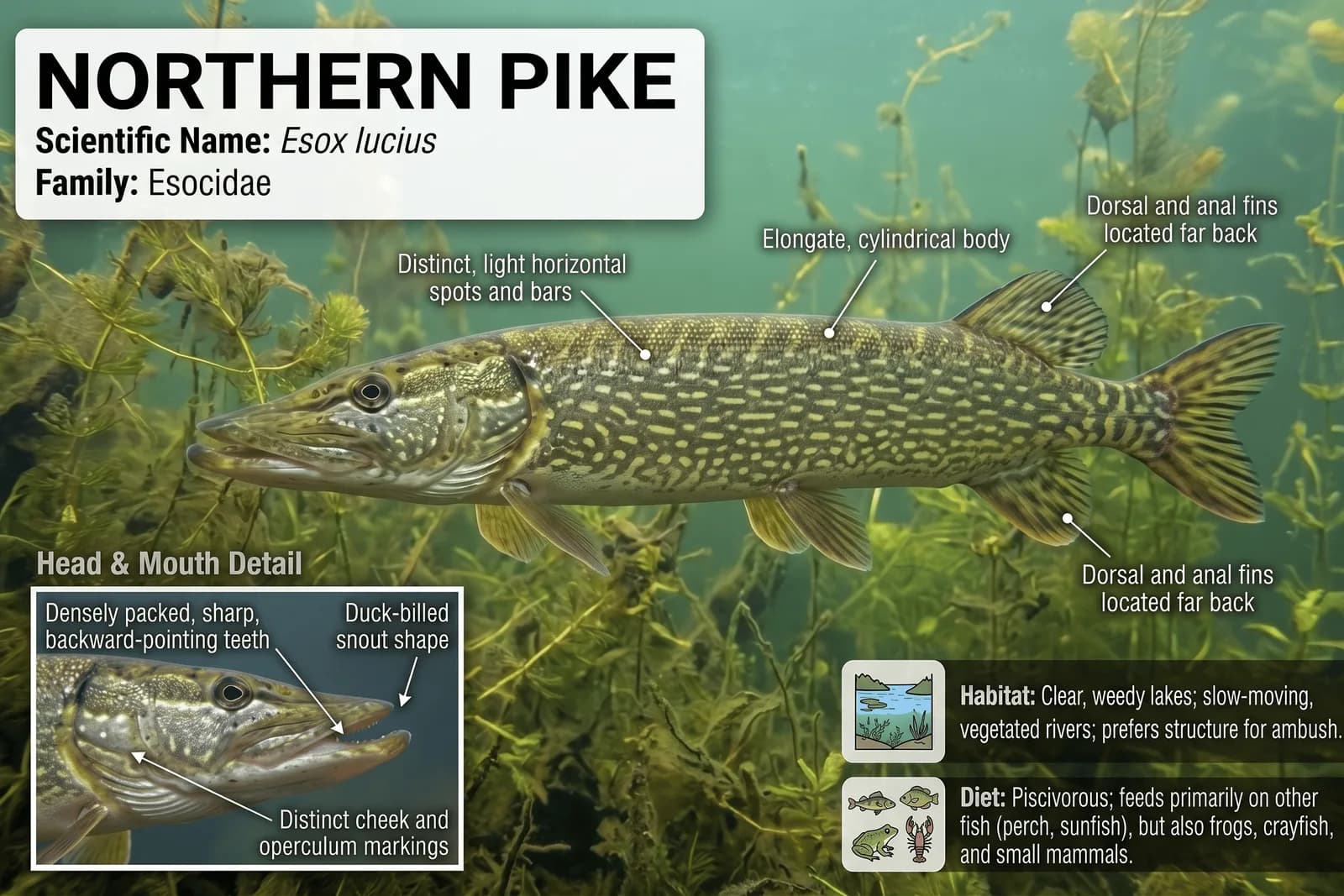
Northern Pike
Esox lucius
A toothy, ambush-hunting apex predator of northern waters.
Typical size: 1–4 kg (2–9 lb), 45–75 cm
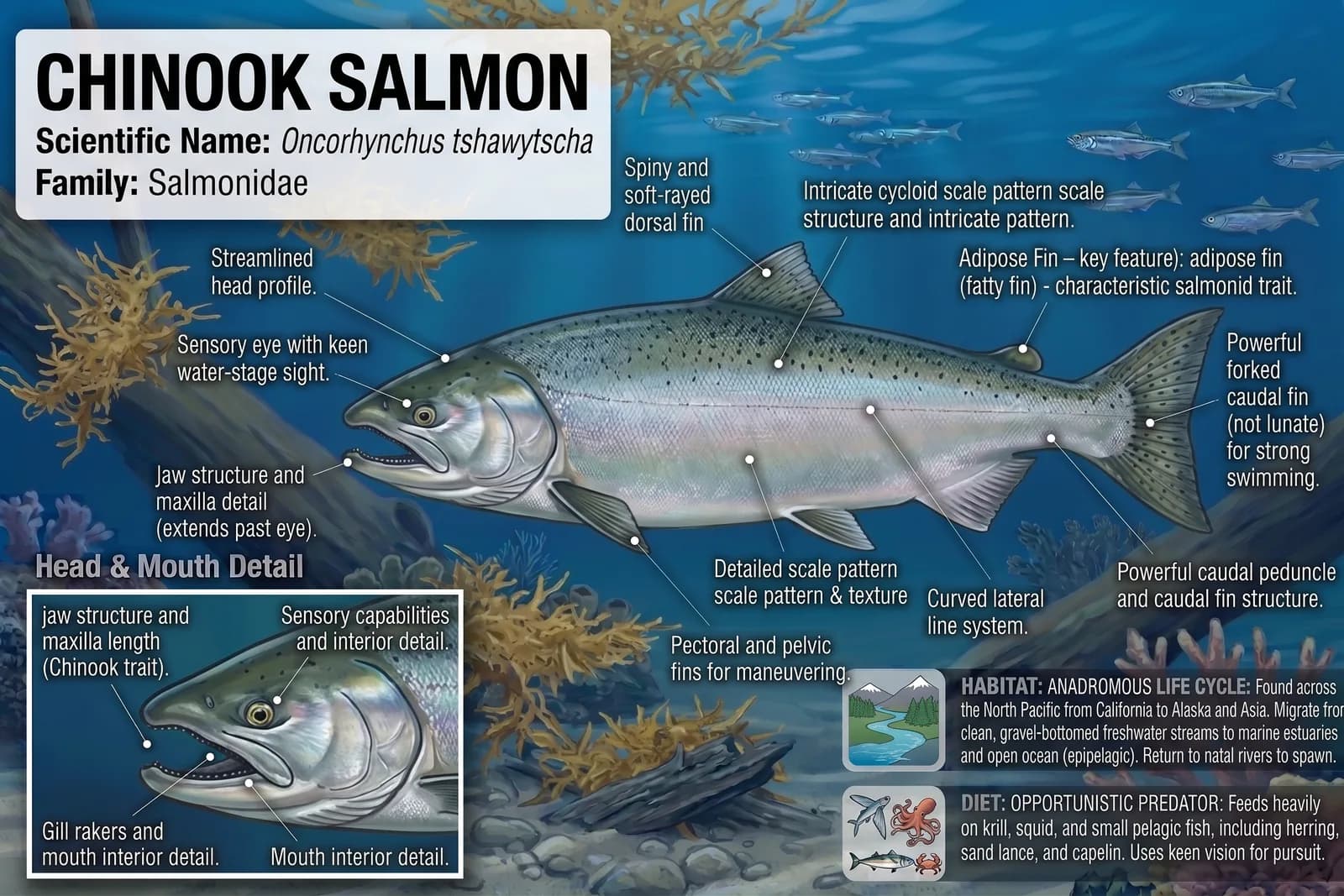
Pacific Salmon
Oncorhynchus spp.
Five species that share a river and a name but not a calendar. In a single Southeast Alaska creek the runs are months apart, which is why one answer to "when do salmon spawn" is always wrong for four of them.
Typical size: Pink 2–6 lb (3 lb average); coho 3–20 lb (8–10 lb average)
Permit
Trachinotus falcatus
The hardest of the flats species to fool and the one with the most complicated rulebook. In the Special Permit Zone, which includes all of the Florida Keys, harvest is closed 1 April to 31 July to protect spawning aggregations.
Typical size: Flats fish are commonly 5-20 lb
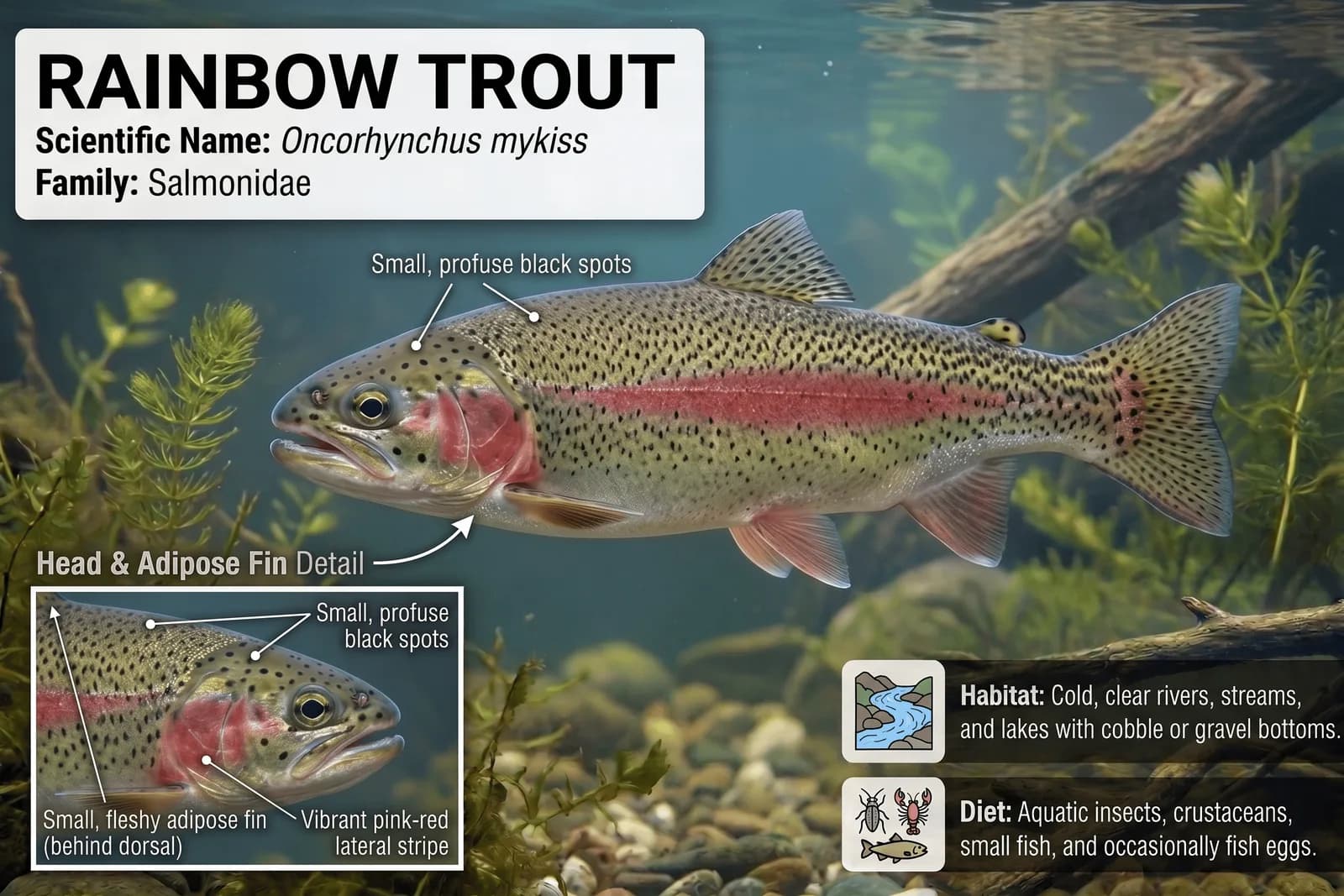
Rainbow Trout
Oncorhynchus mykiss
A hard-fighting, acrobatic salmonid and the world's most widely stocked trout.
Typical size: 0.3–2 kg (1–4 lb)
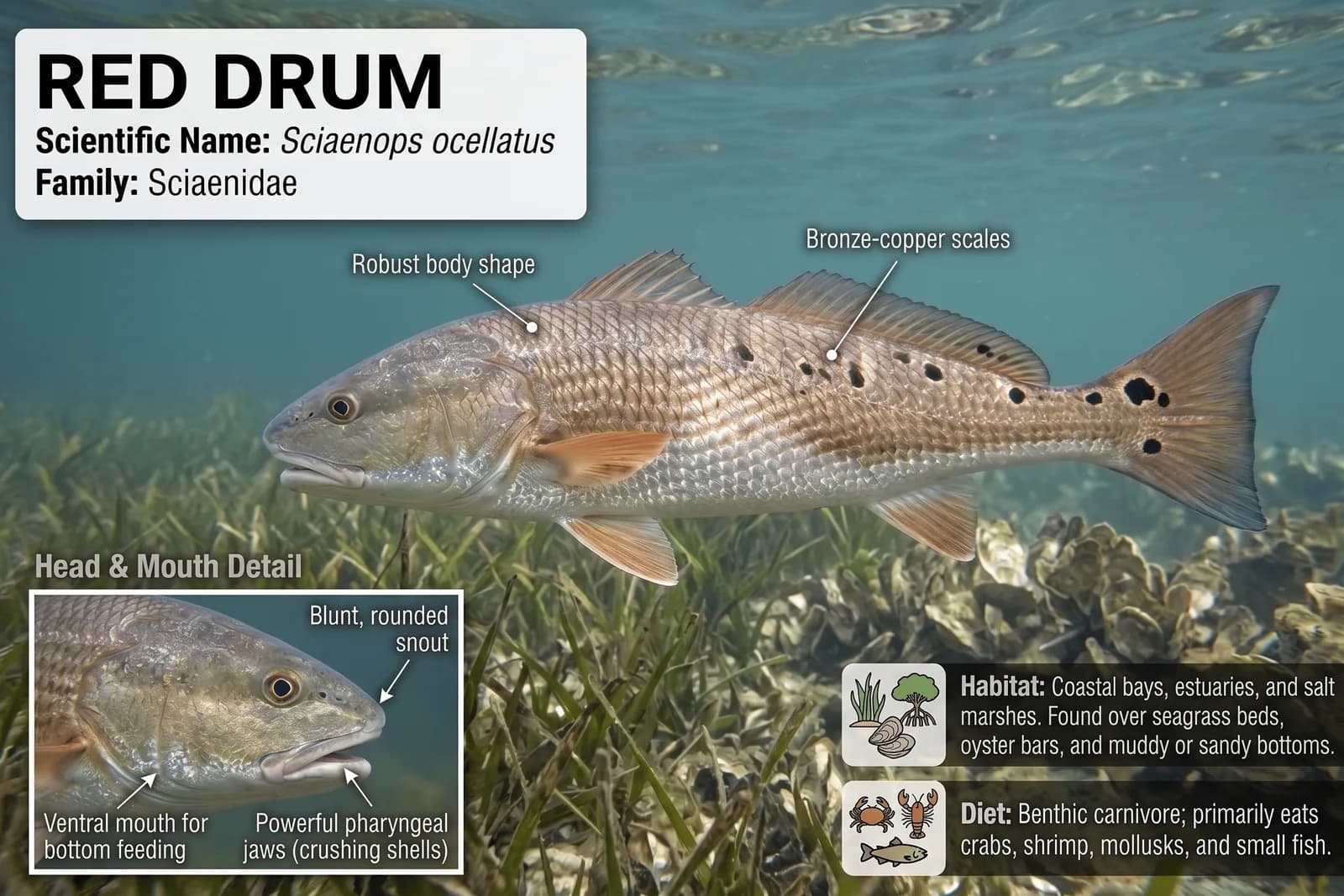
Red Drum
Sciaenops ocellatus
A copper-flanked inshore bruiser and the darling of the flats and marsh.
Typical size: 1–4 kg (2–8 lb) inshore 'slot' fish
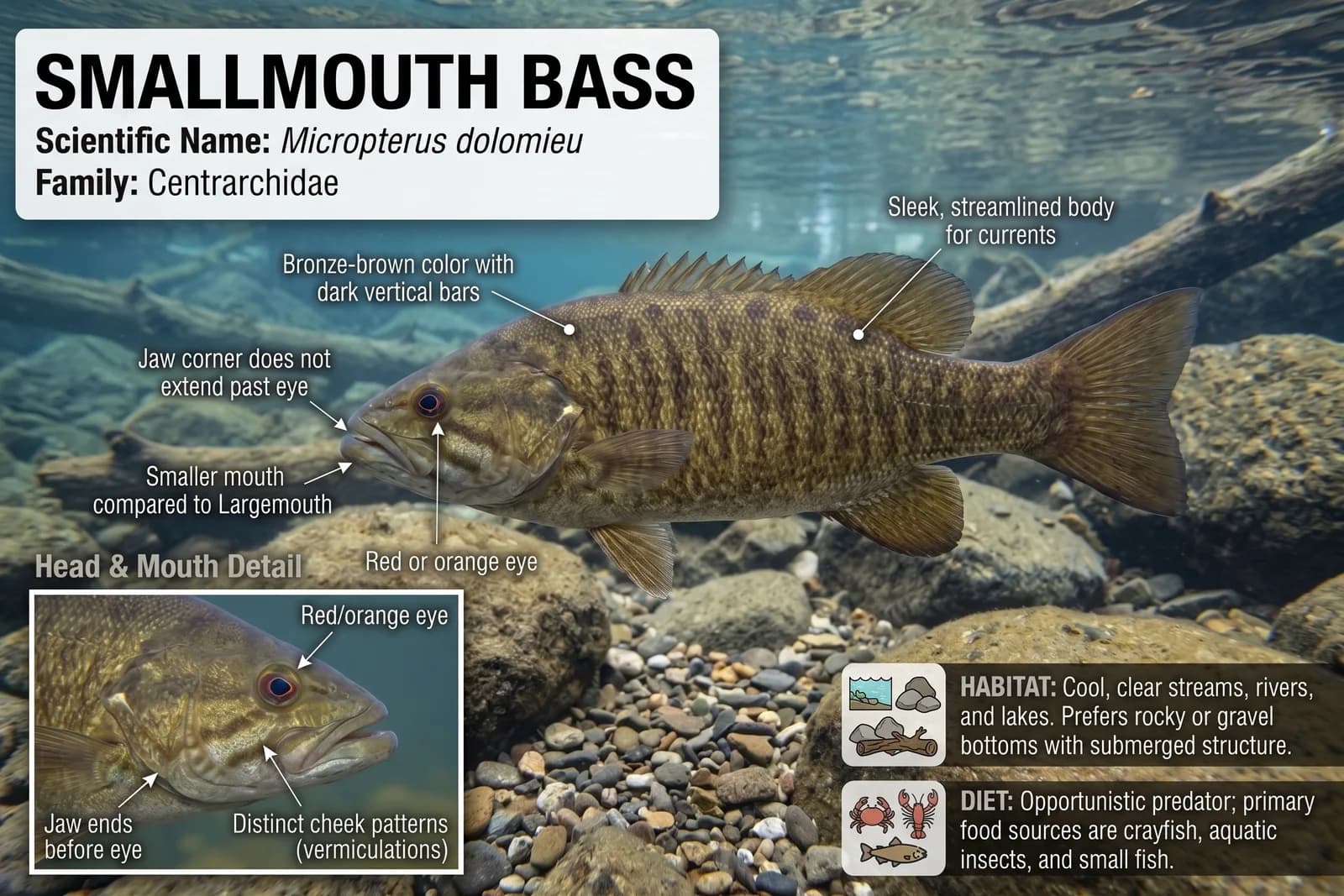
Smallmouth Bass
Micropterus dolomieu
Pound for pound one of the hardest-fighting freshwater gamefish.
Typical size: 0.3–1.5 kg (0.7–3 lb)
Spanish Mackerel
Scomberomorus maculatus
A fast, schooling coastal mackerel that hunts baitfish near the surface and cuts through light leader with genuinely sharp teeth. Measured by FORK length in Florida, unlike most species there.
Typical size: 14–20 in, 1–3 lb
Spotted Seatrout
Cynoscion nebulosus
The defining inshore gamefish of the Gulf coast — an estuarine drum, not a true trout, that holds over grass and along drop-offs and feeds on shrimp and small baitfish.
Typical size: 14–20 in, 1–3 lb
Steelhead
Oncorhynchus mykiss
The migratory form of the rainbow trout. Steelhead run rivers in autumn and spawn the following spring, and the gap between those two events — up to six months — is why almost every account of their timing contradicts the next one.
Typical size: 25–28 in, 6–8 lb
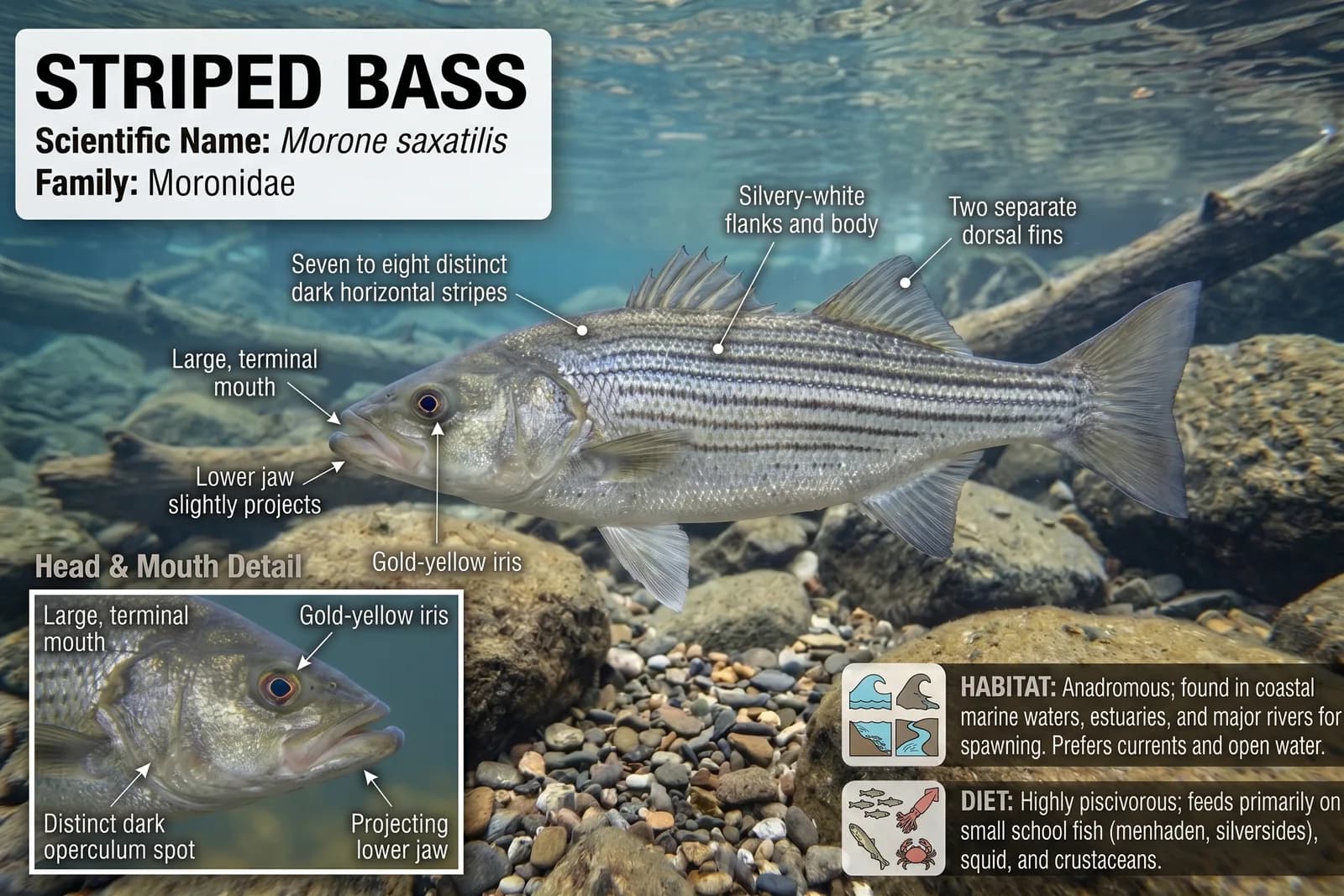
Striped Bass
Morone saxatilis
A migratory, hard-pulling gamefish and the premier inshore target of the US East Coast.
Typical size: 2–9 kg (5–20 lb)
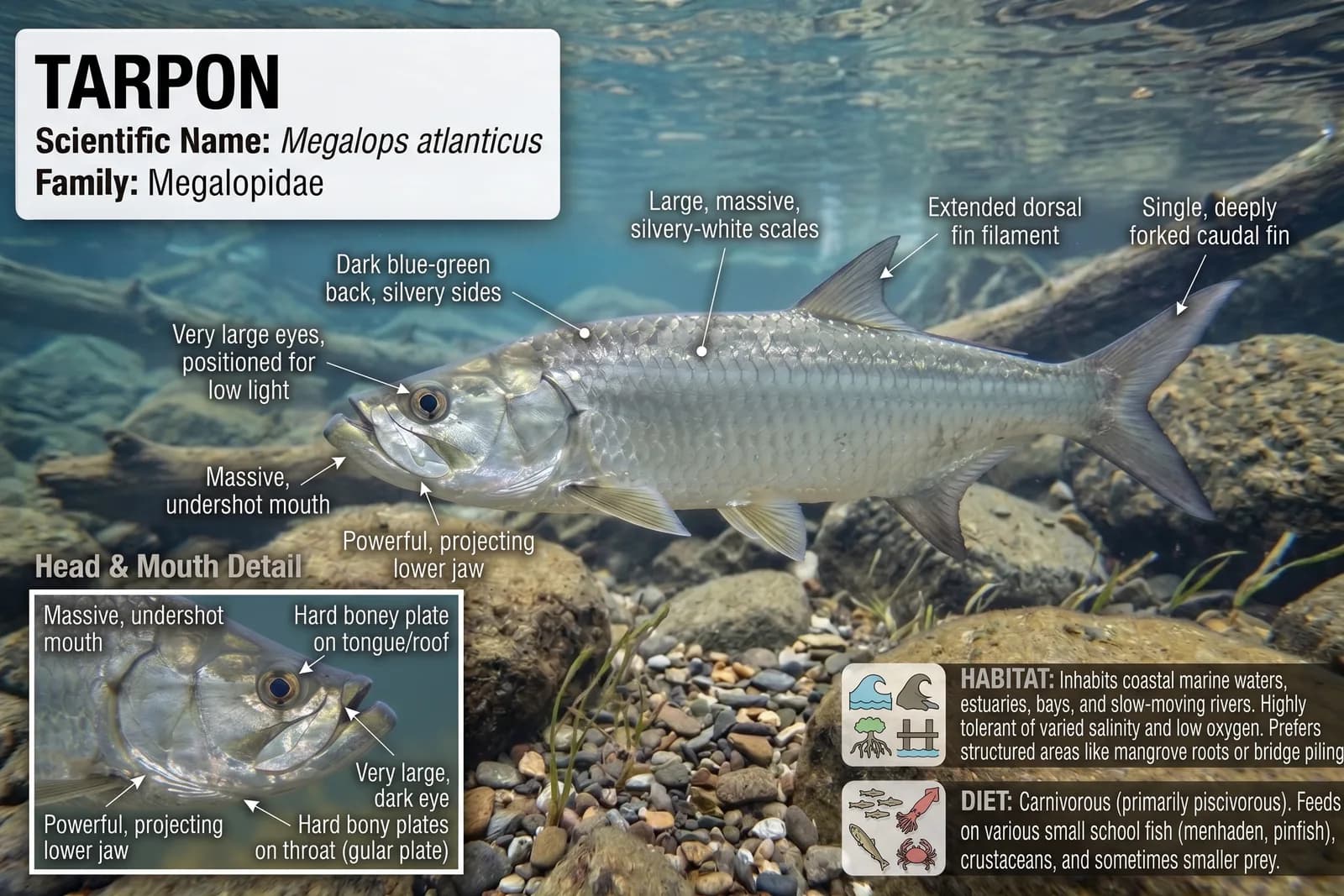
Tarpon
Megalops atlanticus
The 'Silver King' — a giant, prehistoric, air-gulping gamefish famous for blistering runs and spectacular leaps.
Typical size: 18–36 kg (40–80 lb)
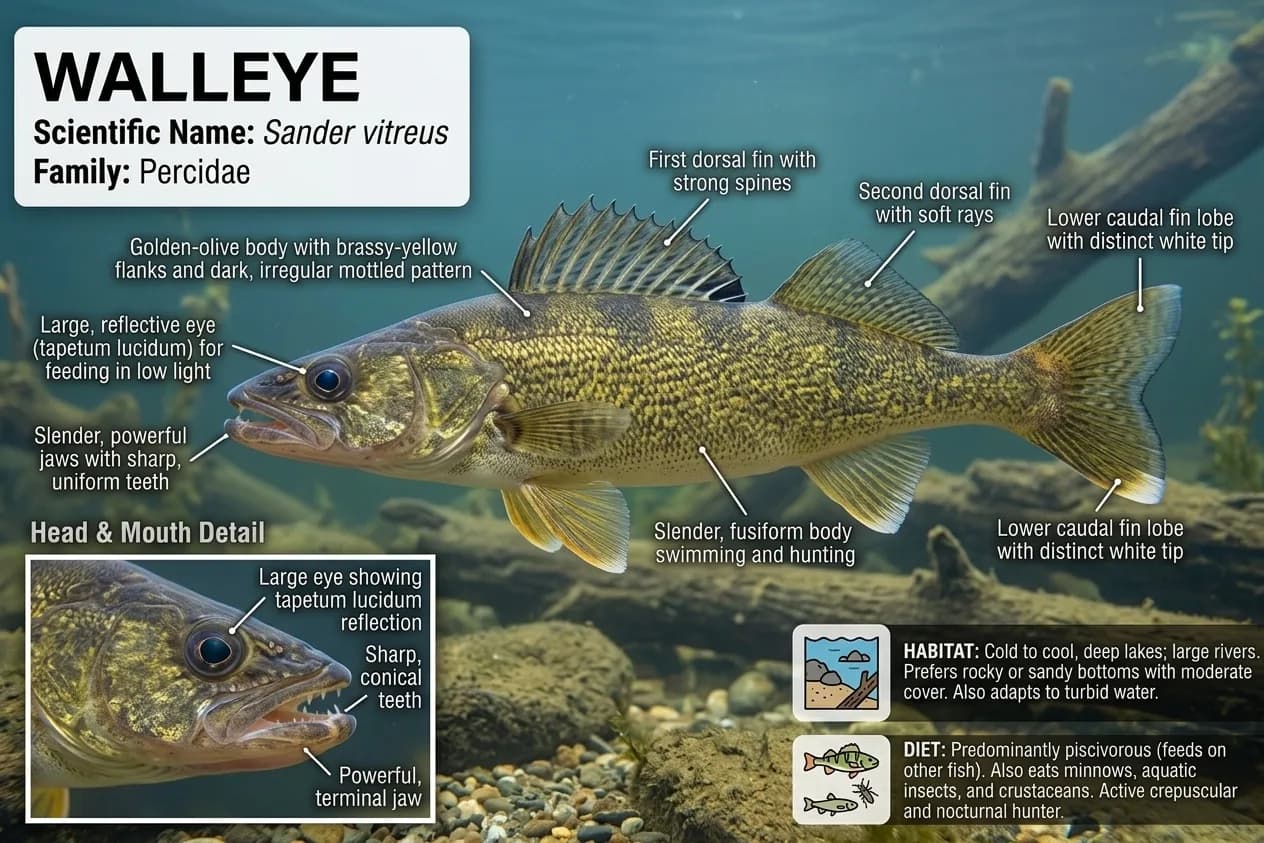
Walleye
Sander vitreus
A prized cool-water gamefish famous for low-light feeding and superb table quality.
Typical size: 0.5–2 kg (1–4 lb)
Wels Catfish
Silurus glanis
Europe's largest freshwater fish and the reason anglers travel to the Ebro. USGS records the largest specimen at 2.73 m and 130 kg — roughly 9 feet and 287 pounds. US Fish and Wildlife classifies it as HIGH RISK for American waters.
Typical size: Ebro fish of 40-100 lb are the draw
White Bass
Morone chrysops
Oklahoma's state fish, and the species with the narrowest spawning window of any covered here — Missouri's agency records spawning completed in five to ten days in any one locality.
Typical size: 0.5–2 lb, 10–15 in
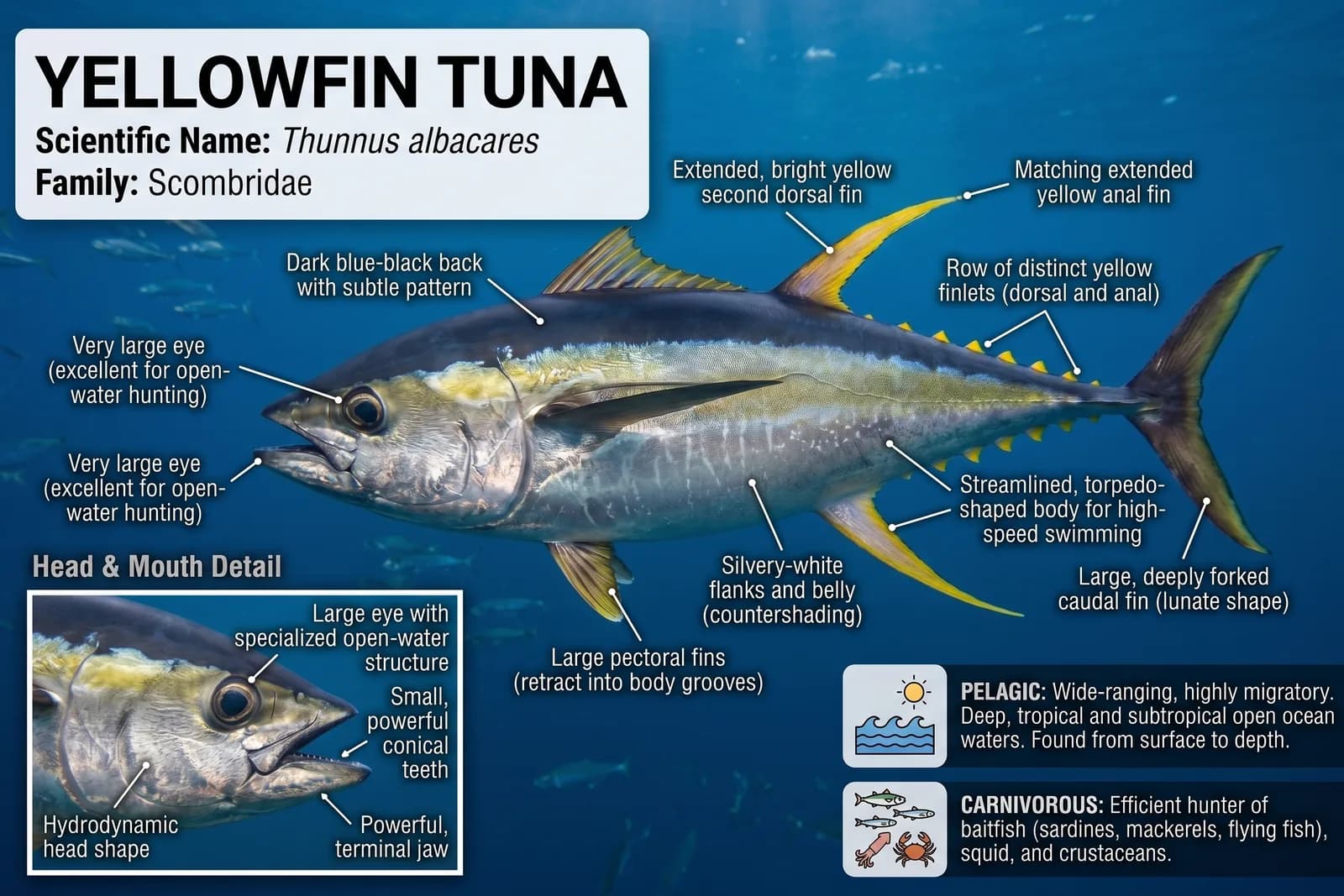
Yellowfin Tuna
Thunnus albacares
A powerful pelagic speedster prized by offshore anglers for blistering runs and deep, dogged fights.
Typical size: 10–40 kg (20–90 lb)