FishTrip
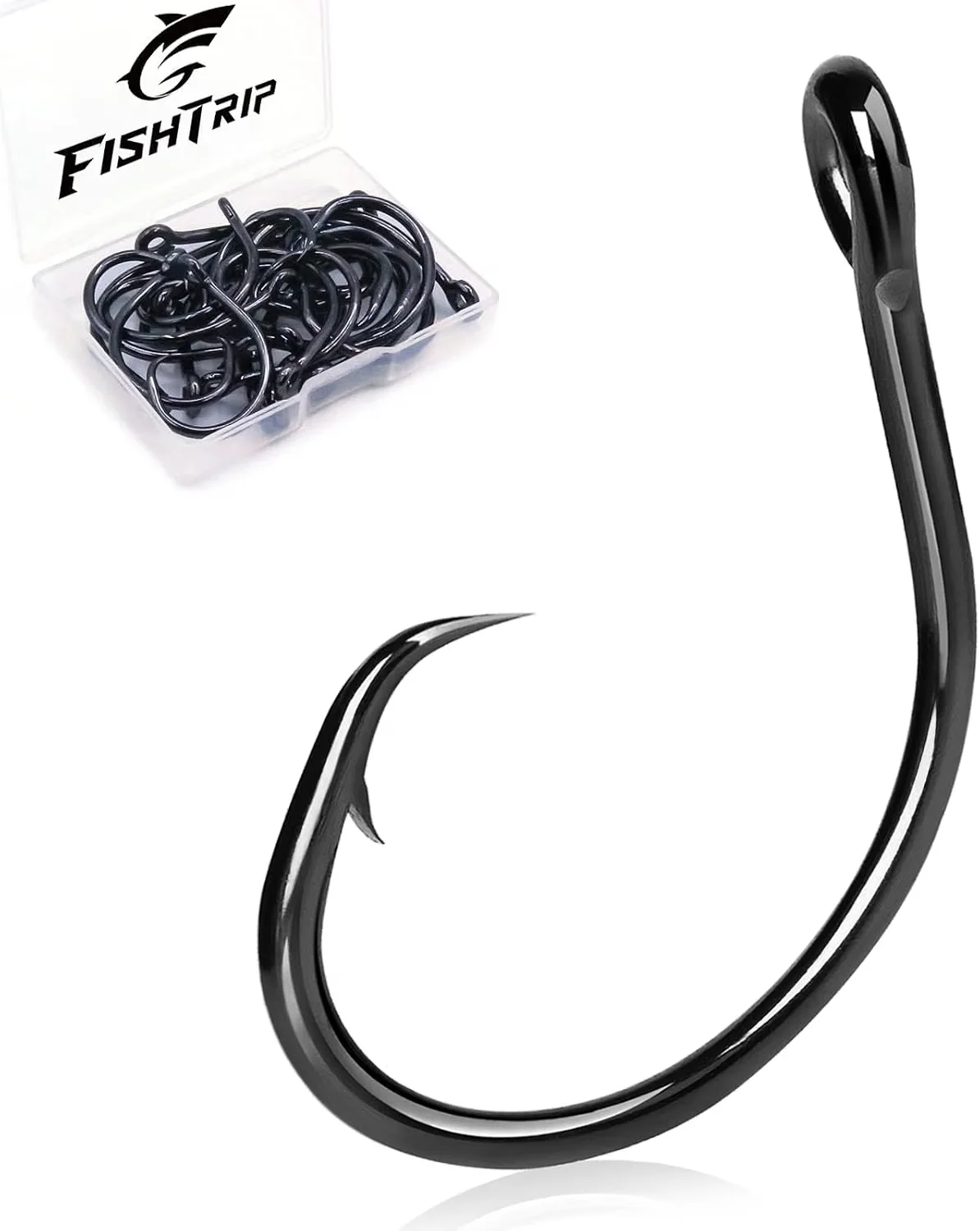
FishTrip Inline 5X Strong Circle Hooks
For bait sitting still in a cavity — and for releasing the big ones alive.
ChronicAnglers is reader-supported. When you buy through links on our site, we may earn an affiliate commission at no extra cost to you.
The catfish articles on this site all end the same way: flatheads and blues can exceed 100 lb, they are slow-growing and long-lived, and keeping eating-size channel cats is a different act from keeping a forty-pound flathead. Circle hooks are the tackle side of that argument.
Why the FishTrip Inline 5X Strong Circle Hooks stands out
Built for how catfish actually eat
Channel cats and flatheads pick a bait up and move. A circle hook uses that movement to rotate into the jaw hinge as the line comes tight — no strike needed, and far fewer gut-hooked fish than a J-hook fished the same way.
Do not strike
The one thing that stops a circle hook working is setting it like a J-hook. Let the rod load and start reeling. This takes a trip or two to trust.
Matters most on the fish you release
A jaw-hooked fish goes back with a real chance. A deeply hooked one often does not, whatever you do afterwards — which is exactly the wrong outcome on a trophy flathead that took fifteen years to grow.
At a glance
| Species | Channel, blue and flathead catfish |
|---|---|
| Technique | Do not strike — let the rod load |
| Best for | Live and cut bait fished static |
The verdict
The right hook for static bait and for catch-and-release on big fish. If you fish flatheads at night with live bluegill, this is the choice that most affects whether the fish you let go survives.
ChronicAnglers is reader-supported. When you buy through links on our site, we may earn an affiliate commission at no extra cost to you.