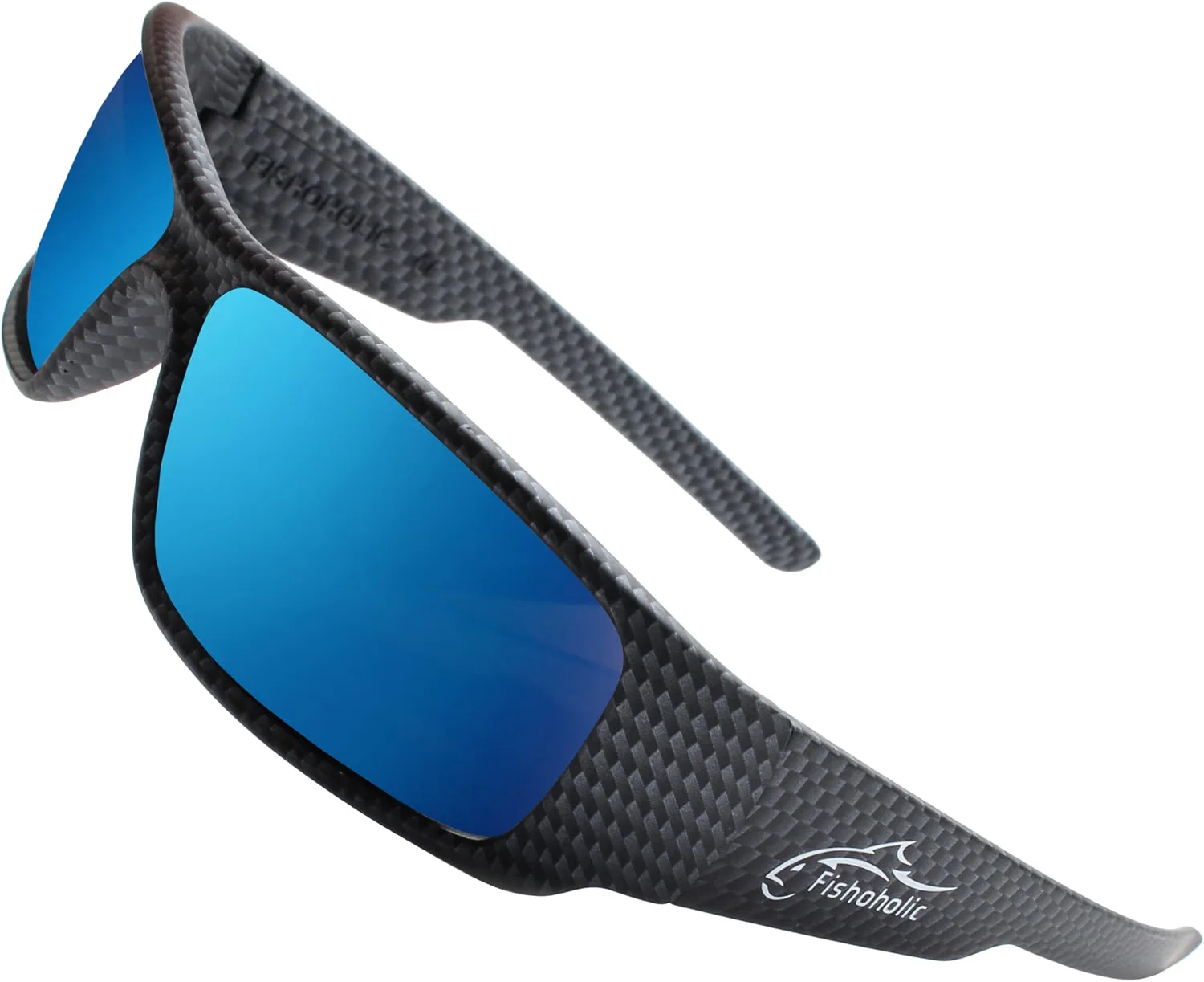
Fishoholic
Fishoholic Polarized Fishing Sunglasses
Turns bed-spotting from guesswork into looking.
ChronicAnglers is reader-supported. When you buy through links on our site, we may earn an affiliate commission at no extra cost to you.
A bluegill bed is dozens of pale saucers packed together. A bass nest is a cleared circle on a firm bottom. A trout redd is a clean, pale oval of gravel against a darker streambed. All three are genuinely easy to see, and all three are close to invisible through surface glare without polarised lenses.
Why the Fishoholic Polarized Fishing Sunglasses stands out
The difference between fishing and searching
Spawning fish concentrate in small, findable places. Bluegill colonies get reused year after year; bass nests sit in protected pockets; redds sit at pool tail-outs. Polarised lenses cut the surface reflection so you are reading the bottom instead of guessing at it.
It is also how you avoid the redds
Every spawn article on this site asks you to fish below the redds rather than on them, and not to wade across clean gravel. That only works if you can see the gravel. Being able to identify a redd is as much an ethics tool as a fishing one.
Lens tint matters more than price
Copper and amber tints lift contrast in the stained and low-light water where most of this fishing happens; grey suits bright open water. If you fish rivers and shallow lakes, warm tints are the more useful default.
At a glance
| Essential feature | True polarisation — not just a dark tint |
|---|---|
| Tint for rivers and shallows | Copper or amber, for contrast |
| Tint for open, bright water | Grey |
The verdict
If you fish visually for spawning fish — and every article in this batch assumes you do — this is the item that does the most work. It also makes the redd etiquette these pages ask for actually possible.
ChronicAnglers is reader-supported. When you buy through links on our site, we may earn an affiliate commission at no extra cost to you.