Buyer's Guide
Top 5 Braided Fishing Lines
Braid changed what a spinning reel can do. Almost no stretch means a soft bite thirty yards out arrives at your hand, and a strength-to-diameter ratio no monofilament can match means more line on the same spool and longer casts.
The choice inside the category is mostly about construction. Braid is woven from multiple fibres, and eight-strand lines are rounder and smoother than four-strand, so they run more quietly through the guides and cast noticeably farther. Four-strand is coarser, tougher against abrasion, and cheaper. That trade-off matters more than the badge on the spool.
These five are the braids that keep coming up among people who fish braid hard, and each is here for a different reason.
ChronicAnglers is reader-supported. When you buy through links on our site, we may earn an affiliate commission at no extra cost to you.
At a glance
| # | Line | Best for | Type |
|---|---|---|---|
| 1 | Sufix 832 Advanced Superline Braid | Best overall | 8-strand braid |
| 2 | PowerPro Spectra Braided Line | Best proven all-rounder | Braid |
| 3 | SpiderWire Stealth Braid | Best value | Braid |
| 4 | KastKing SuperPower Braided Line | Best budget | Braid |
| 5 | Seaguar Smackdown Braid | Best for spinning reels | 8-strand braid |
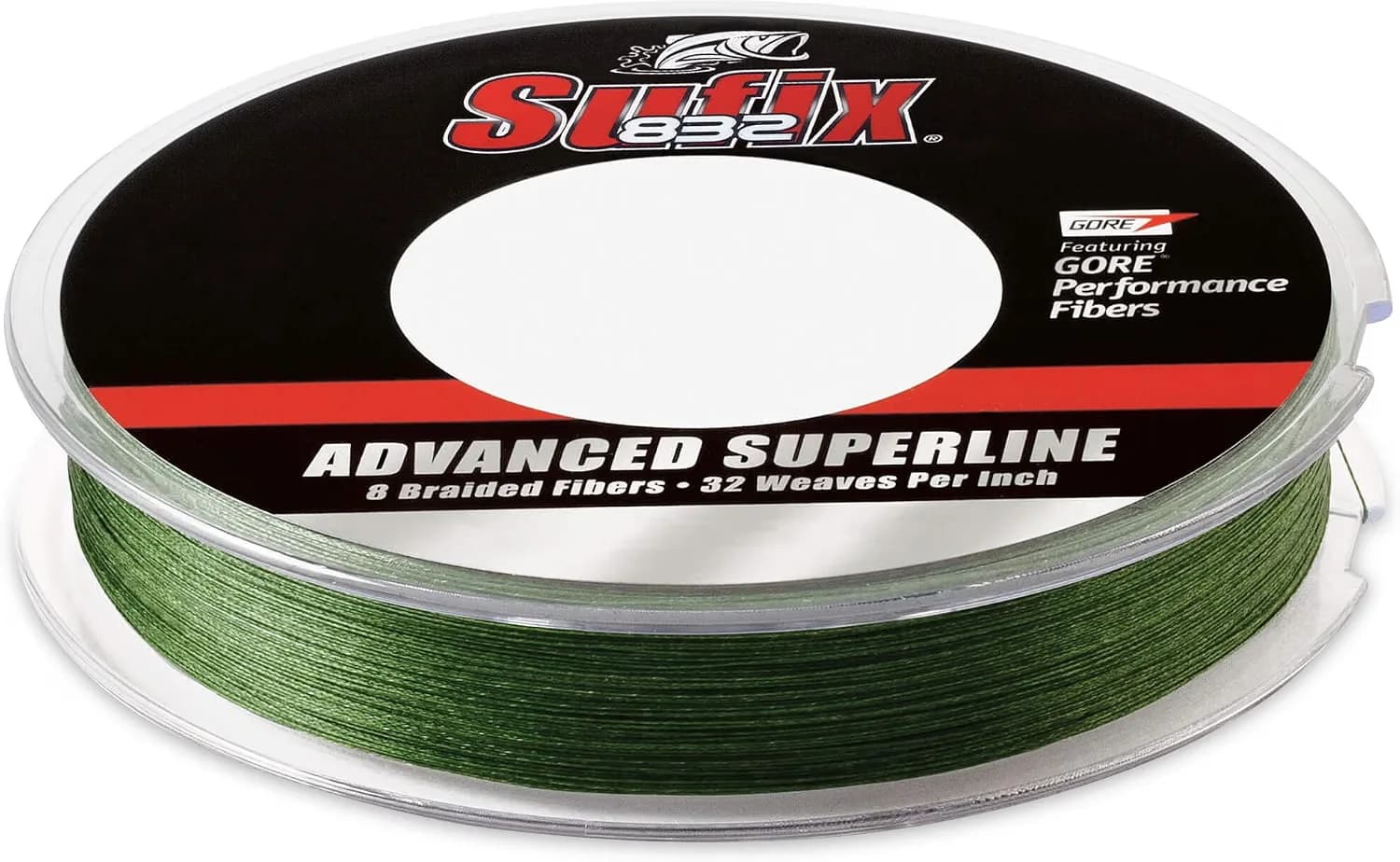
Sufix 832 Advanced Superline Braid
- Strands:
- 8
- Fibres:
- 7 Dyneema + 1 GORE
- Profile:
- Round
- Best for:
- Spinning and casting
The 832 is the line most often named when experienced anglers are asked what they actually spool, and its construction is the reason: eight fibres, seven of them Dyneema woven with one GORE Performance Fiber. That eighth fibre is the unusual part. It is there for abrasion resistance and to help the line hold a round cross-section, and a round braid is a braid that runs quietly through the guides, packs evenly on the spool and casts a long way. As an eight-strand it sits firmly on the casting side of the strand trade-off, which makes it a natural spinning-reel line for bass, pike and inshore salt. It is not the line to pick if your day is spent dragging a jig through oyster, but for almost everything else it is the safe answer.
- Eight-strand construction casts farther than coarser four-strand line
- The GORE fibre is a genuine construction difference, not marketing
- Holds a round profile, so it stays quiet in the guides
- Stocked almost everywhere in a full range of pound tests
- Costs more per yard than budget braid
- Like all braid it is highly visible, so plan on a leader
- Smooth eight-strand line is less abrasion-resistant than four-strand
PowerPro Spectra Braided Line
- Material:
- Spectra fibre
- Finish:
- Treated, slick surface
- Character:
- Stiffer, packs tight
- Best for:
- General fresh and salt
PowerPro is the line that made braid normal. It has been on tackle shop walls for decades, it is stocked in places that stock almost nothing else, and it does the job without drama. It is a slightly stiffer, coarser line than the premium eight-strands, and that cuts both ways: a little more noise through the guides and a little less distance, but a line that tolerates being dragged over structure and that packs onto a spool tightly and stays where you put it. If you want one braid you can walk into any shop in any state and find on the shelf, in the test you need, this is still it.
- Available almost everywhere, in every pound test
- Tough and forgiving of hard use around structure
- Packs tightly and holds its position on the spool
- A very long track record behind it
- Not as slick or as long-casting as premium eight-strand lines
- Can be noisy running through the guides
- Colour fades with use
SpiderWire Stealth Braid
- Material:
- Dyneema fibre
- Finish:
- Fluoropolymer treated
- Best for:
- Bass, pike, general freshwater
- Range:
- Wide, many colours
Stealth is what gets recommended when somebody wants braid but does not want to spend premium money on a first spool. It is smooth, it casts well, and it is priced so that respooling is not a decision you have to think about, which matters more than it sounds. Braid lasts a long time overall but the working end takes damage, and anglers who feel bad about cutting line back end up fishing with compromised line. Cheap enough to maintain properly is a real feature, not a compromise, and the fluoropolymer treatment means it does not feel like a budget line on the first few casts either.
- Strong price-to-performance for a name-brand braid
- Fluoropolymer treatment keeps it running smoothly
- Wide range of pound tests and colours
- Cheap enough that you will actually trim the working end
- Colour fades faster than premium lines
- Not the longest-casting option here
- Some anglers find it noisy for the first trip or two
KastKing SuperPower Braided Line
- Material:
- UHMWPE fibre
- Best for:
- First braid, backup spools
- Range:
- Ultralight to heavy
This is the budget braid that keeps getting named alongside lines costing several times more, and the honest summary is that it is not the slickest and not the longest-casting, but it is genuinely usable braid at a price that makes filling three reels a reasonable thing to do. That is the right proposition for a first braid spool, for backups, and for anyone who wants to find out whether they actually like fishing braid before committing to a premium line. On very light tests it is more prone to wind knots than a smooth eight-strand, so if this is going on a small spinning reel, fill the spool to just below the lip and close the bail with the handle rather than by hand.
- Very low cost per spool
- Huge range of pound tests, from ultralight up
- Good enough performance for most freshwater fishing
- Makes respooling several reels painless
- Less consistent in diameter than premium lines
- More prone to wind knots on very light tests
- Colour fades quickly
Seaguar Smackdown Braid
- Strands:
- 8
- Profile:
- Thin for its rating
- Best for:
- Finesse and long casts
Smackdown is the braid people reach for specifically on spinning gear, and the reason is wind knots. Thin, round, slick eight-strand line leaves the spool cleanly and comes back onto it cleanly, and that is precisely where cheaper braid gets you into trouble on a spinning reel: loose coils that lie badly, then a loop that pulls through on the next cast. It is also thin for its rated strength, which means more line on the spool and less water resistance, both of which help on light finesse presentations where you are trying to keep contact with a small bait a long way off. The trade is the usual one with fine eight-strand line, which is that it does not love abrasion.
- Smooth eight-strand construction behaves well on spinning reels
- Very thin for its rated strength
- Fewer wind knots than coarser budget braid
- Casts a long way with light baits
- Premium price
- Thin diameter is less forgiving against rock and shell
- More line than you need for heavy cover work
How to choose a braided line
- Strand count decides how it casts: eight-strand braids are rounder and smoother and cast farther than four-strand, which is coarser and tougher against abrasion. Pick eight-strand for spinning reels and distance, four-strand for dragging baits through structure.
- Braid is visible, so plan on a leader: braid sits close to nylon in refractive index and is among the most visible lines in the water. A fluorocarbon or monofilament leader also covers braid's weakest point, which is abrasion resistance.
- Match the pound test to your reel, not your ambition: braid is far thinner than mono at the same rating, so 30 lb braid can be the diameter of 8 lb mono. Overfilling a spool with heavy braid causes more problems than it solves.
- Braid needs different knots: it is slick, and a knot that holds in mono can slip in braid. The FG knot exists specifically to join braid to a leader, and it is worth the evening it takes to learn.
- Fill to just below the spool lip: an overfilled spinning spool throws loose coils, and loose coils are what become wind knots on the next cast.
Frequently asked questions
- Is 4-strand or 8-strand braid better?
- It depends what you want from it. Eight-strand braid is rounder and smoother, so it casts farther and runs more quietly through the guides, which suits spinning reels and distance. Four-strand is coarser and more abrasion-resistant, which suits dragging baits through structure. Neither is universally better.
- Do you need a leader with braided line?
- Almost always, for two reasons. Braid is one of the most visible lines in the water, and it has the weakest abrasion resistance of the three main line types. A fluorocarbon or monofilament leader of about a rod length solves both problems at once.
- What pound test braid should I use?
- Match it to your rod and reel rating rather than to the size of fish you hope for. Braid is much thinner than monofilament at the same rating, which is why people over-spool. For general freshwater spinning, 10 to 20 lb braid on a 2500 to 3000 size reel covers most situations.
- Why does my braid keep getting wind knots?
- Usually a combination of an overfilled spool, line that is too limp for the reel, and closing the bail by hand instead of with the handle. Smoother eight-strand braids reduce it noticeably, and so does filling the spool to just below the lip rather than to the very edge.
- How long does braided line last?
- Far longer than monofilament. Braid does not degrade in sunlight the way nylon does and it has essentially no memory. What wears out is the last few yards. Most anglers trim the working end periodically and reverse the line on the spool once, rather than replacing it every season.
- Can you use braid straight to the lure?
- You can, and plenty of people do in heavy cover or dirty water where visibility matters less and you want maximum hook-setting power. In clear water and on wary fish a leader is the difference between bites and none, and it also protects you from braid's poor abrasion resistance.
The bottom line
If you want one answer, take the Sufix 832 for its eight-strand construction and the GORE fibre, or the KastKing SuperPower if this is your first braid spool and you would rather find out whether you like braid before spending more. On a spinning reel specifically, Seaguar Smackdown is the one that will give you the fewest wind knots. Whichever you choose, run a leader and learn one good braid-to-leader knot, because braid's two real weaknesses, visibility and abrasion, are both solved by the last three feet of the setup.
ChronicAnglers is reader-supported. When you buy through links on our site, we may earn an affiliate commission at no extra cost to you.