Buyer's Guide
Top 5 Spinning Reels
Most spinning reel marketing is about bearing count, and bearing count is close to meaningless. A reel with ten cheap bearings is worse than a reel with five good ones, and neither number tells you the thing you actually need to know.
What decides whether a reel is any good is a short list: whether the drag is smooth from the moment it starts moving, whether the body flexes under load, and whether it survives what you fish it in. A reel that is buttery in the shop and gritty after one season in salt was never a good reel, it was a good showroom.
These five are chosen against that list, from a first freshwater reel to one built to be hosed off and fished again.
ChronicAnglers is reader-supported. When you buy through links on our site, we may earn an affiliate commission at no extra cost to you.
At a glance
| # | Reel | Best for | Type |
|---|---|---|---|
| 1 | Shimano Stradic Spinning Reel | Best overall | Spinning |
| 2 | Penn Battle IV Spinning Reel | Best for saltwater | Spinning |
| 3 | Daiwa BG Spinning Reel | Best value in saltwater | Spinning |
| 4 | Pflueger President Spinning Reel | Best freshwater all-rounder | Spinning |
| 5 | KastKing Sharky III Spinning Reel | Best budget | Spinning |
Shimano Stradic Spinning Reel
- Gearing:
- HAGANE cold-forged
- Protection:
- X-Protect
- Best for:
- Fresh and inshore salt
The Stradic is the reel that keeps being recommended by people who own far more expensive ones, because it sits at the point where the things that matter stop improving quickly. Shimano's cold-forged HAGANE gearing and X-Protect water-resistant construction are the two features to care about here: the first is what keeps the retrieve feeling the same after a season rather than developing the faint grinding cheap gears get, and the second is what stops salt spray from ending the reel early. It is smooth enough that a delicate tap telegraphs to your hand, and light enough to fish all day. It is not cheap, but a Stradic bought once and looked after outlasts three budget reels bought in sequence.
- Cold-forged HAGANE gearing holds its smoothness over seasons
- X-Protect construction handles salt spray properly
- Refined enough to feel light bites through the handle
- Sizes covering freshwater lakes through inshore salt
- Premium price for a mid-range reel
- More reel than a pond bluegill setup needs
- Still wants a rinse after saltwater use
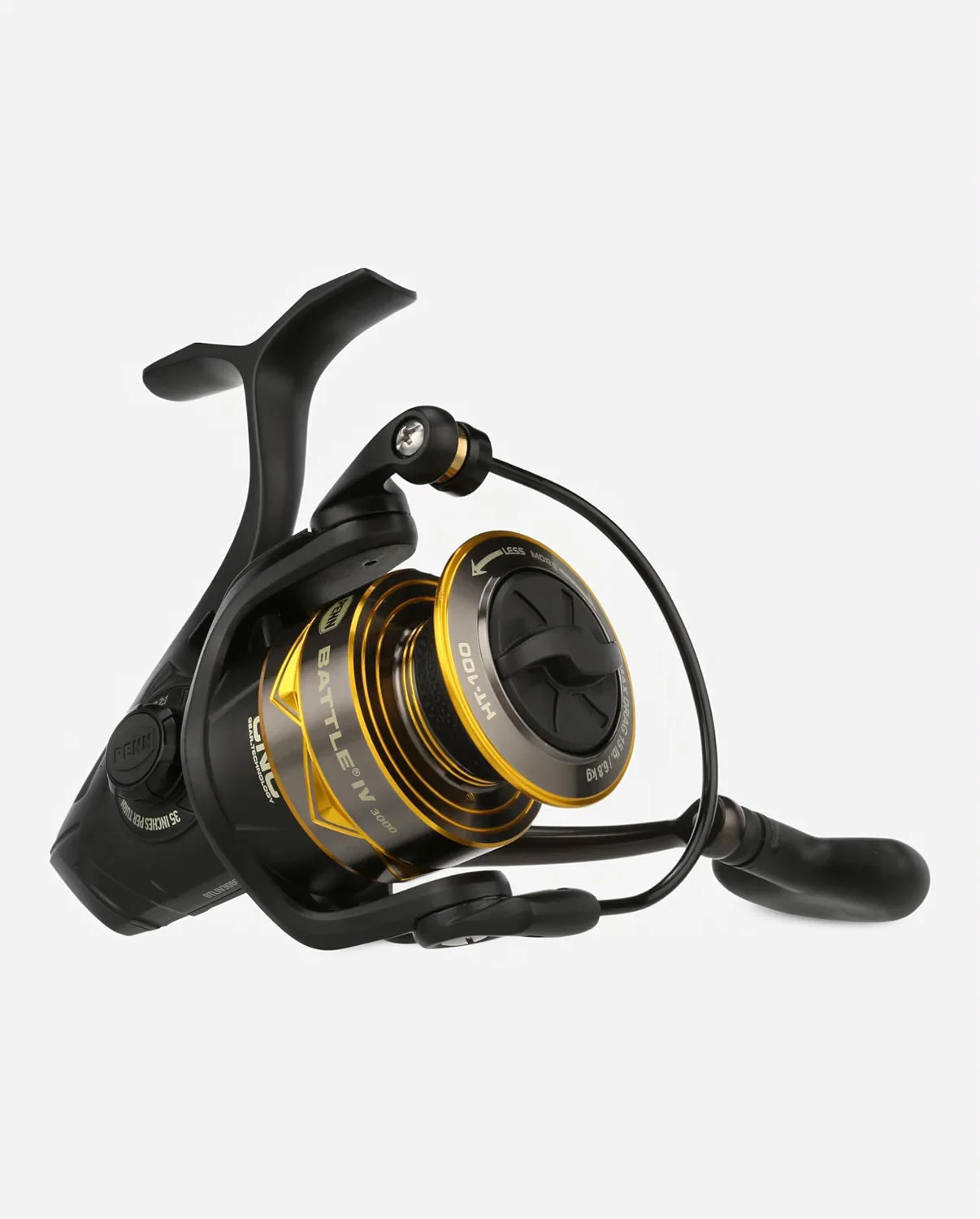
Penn Battle IV Spinning Reel
- Body:
- Full metal
- Drag:
- HT-100 carbon fibre
- Best for:
- Surf, inshore, pier
The Battle is the reel you see on more piers and surf rods than anything else, and the reasons are structural. It has a full metal body, which means the frame does not flex and let the gears wander out of alignment when a big fish loads it up, and it uses Penn's HT-100 carbon fibre drag washers, which is the part that actually matters when a red or a striper takes off. A drag that starts smoothly rather than sticking and then letting go is the difference between a landed fish and a popped leader. It is heavier than a comparable freshwater reel and it does not feel refined in the hand, but it is not built to feel refined, it is built to be dropped on a jetty and fished again.
- Full metal body resists flex under heavy load
- HT-100 carbon fibre drag starts smoothly under pressure
- Built for surf, pier and inshore abuse
- A wide range of sizes up to serious saltwater weights
- Heavier than a comparable freshwater reel
- Less refined feel than a Stradic
- Overbuilt for light freshwater work
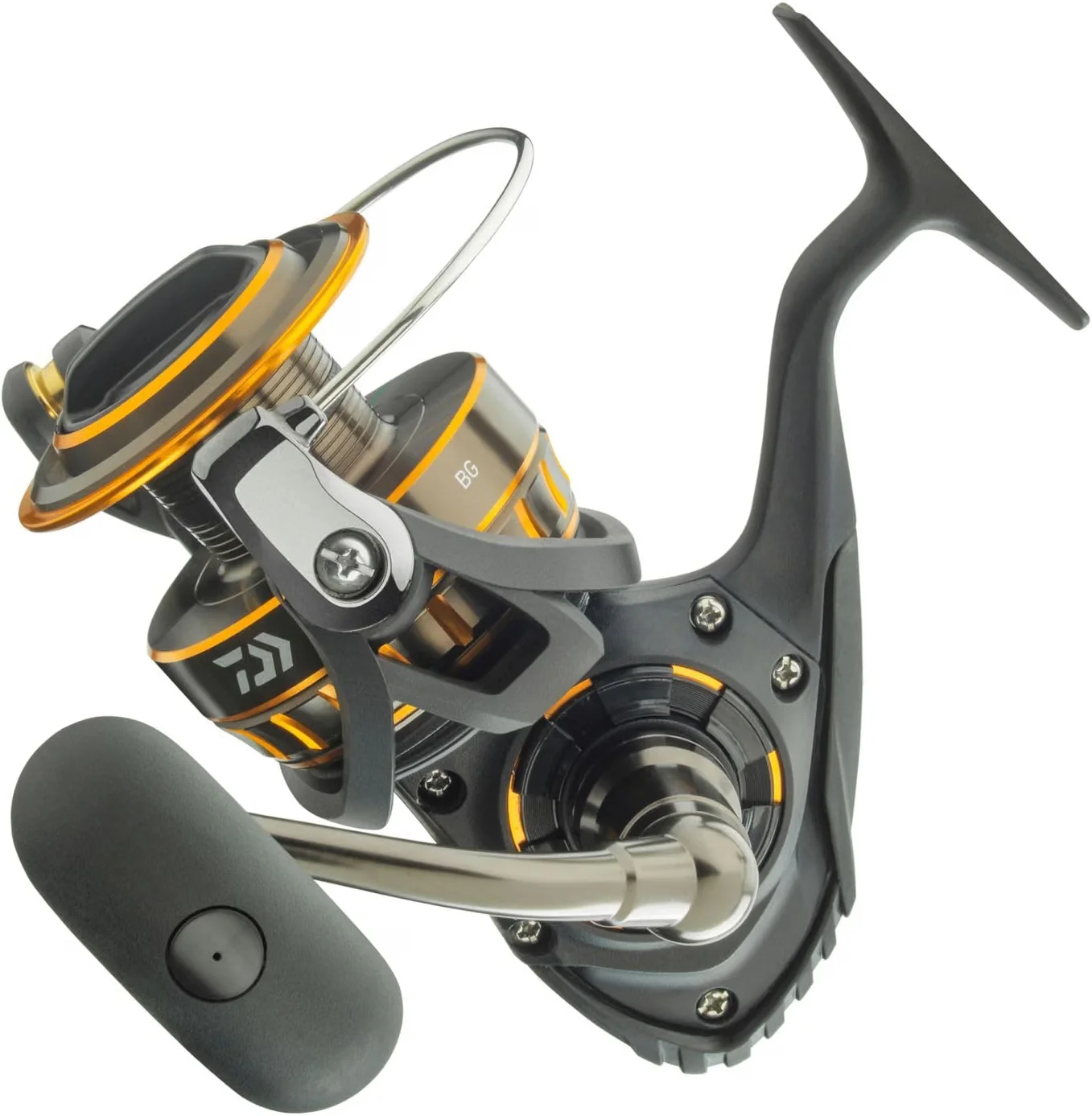
Daiwa BG Spinning Reel
- Body:
- Aluminium
- Gearing:
- Digigear
- Best for:
- Inshore and light offshore
The BG has an almost cult following among inshore anglers and the reason is that it delivers an aluminium body at a price where competitors are still using graphite. That single material choice is what keeps a reel rigid when a fish is pulling hard, and rigidity is what protects the gear mesh over time. Combined with Daiwa's Digigear gearing it produces a reel that feels solid rather than clever, and solid is the correct target in salt. It is not the lightest reel in its class and the handle knob is the part people most often replace, but as a piece of engineering value in a corrosive environment it is very hard to argue with.
- Aluminium body at a price where rivals use graphite
- Rigid under load, which protects the gear mesh
- Strong reputation among inshore saltwater anglers
- Sizes that scale up to light offshore work
- Heavier than premium reels of the same size
- Handle knob is a common upgrade
- Feel is solid rather than refined
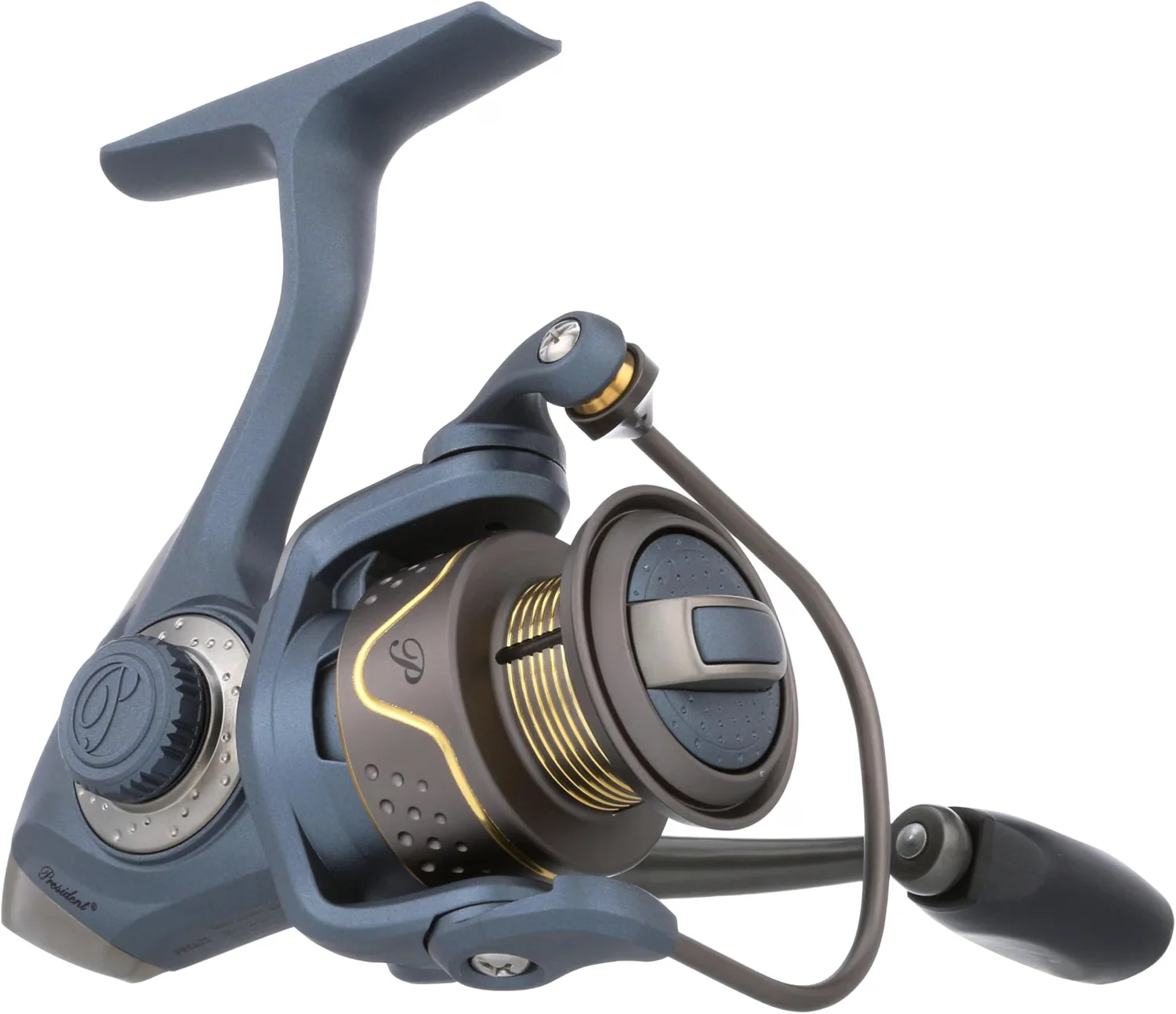
Pflueger President Spinning Reel
- Body:
- Graphite
- Drag:
- Sealed
- Best for:
- Trout, panfish, bass
The President has been the sensible freshwater recommendation for a very long time, and it earns that with a sealed drag and a light graphite body at a price that leaves budget for the rod. Sealed matters more than the marketing makes it sound: an open drag stack takes in grit and water and starts to stutter, and a stuttering drag on four-pound line is how trout get lost. Light weight matters too, because a freshwater spinning reel is usually being held and worked all day rather than sitting in a rod holder. It is not a saltwater reel and should not be treated as one, but for trout, panfish and general bass fishing it is close to the ideal balance of price and quality.
- Sealed drag stays consistent as it gets used
- Light graphite body suits all-day lure fishing
- Well matched to light line and small lures
- The long-standing sensible freshwater buy
- Graphite body flexes more than aluminium under heavy load
- Not built for regular saltwater use
- Small sizes only really suit light tackle
KastKing Sharky III Spinning Reel
- Sealing:
- Water-resistant design
- Best for:
- First reel, backups
- Range:
- Wide
The Sharky III is the budget reel that most often gets described as punching above its price, and the sensible way to read that is not that it matches a Stradic but that it does the important things adequately for a fraction of the money. It has a water-resistant design, which is unusual at this price and is the feature that most affects how long a cheap reel lasts, and it comes in a wide enough range of sizes to build several rods around. This is the right answer for a first setup, for a rod you leave in the truck, or for a backup that has to work on the one day the good reel fails. Look after it rather than abuse it and it will do a lot more than it cost.
- Water-resistant design at a genuinely low price
- Wide size range, so a whole rack can be built on it
- Good first reel or backup
- Perfectly capable for general freshwater fishing
- Does not hold its smoothness like a premium reel
- Heavier than better reels of the same size
- Not a reel to leave dirty after a salt trip
How to choose a spinning reel
- Ignore the bearing count: ten cheap bearings are worse than five good ones, and the number tells you nothing about the drag or the body, which are the two things that decide whether a reel is good.
- The drag is the most important component: what matters is whether it starts moving smoothly rather than sticking and then releasing in a jerk. That initial stick is what breaks leaders on the first run of a good fish.
- Match the size to the line, not the fish: a 1000 to 2500 covers trout, panfish and finesse bass, 2500 to 4000 covers general bass and light inshore, and 4000 and up is where surf and serious saltwater start. Balance it against the rod so the outfit does not feel tip-heavy.
- Metal body for salt, graphite for light freshwater: an aluminium body resists the flex that pulls gears out of alignment under load, while graphite is lighter and cheaper and perfectly right for trout and panfish.
- Rinse a saltwater reel after every trip: a light freshwater rinse, not a pressure hose, which drives salt past the seals. This does more for reel life than any feature on the box.
- Back the drag off in storage: leaving it wound tight compresses the washers and is the easiest avoidable way to ruin the one component that matters most.
Frequently asked questions
- What size spinning reel do I need?
- Match it to the line and the rod rather than to the fish. A 1000 to 2500 suits trout, panfish and finesse bass on light line; 2500 to 4000 covers general bass fishing and light inshore saltwater; 4000 and above is where surf and heavier saltwater work begins. The outfit should balance in the hand rather than feel tip-heavy.
- Do more ball bearings mean a better reel?
- No. Bearing count is one of the least useful numbers on the box, because it says nothing about bearing quality or where they sit. A reel with fewer, better bearings and a good drag will outperform one advertising a high count. Judge a reel on drag smoothness and body rigidity instead.
- Can you use a freshwater spinning reel in saltwater?
- Once or twice with a thorough freshwater rinse afterwards, yes. Regularly, no. Salt attacks bearings, gears and drag washers, and a reel that is not sealed for it will get rough quickly. If you fish salt more than occasionally, buy a reel built for it.
- What is a good gear ratio for a spinning reel?
- A ratio around the middle of a manufacturer's range is the versatile choice, because it retrieves fast enough for moving baits and slowly enough for jigs. Higher ratios suit picking up slack quickly with topwater and jerkbaits; lower ratios give more torque for deep cranking and heavy jigs.
- How do you stop a spinning reel from twisting line?
- Most line twist comes from closing the bail with the handle after the line has gone slack, from reeling against the drag while a fish is taking line, and from lures that spin. Close the bail by hand, stop reeling when the drag is giving line, and use a swivel with inline spinners.
- How often should a spinning reel be serviced?
- A rinse after every saltwater trip, a wipe-down and a check of the drag at the end of a season, and a proper strip and grease every year or two for a reel in heavy use. Backing the drag off during storage is the single easiest thing you can do to make the washers last.
The bottom line
The Shimano Stradic is the reel to buy if you want one that will still feel right in five years, and the Penn Battle IV is the one to buy if it is going to live near salt and get treated accordingly. The Daiwa BG is the value pick for inshore, the Pflueger President is the sensible freshwater all-rounder, and the KastKing Sharky III is the honest budget answer for a first setup. Whichever you pick, spend the extra on the drag rather than on extra bearings.
ChronicAnglers is reader-supported. When you buy through links on our site, we may earn an affiliate commission at no extra cost to you.