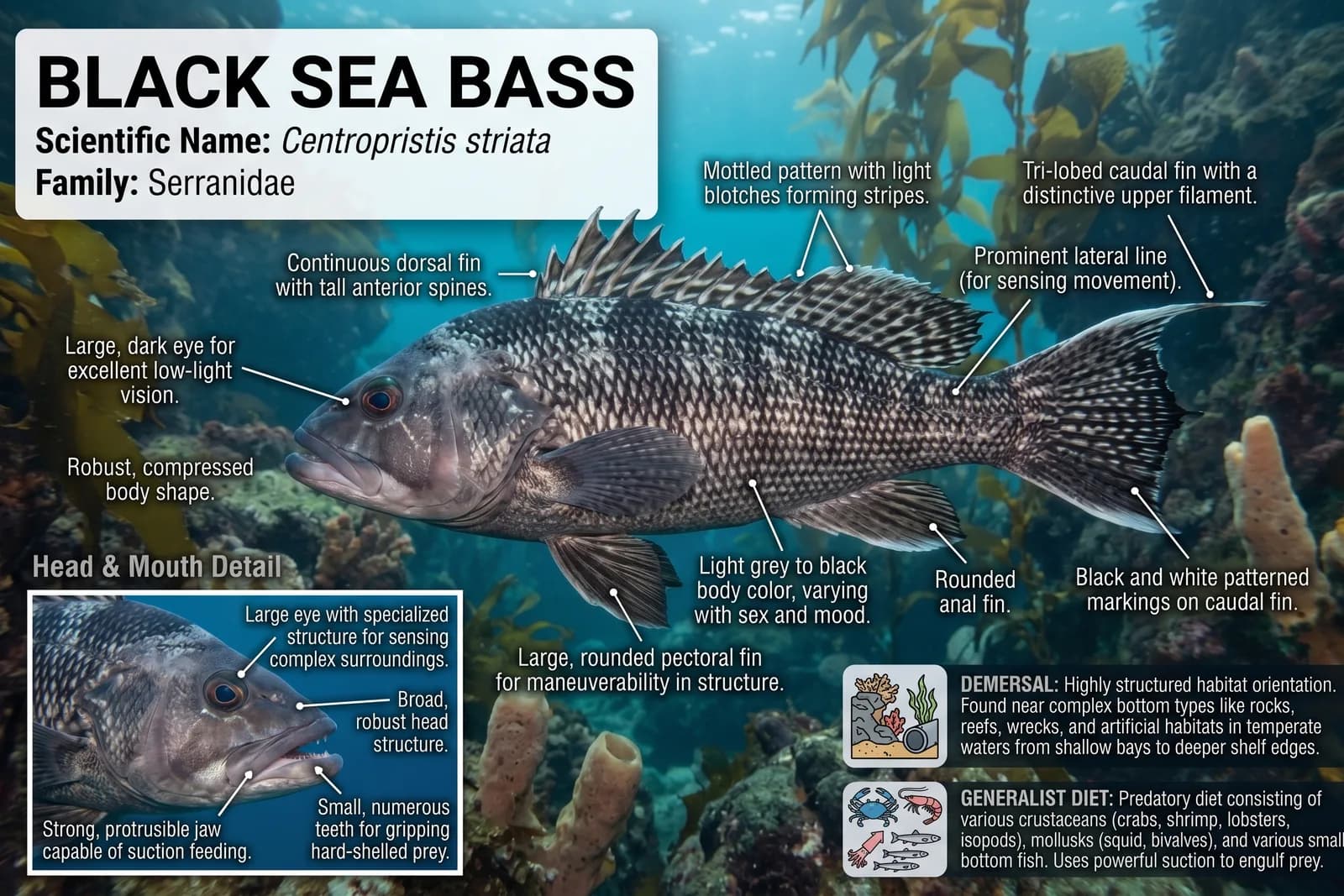
Black Sea Bass
Centropristis striata · Serranidae
Also known as: Sea bass, Blackfish (regional)
A structure-loving bottom fish with a genuinely unusual life history: NOAA describes black sea bass as protogynous hermaphrodites, meaning most start out as females and become males as they grow.
- Typical size
- Most keepers are 1-3 lb
- Max size
- NOAA records slow growth up to 2 feet and 9 pounds. Females live up to 8 years, males up to 12.
- Water
- Saltwater
- Best season
- Spring inshore and autumn offshore in the Mid-Atlantic, following the seasonal migration.
Identification
Typically black, with dusky brown colouring in smaller fish and a belly slightly paler than the sides. Fins are dark with dusky spots, and the dorsal fin carries a series of white spots and bands. Dominant males turn bright blue at spawning time and develop a blue hump on the head.
Habitat & Range
Structured ground such as reefs, wrecks and oyster beds, in temperate and subtropical water.
The US East Coast from Cape Cod to the Gulf. Mid-Atlantic fish move inshore into coastal areas and bays in spring and offshore in autumn; South Atlantic fish migrate far less.
Diet & Feeding
Crabs, shrimp, worms, small fish and clams.
Spawning windowSource-verified
- Run begins
- Jan 1
- Ends
- Jul 31
NOAA reports spawning in coastal areas from January through July. The species is a protogynous hermaphrodite, so most fish begin life as females and become male as they mature and grow, which is why size limits carry unusual weight for this species. No agency spawning temperature was found, so none is published.
Timing is modelled for a mid-latitude reference population — fish the thermometer, not the calendar. Based on 1 cited source.
How to Catch
Fish tight to structure and expect to lose tackle, because that is where they live. Since most large fish are males, releasing the big ones has a different meaning here than it does for most species.
Best techniques
- Bottom fishing over structure
- Light jigging
- Wreck and reef fishing
Lures & baits
- Squid strips
- Clam
- Small jigs
- Cut bait
Best season: Spring inshore and autumn offshore in the Mid-Atlantic, following the seasonal migration.