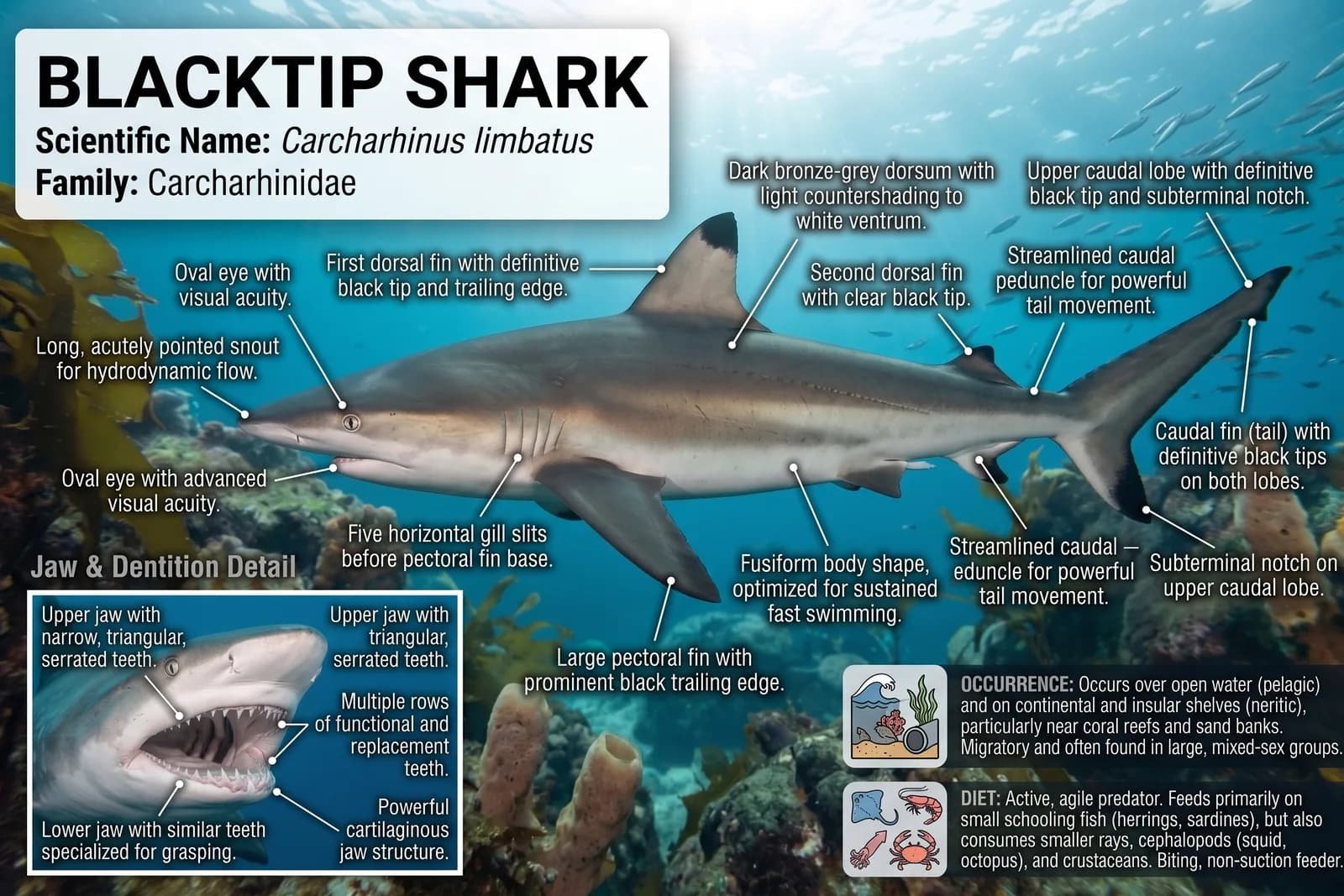
Blacktip Shark
Carcharhinus limbatus · Carcharhinidae
Also known as: Blacktip
One of the most commonly encountered coastal sharks for US surf and inshore anglers, and a fishery with real federal paperwork attached. NOAA requires an HMS permit with a shark endorsement before you may fish for sharks recreationally.
- Typical size
- Commonly 4-5 ft
- Max size
- NOAA sets a recreational minimum retention size of 54 inches fork length, which gives a sense of the size class involved.
- Water
- Saltwater
- Best season
- Warm months, following bait along the beaches.
Identification
A streamlined grey shark with black tips on the pectoral, dorsal and lower tail fins. Frequently confused with the spinner shark, which also leaps and spins; the anal fin tip is the usual separator, black on a spinner and not on a blacktip.
Habitat & Range
Shallow coastal water, surf zones, bays and nearshore reefs.
Warm coastal waters of the US Atlantic and Gulf.
Diet & Feeding
Small schooling fish. Follows bait migrations along the beaches.
Spawning & Reproduction
Sharks bear live young rather than spawning, so no spawning window applies. No agency pupping data is published here.
How to Catch
Read the federal rules before you fish. NOAA requires a valid HMS Angling or Charterboat/Headboat permit plus a shark endorsement; recreational retention of blacktip is 1 total per vessel per trip with a 54 inch fork length minimum; and twenty species are prohibited outright and must be released with minimal injury and without removing them from the water. State rules apply on top. When in doubt, release it in the water.
Best techniques
- Surf fishing with cut bait
- Nearshore drifting
- Fly and lure casting to visible fish
Lures & baits
- Cut mullet and menhaden
- Live baitfish
- Large flies and lures
Best season: Warm months, following bait along the beaches.