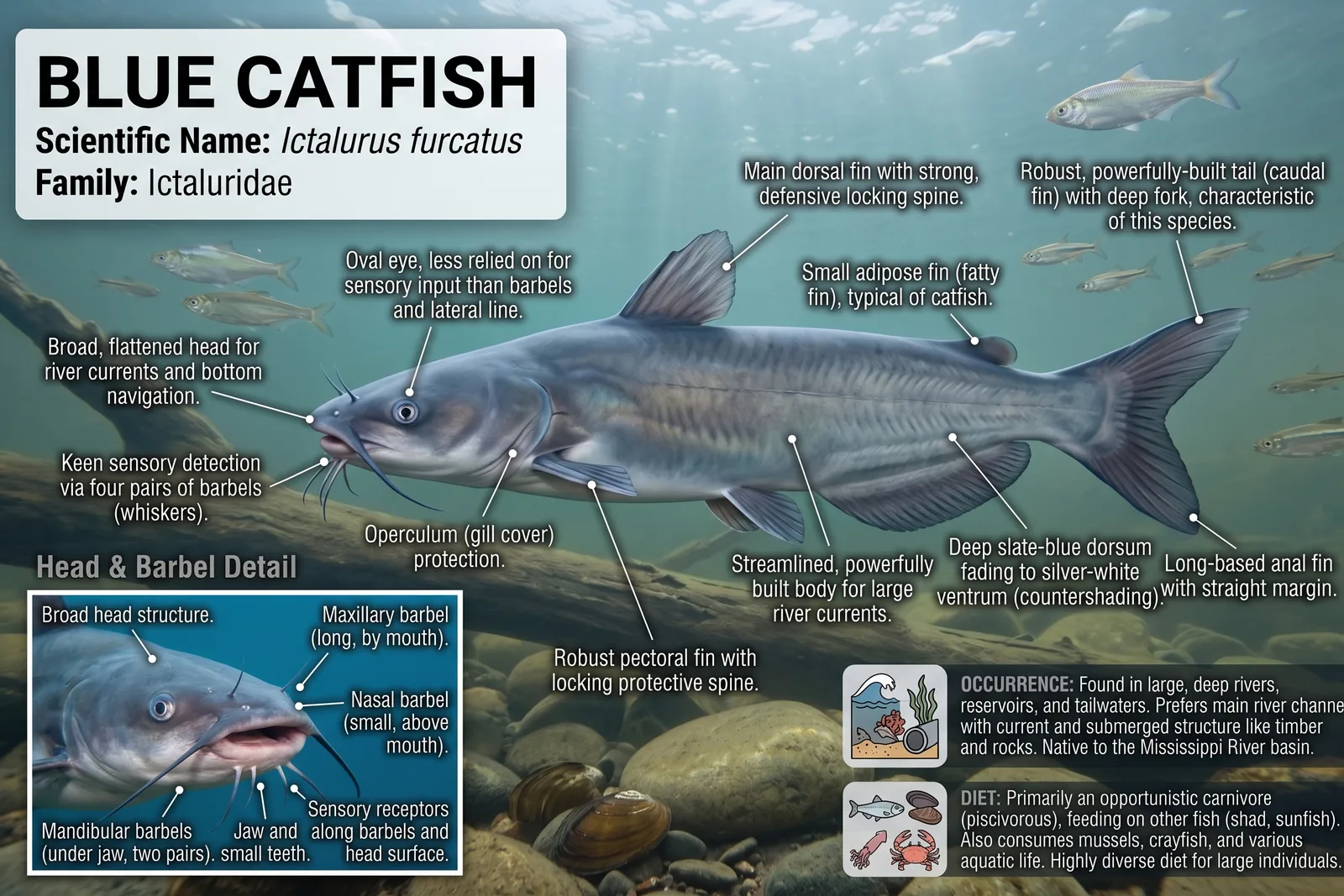
Blue Catfish
Ictalurus furcatus · Ictaluridae
Also known as: Blue cat, Hump-back blue, Chucklehead
The largest catfish in North American fresh water, and the one whose spawning is least well documented — the figures agencies publish for it are usually borrowed from channel catfish.
- Typical size
- 5–30 lb
- Max size
- Can exceed 100 lb — the largest catfish in North America.
- Water
- Freshwater
- Best season
- Year-round; winter and early spring produce the largest fish in tailwaters.
Identification
Forked tail like a channel catfish, but the anal fin runs straight across the bottom where a channel cat's is rounded. That fin is the reliable test. Slate blue to grey above, with no spots on adults.
Habitat & Range
Swift current and deep water in large rivers and reservoirs, typically near dams and main channel structure.
Native to the Mississippi, Missouri and Ohio river systems. In Oklahoma originally limited to the Red River, now widespread through transplanting and established in the Arkansas River system.
Diet & Feeding
Predominantly fish, especially shad, plus crustaceans and molluscs. Takes cut bait readily, unlike flathead.
Spawning & Reproduction
Spawns in late spring and early summer in cavities, in the same general manner as channel catfish. Published agency figures for blue catfish spawning are frequently shared word-for-word with channel catfish, so treat any precise blue-specific temperature or date with caution.
How to Catch
Fish current. Blues sit where moving water concentrates shad, particularly below dams and on main channel edges. Fresh cut shad beats everything, and fresher beats bigger.
Best techniques
- Drift fishing
- Anchored bottom fishing
- Vertical jigging near dams
Lures & baits
- Fresh cut shad
- Skipjack herring
- Gizzard shad
Best season: Year-round; winter and early spring produce the largest fish in tailwaters.