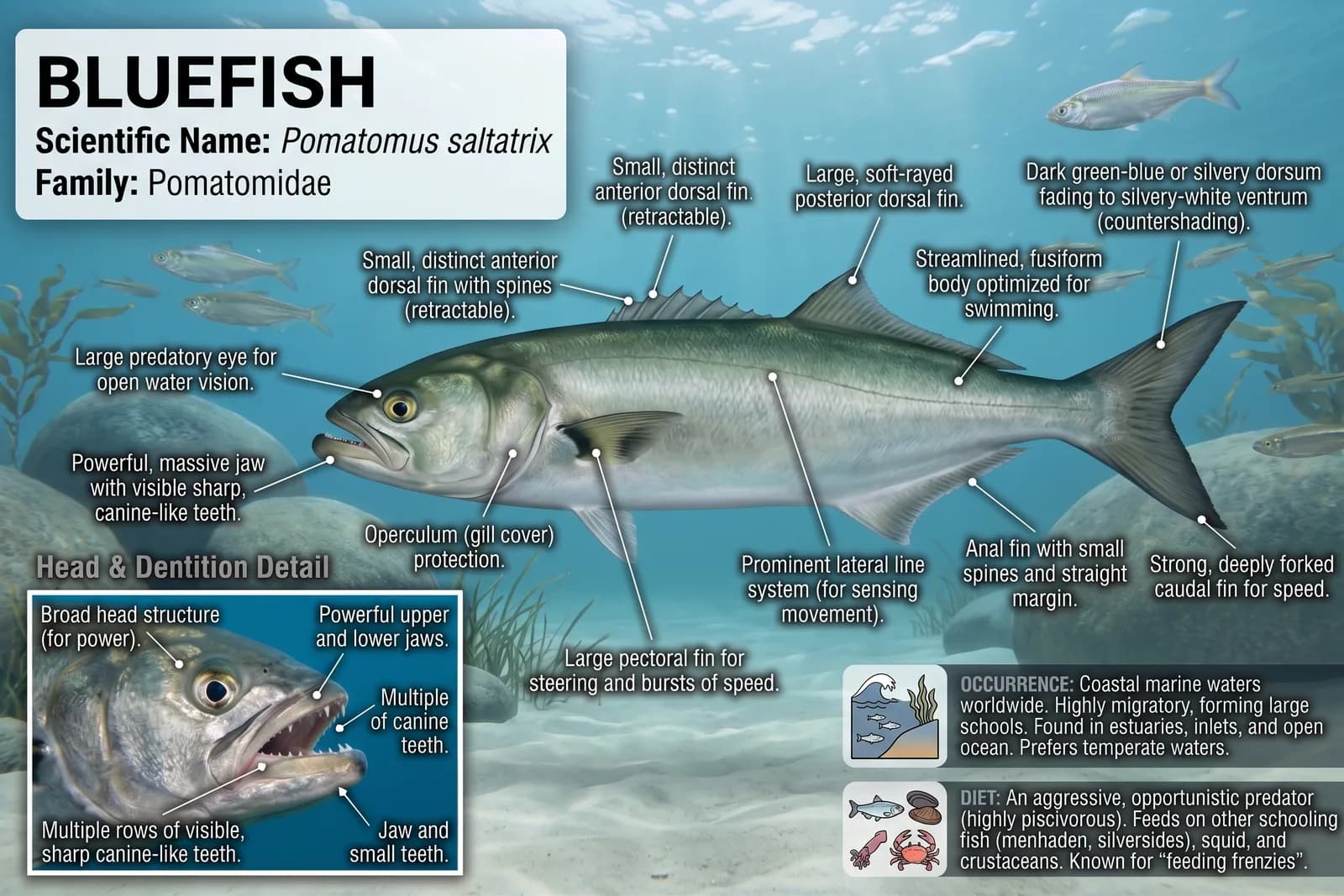
Bluefish
Pomatomus saltatrix · Pomatomidae
Also known as: Blue, Chopper, Snapper blue (juvenile)
A fast, aggressive schooling predator with genuinely dangerous teeth. NOAA describes the bluefish blitz, where large schools attack baitfish near the surface and churn the water like a washing machine.
- Typical size
- Most rod-caught fish are 2-10 lb
- Max size
- NOAA records them up to 31 pounds and 39 inches. They live up to 12 years.
- Water
- Saltwater
- Best season
- Follow the migration: spring and summer northward, autumn southward.
Identification
Blue-green on the back, silvery on the sides and belly, with a prominent jaw carrying sharp, compressed teeth. The teeth are the giveaway, and they are the reason a wire or heavy leader matters.
Habitat & Range
Temperate and tropical coastal oceans worldwide, except the eastern Pacific. Forms large schools and feeds hard at the surface.
Along the US East Coast from Maine to eastern Florida. Migrates seasonally, moving north in spring and summer as water warms and south in autumn and winter into the South Atlantic Bight.
Diet & Feeding
Squid and fish, particularly menhaden and smaller fish such as silversides.
Spawning windowSource-verified
NOAA reports bluefish spawn multiple times across spring and summer, with females releasing eggs in the open ocean and producing between 400,000 and 2 million eggs depending on size. No agency spawning temperature was found, so none is published.
Timing is modelled for a mid-latitude reference population — fish the thermometer, not the calendar. Based on 1 cited source.
How to Catch
Use a wire or heavy leader. Bluefish teeth cut straight through mono and fluorocarbon, and they will take a lure off on the strike. Handle with pliers and keep fingers clear of the mouth even after landing.
Best techniques
- Casting metal into surface blitzes
- Surfcasting
- Trolling
- Live-lining bait
Lures & baits
- Metal jigs and spoons
- Poppers
- Cut bunker or menhaden
- Live baitfish
Best season: Follow the migration: spring and summer northward, autumn southward.