Flounder
Paralichthys albigutta · Paralichthyidae
Also known as: Gulf flounder, Southern flounder, Summer flounder, Fluke, Doormat
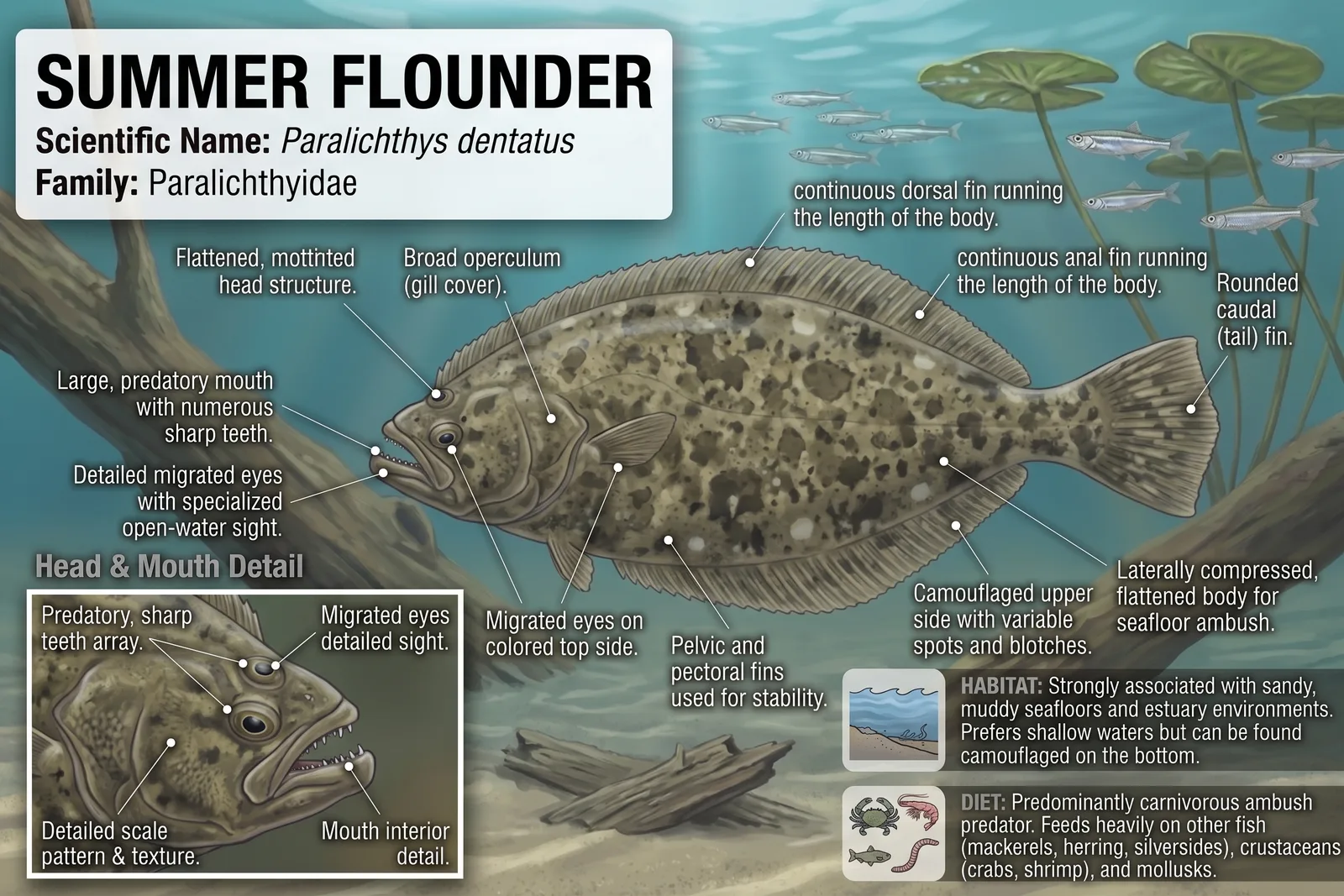
A flatfish that lies on the bottom with both eyes on its left side, ambushing prey that passes overhead. Florida regulates several flounder species together — Gulf, Southern, summer and fringed — under one set of rules.
- Typical size
- 14–18 in, 1–3 lb
- Max size
- Southern flounder over 20 in — a doormat — is a notable fish.
- Water
- Saltwater
- Best season
- Late summer into early autumn before the closure, and again from December once harvest reopens.
Identification
Flat, oval body lying on its right side with both eyes on the left. Gulf flounder carries three prominent dark ocellated spots in a triangle on the upper side. Colour changes to match the bottom, which is why a settled fish is almost invisible.
Habitat & Range
Sand and mud bottom near structure — channel edges, docks, jetties, inlets and the mouths of creeks. Sits buried with only the eyes exposed and ambushes upward.
Both Florida coasts, through the Gulf and up the Atlantic seaboard. Moves offshore to spawn in the colder months, which is what the autumn harvest closure protects.
Diet & Feeding
Small fish, shrimp and crabs taken in a short upward strike from the bottom.
Spawning & Reproduction
Moves offshore in autumn and early winter to spawn. Florida closes recreational harvest 15 October to 30 November over that migration. No agency spawning temperature was found, so none is published.
Spawning timing by location
Spawning tracks water temperature, so the calendar shifts with latitude and elevation. These break flounder timing down by state and water body.
- How to Catch Flounder in Florida
Flounder lie buried on sand next to structure and ambush upward, so the whole technique is keeping your bait on the bottom and moving slowly. The rule worth knowing before you plan an autumn trip: Florida closes flounder harvest from 15 October to 30 November, right when the fish are moving.
How to Catch
Flounder strike upward and then hold. Give it a moment before setting the hook, and fish slowly enough to stay on the bottom — a jig that never touches sand will never be seen.
Best techniques
- Slow-dragging a jig along the bottom
- Drifting live bait on a fish-finder rig
- Working dock and jetty edges
- Gigging in shallow water at night, where legal
Lures & baits
- Live mud minnows
- Finger mullet
- Live shrimp
- Soft-plastic paddle tails on a light jig head
- Bucktail jigs
Best season: Late summer into early autumn before the closure, and again from December once harvest reopens.