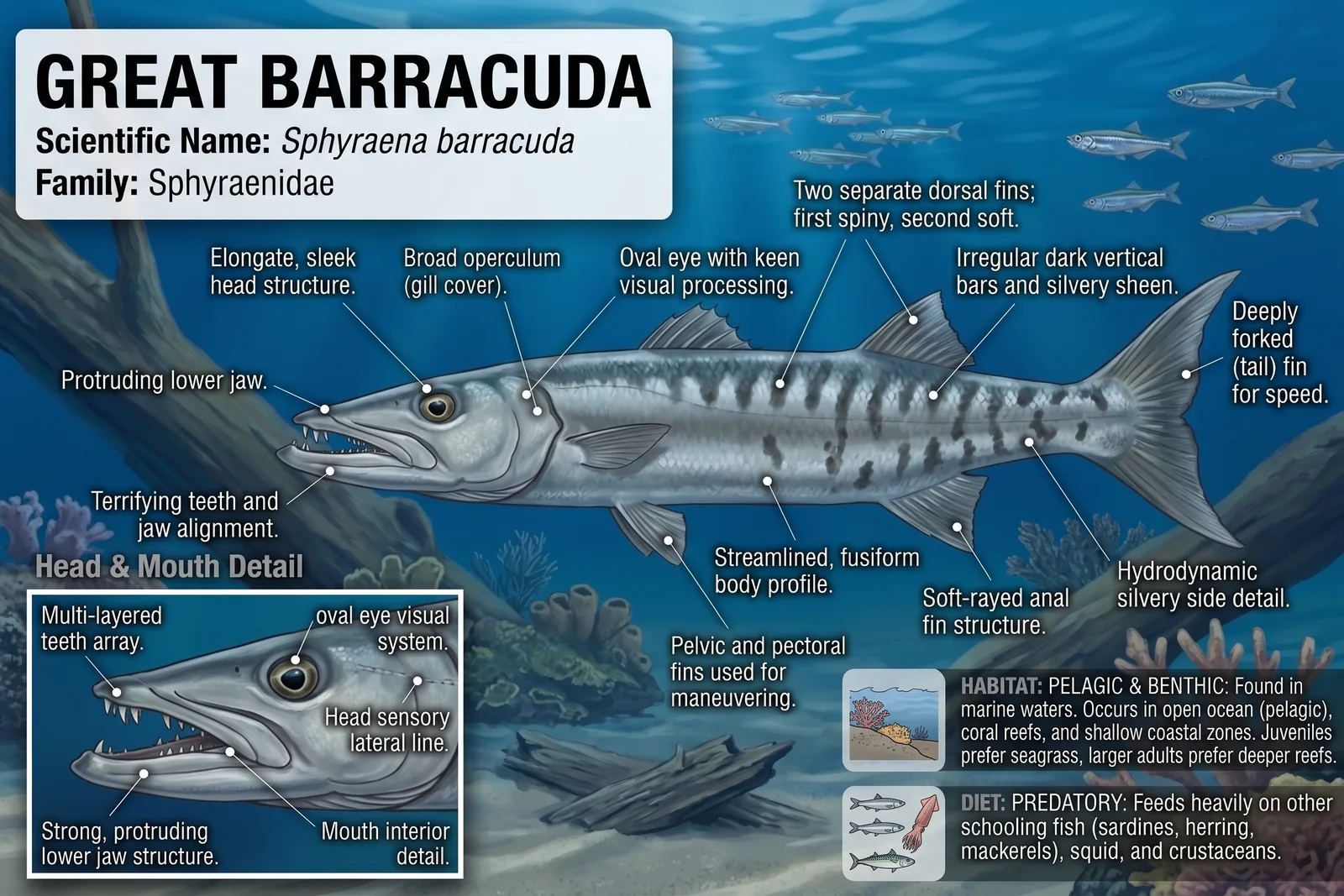
Great Barracuda
Sphyraena barracuda · Sphyraenidae
Also known as: Cuda, Barracuda
A top reef predator built entirely for speed, and one of the few sport fish that comes with a genuine food-safety warning attached.
- Typical size
- Most fish encountered are 5-20 lb
- Max size
- FWC records them up to 106 pounds.
- Water
- Saltwater
- Best season
- Year-round in warm water; sight-fishing is best on clear, calm flats.
Identification
Grey with a greenish cast on the back shading to a lighter belly, a mouth full of prominent sharp teeth, and a lower jaw that protrudes past the upper. Black blotches on the lower sides. Young fish carry a dark stripe along the side that breaks into blotches with age.
Habitat & Range
Inshore to offshore. Juveniles use seagrass beds and estuaries as nursery ground, moving to inshore and nearshore reefs as they mature.
Warm Atlantic waters including Florida and the Caribbean.
Diet & Feeding
Fishes, squid and shrimp. FWC describes it as a top predator in reef areas.
Spawning & Reproduction
No agency spawning window or temperature was found for Florida, so none is published.
How to Catch
FWC warns plainly that consuming larger barracuda may cause ciguatera poisoning, a toxin that accumulates in large, long-lived reef predators and is not destroyed by cooking. Many anglers release them for that reason alone. Use a wire trace, because the teeth cut everything else, and keep hands well clear.
Best techniques
- Fast retrieves with tube lures
- Casting to visible fish on the flats
- Live-baiting on reefs
Lures & baits
- Tube lures
- Fast-moving plugs
- Live baitfish
Best season: Year-round in warm water; sight-fishing is best on clear, calm flats.