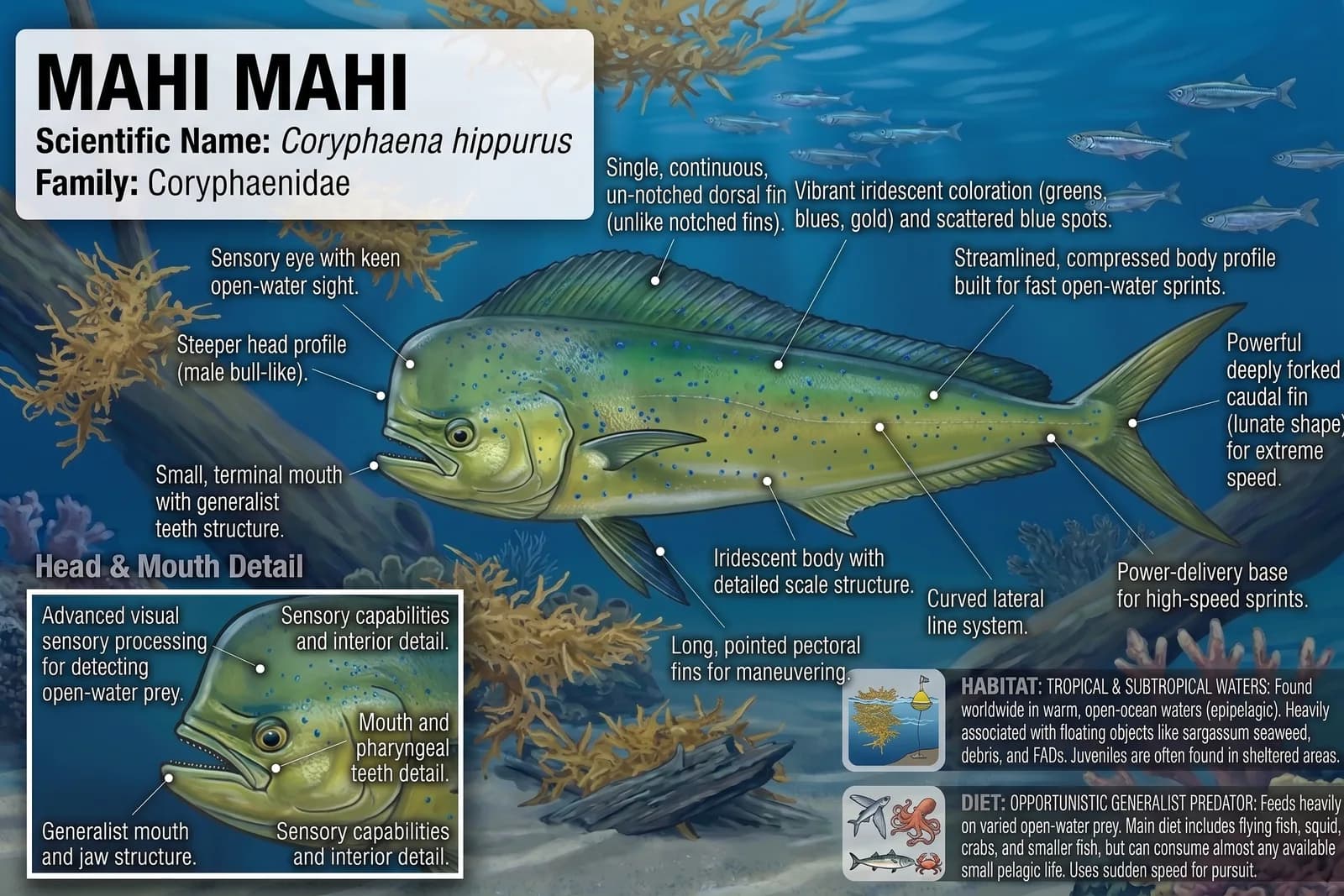
Mahi Mahi
Coryphaena hippurus · Coryphaenidae
Also known as: Mahimahi, Dolphinfish, Dolphin, Dorado
One of the fastest-growing fish in the ocean and among the most spectacular to look at. NOAA notes the brilliant colouring fades almost immediately after harvest.
- Typical size
- Most rod-caught fish are 5-25 lb
- Max size
- NOAA records them up to almost 7 feet and 88 pounds. They live up to 5 years and can exceed 4 feet in their first year.
- Water
- Saltwater
- Best season
- Warm months, following blue water and weed lines closer to shore.
Identification
Electric greenish-blue back, gold or sparkling silver lower body, and sides mixing dark and light spots. Males have a square, blunt head; females a rounded one.
Habitat & Range
Tropical and subtropical water near the surface, frequently around floating weed lines and debris. Juveniles school; larger males prefer open ocean.
The Atlantic, Gulf and Caribbean, caught from Massachusetts to Texas.
Diet & Feeding
A wide range, including small pelagic fish, juvenile tuna, invertebrates, billfish, jacks, pompano, and the pelagic larvae of nearshore bottom-living species.
Spawning & Reproduction
NOAA reports mahi mahi reach maturity at just 4 to 5 months old and are believed to spawn every 2 to 3 days through the spawning season, releasing 33,000 to 66,000 eggs each time. Because spawning is near-continuous rather than seasonal, no discrete spawning window is published here.
How to Catch
Keep one hooked fish in the water beside the boat and the rest of the school will often stay with it, giving everyone aboard a shot. Their extreme growth rate and five-year life mean populations turn over unusually fast.
Best techniques
- Trolling weed lines and debris
- Casting to visible fish
- Live-baiting
Lures & baits
- Trolled ballyhoo
- Skirted lures
- Live pilchards
- Bucktail jigs
Best season: Warm months, following blue water and weed lines closer to shore.