When Do Catfish Spawn in Oklahoma?
Oklahoma channel catfish spawn in late May or early June, when water hits 75°F. Flatheads run later — into July — even though the state's field guide gives all three species the same dates.
Published
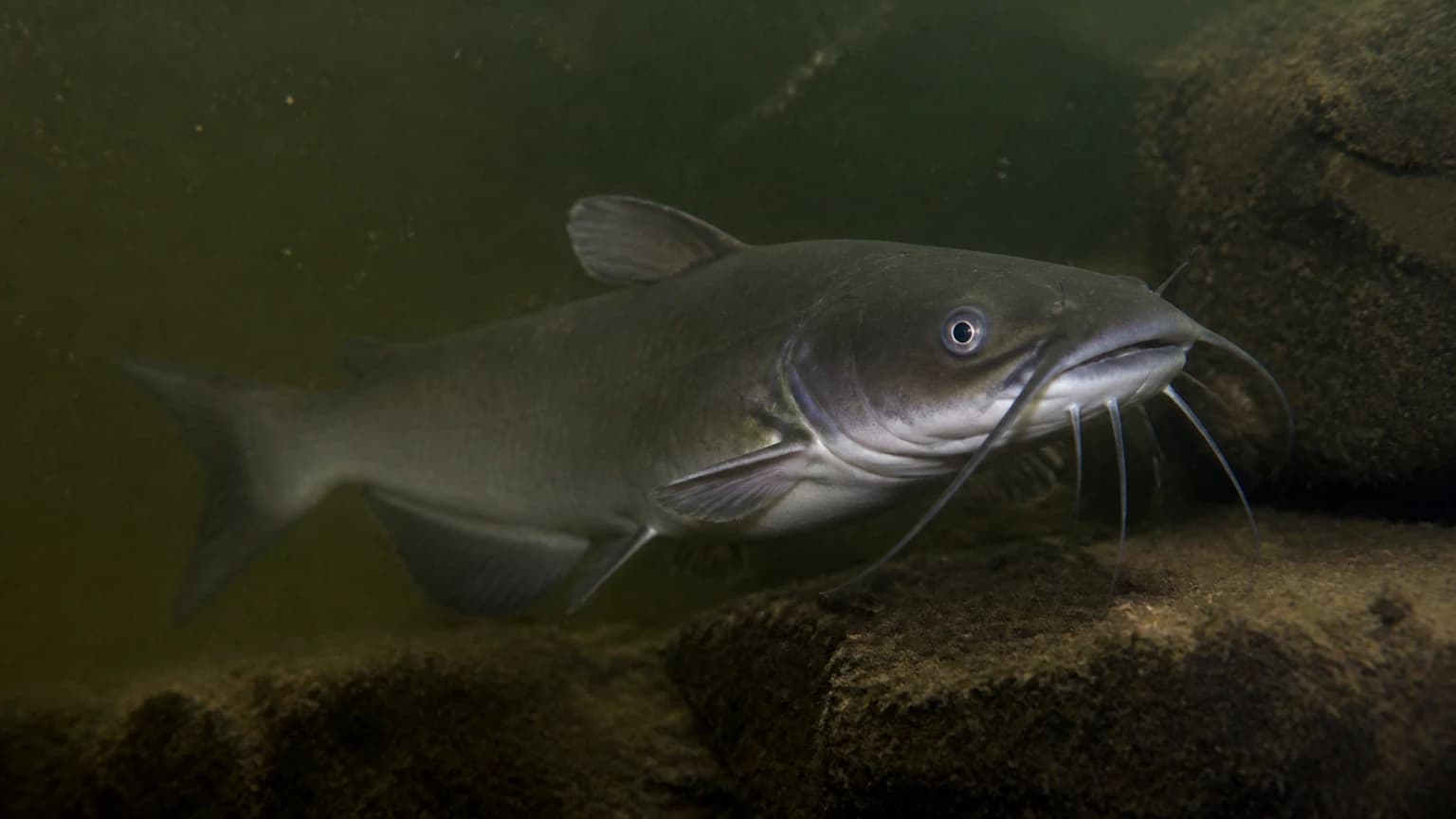
Oklahoma's Department of Wildlife Conservation puts the catfish spawn at late May or early June, when water reaches 75°F. That is a good answer for channel catfish. For flatheads it is about a month early — and the reason is worth understanding.
A caution about the state's own numbers
ODWC publishes a field guide page for each catfish species. The spawning text on the channel, flathead and blue catfish pages is word for word identical:
"Spawning usually takes place in late May or early June when the water temperature reaches 75 degrees F." … "Females lay about 10,000 eggs each." … "Eggs hatch in six to 10 days as determined by temperature."
Three species, one paragraph. That is shared boilerplate rather than three separate findings, and two things give it away.
First, Missouri's conservation department explicitly contradicts it, stating that flathead catfish spawn "somewhat later than the channel catfish" — late June and July, against late May through June for channels.
Second, the egg count is wrong for flatheads by an order of magnitude. MDC describes the flathead egg mass as "a compact, golden yellow mass that may contain 100,000 eggs or more." ODWC's 10,000 is a channel catfish figure.
None of this makes ODWC unreliable — the 75°F and 10,000-egg figures are entirely plausible for channel catfish, which is what this page uses them for. It just means you should not read the flathead page as flathead-specific data. Most articles about Oklahoma catfish do exactly that.
What actually happens, and when
| Species | Spawning | Confidence |
|---|---|---|
| Channel catfish | Late May – early June, at 75°F | Good — ODWC, species-appropriate |
| Flathead catfish | Late June – July | Good, but sourced from Missouri, not Oklahoma |
| Blue catfish | Late spring to early summer, in cavities | General only — no reliable blue-specific figure exists |
Oklahoma's south-to-north spread and its mix of shallow reservoirs and big rivers move all of this by a week or two. Shallow ponds and the southern reservoirs hit 75°F well before the northern impoundments and the deeper main-channel water.
Nest sites, and the riprap shortcut
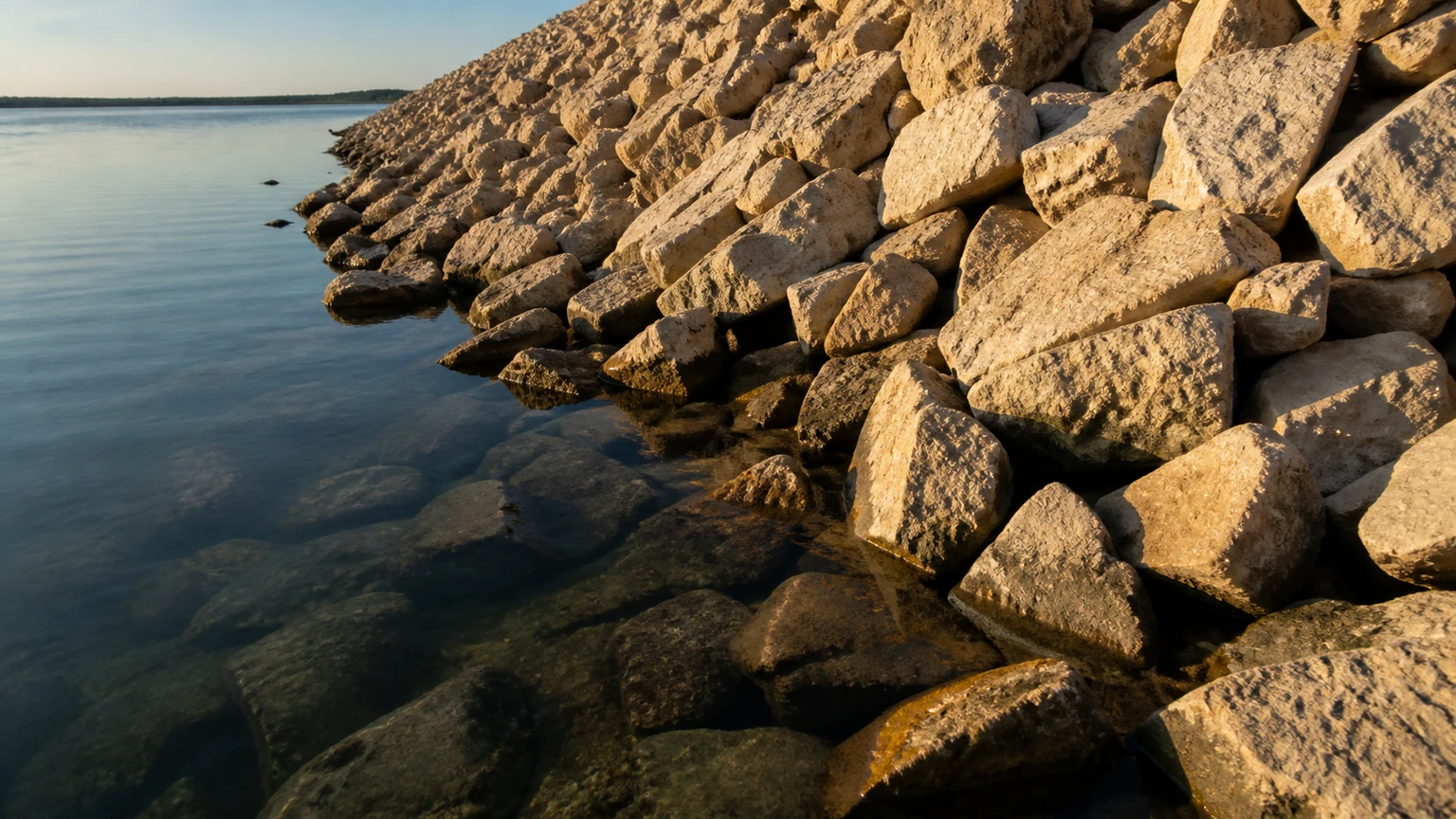
ODWC names the cavity types precisely: hollow logs, overhanging underwater ledges, or holes under mud banks.
The practical shortcut is the same everywhere catfish spawn — rock riprap. Causeways, bridge abutments, dam faces and reinforced banks are full of the enclosed gaps a spawning channel catfish wants, and unlike a hollow log you can find them from the road. Missouri's agency names riprap shorelines directly as where larger channel catfish spawn.
Once the eggs are down, the male guards them against intruders, including the female. Eggs hatch in six to ten days depending on temperature, and the male briefly tends the fry as they feed in a dense school.
That guarding behaviour is why spawning channel cats are frustrating to fish for: the male will not leave the cavity. Fish the approaches and the edges rather than the hole itself, and fish after dark.
The flathead shutdown
If you fish for flatheads, this is the most useful thing on this page.
Missouri's conservation department documents that flatheads "feed heavily before and after spawning but seldom feed while actively spawning," and "generally don't bite well during that time."
Flatheads exceed 100 pounds in Oklahoma and are a genuine trophy fishery. Planning around their spawn is worth more than any tackle decision:
- June — pre-spawn, feeding heavily, staging near the cavities. The best window of the year.
- Late June into mid-July — the shutdown. Target channel cats or blues.
- Late July into autumn — back on the feed hard, and cooling water concentrates them in deep holes.
Flatheads eat live fish and crayfish almost exclusively, with mussels, snails and insects occasionally, and rarely touch cut or prepared bait. Live bluegill or green sunfish, at night, tight to brushy tangles, submerged logs and undercut banks in the larger pools and deep holes.
Blue catfish: where they came from
ODWC has a nice piece of Oklahoma-specific history here. Blue catfish were originally limited to the Red River. They now occupy most of the state through deliberate transplanting, and have become established in the Arkansas River system.
They can exceed 100 pounds — the largest catfish in North America — and they want current, sitting where moving water concentrates shad, particularly below dams.
Identifying them matters, because they look like a channel catfish at a glance. Both have a deeply forked tail. The difference is the anal fin: straight across the bottom on a blue, rounded on a channel.
Telling the three apart
| Tail | Anal fin | Head | |
|---|---|---|---|
| Channel | Deeply forked | Rounded | Normal |
| Blue | Deeply forked | Straight across | Normal |
| Flathead | Squared | — | Broad, flattened, lower jaw projecting |
Check the current Oklahoma fishing regulations for limits on the water you are fishing.
Sources
- Catfish, Channel — Oklahoma Department of Wildlife Conservation — late May or early June at 75°F; hollow logs, overhanging underwater ledges and holes under mud banks; about 10,000 eggs; hatching in six to ten days; the male guarding eggs against intruders including the female, and tending the fry.
- Catfish, Flathead — ODWC — size beyond 100 lb; diet of live fish and crayfish plus mussels, snails and insects; habitat in larger pools and deep holes among brushy tangles, submerged logs and undercut banks.
- Catfish, Blue — ODWC — the straight anal fin; original restriction to the Red River and subsequent establishment through the Arkansas River system.
- Flathead Catfish — Missouri Department of Conservation field guide — flatheads spawning late June and July, later than channel catfish; the golden-yellow mass of 100,000 or more eggs.
- Hunting Flathead Catfish — Missouri Conservationist — flatheads feeding heavily before and after spawning but seldom during it.
- Channel Catfish — Ohio DNR — spawning beginning near 70°F.
Flathead spawning timing on this page is sourced from Missouri, not Oklahoma, for the reason set out at the top: ODWC's flathead page carries the same spawning paragraph as its channel and blue catfish pages. No blue-catfish-specific spawning temperature or date is asserted.
Frequently asked questions
- When do catfish spawn in Oklahoma?
- Oklahoma's Department of Wildlife Conservation gives late May or early June, when water temperature reaches 75°F. That figure is sound for channel catfish. Flathead catfish spawn later — Missouri's agency documents them in late June and July, distinctly after channel catfish.
- What temperature do catfish spawn at in Oklahoma?
- ODWC gives 75°F. Neighbouring agencies put channel catfish a little lower — Ohio DNR reports spawning beginning near 70°F — so the low-to-mid 70s is the working range.
- Do all three catfish species spawn at the same time in Oklahoma?
- Almost certainly not, despite ODWC publishing the same dates for all three. Missouri's conservation department states plainly that flathead catfish spawn somewhat later than channel catfish, and gives late June and July for flatheads against late May through June for channels.
- Where do Oklahoma catfish nest?
- ODWC names hollow logs, overhanging underwater ledges and holes under mud banks. Rock riprap on causeways, bridge abutments and dam faces offers the same enclosed cavities and is far easier to locate.
- Where did Oklahoma's blue catfish come from?
- They were originally limited to the Red River. ODWC notes they now occupy most of the state through intentional transplanting, and have become established in the Arkansas River system.
Gear for this
 AccessoriesCheck price on Amazon
Stream & Lake Water Thermometer
The one piece of kit every spawn article on this site tells you to carry.
 HooksCheck price on Amazon
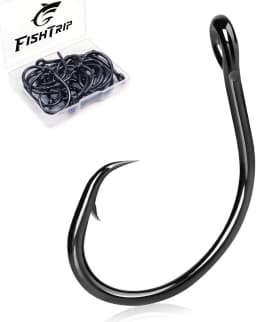
FishTrip Inline 5X Strong Circle Hooks
For bait sitting still in a cavity — and for releasing the big ones alive.
- Check price on Amazon

ChronicAnglers is reader-supported. When you buy through links on our site, we may earn an affiliate commission at no extra cost to you.