When Do Largemouth Bass Spawn in Ohio?
Ohio largemouth bass spawn from mid-April to mid-June. Males start building at 58–60°F and spawning follows at 60–65°F — always in water with no current and no wave action.
Published
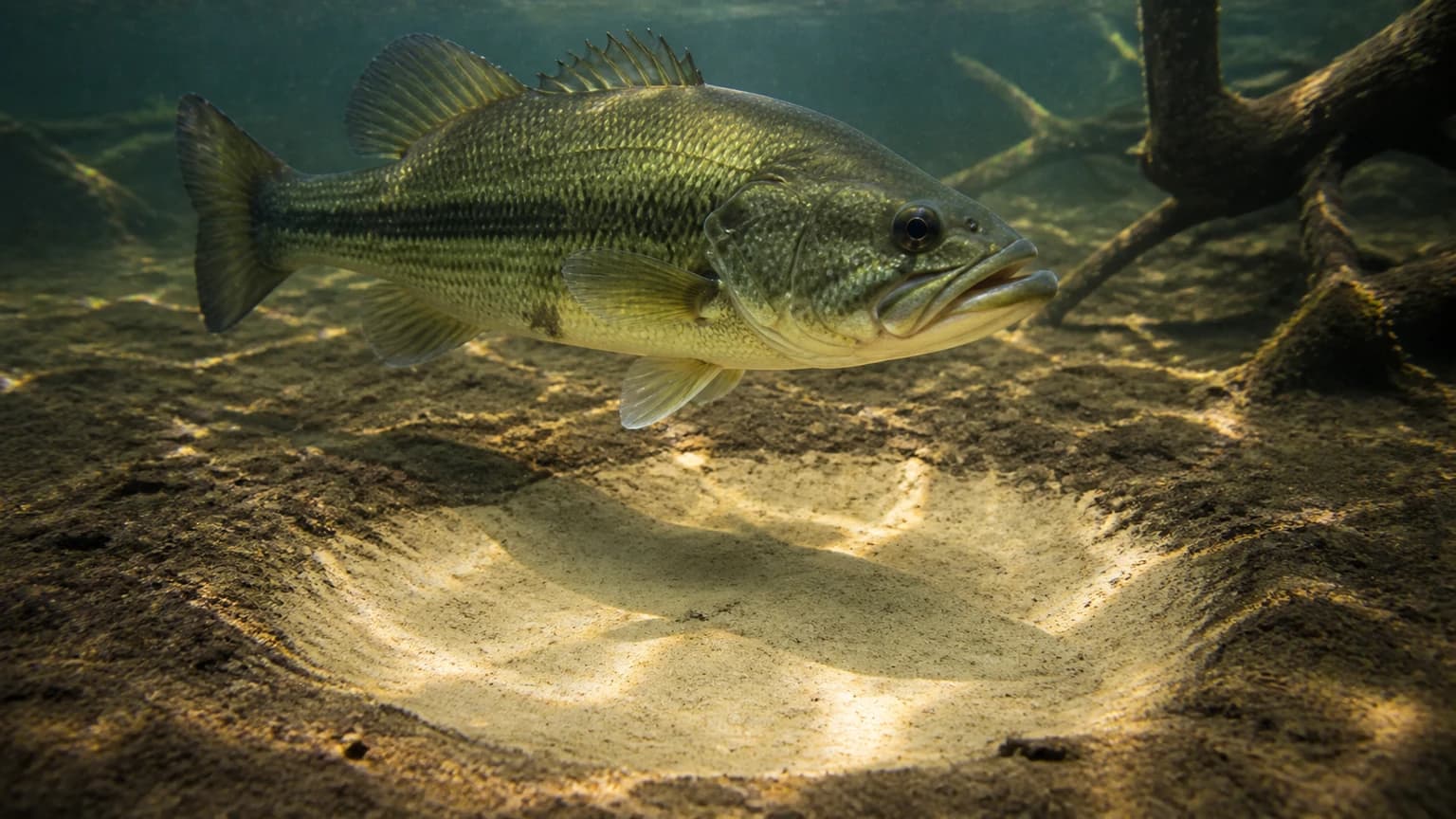
Ohio largemouth bass spawn from mid-April through mid-June. Males begin scouting and building nests at about 58–60°F, and spawning follows at 60–65°F. In central Ohio that usually lands somewhere between early May and early June, depending on the spring.
Two temperatures, a few days apart
The distinction is small but it is the difference between finding empty beds and finding fish on them:
| What's happening | Water temperature |
|---|---|
| Males scouting and building nests | 58–60°F |
| Spawning — males on the nest, females moving shallow | 60–65°F |
| Broader range spawning can occur across | 55–75°F |
A fresh, clean, empty bed at 58°F is not a missed opportunity. It means the male has claimed the spot and the females are still out deep — which is the pre-spawn, and the best big-fish fishing of the Ohio year.
They will not nest in moving water

This is the fastest way to eliminate water on an Ohio reservoir, and it comes from Missouri's conservation department:
Largemouth bass do not nest where current or wave action are present.
Substrate is flexible — rock or gravel by preference, but any firm, silt-free bottom will do. Stillness is not flexible.
The reason is parental care. Walleye broadcast their eggs and give none, so they need current to clear silt and oxygenate. The male largemouth does that job himself, fanning silt off the eggs for days, and current would only scatter what he built.
So on a windy April day in Ohio, fish the protected side: the backs of coves, lee shores, behind points and islands, marina basins, the calm side of any structure. Ohio's reservoirs are big and wind-exposed, and this narrows things enormously.
Depth follows clarity
Ohio DNR gives one to six feet for largemouth nests. Missouri's agency records a wider range — under one foot to fifteen feet or more — because clarity drives it.
Ohio has both kinds of water. Shallow, stained western reservoirs put beds where you can see them. Clearer inland lakes and quarries push them deeper than most anglers look. If the banks are empty in mid-May on clear water, go deeper before concluding you missed it.
This is the same rule that governs crappie and bluegill in the same lakes.
The nest timeline
| Stage | Timing |
|---|---|
| Eggs hatch | 2–4 days |
| Fry rise and begin feeding | 5–8 days after hatching |
| School holds over the nest | another 4–5 days |
| School disperses | 26–31 days after hatching, at just over 1 inch |
The male guards throughout — eggs, then fry — which is close to a month of one fish defending one patch of bottom and eating very little.
Missouri's agency calls him "a more attentive parent than any of the other sunfishes." Once the female's eggs are fertilised she drops back to deeper water and he is on his own.
Timing across Ohio
| Region | Spawning |
|---|---|
| Southern Ohio | Mid-to-late April |
| Central Ohio | Early May – early June |
| Northern Ohio / Lake Erie basin | Mid-May – mid-June |
Central Ohio's row is Ohio DNR's own; the other two are modelled from the 60–65°F range applied to Ohio's normal spring warming.
The variable that beats latitude here is weather stability. Bass want sustained warmth, not one warm afternoon. A cold front through a spawning week stalls everything and can push the whole event back by two weeks — which is why "early May to early June" is a genuinely honest range rather than vagueness.
Lake Erie is its own case: the open lake lags far behind, while the warm shallow bays, harbours and marinas along the shoreline can run weeks ahead of it.
Fishing the phases
Pre-spawn (mid-50s to 60°F). The best window of the Ohio year for a big fish. Females stage on the first drop outside the spawning pockets — secondary points, channel swings at cove mouths, deeper brush and weed edges. Lipless crankbaits, jerkbaits, a slowly worked jig.
Spawn (60–65°F). Fish on beds in protected water. Sight fishing on the clearer lakes; blind-fishing likely calm pockets on the stained ones. Slow soft plastics.
Post-spawn. Females drop back and sulk for a week or two, then feed hard. Males stay shallow guarding fry. Topwater around fry schools in the backs of pockets is very good and widely ignored.
Check the current Ohio fishing regulations — black bass length and daily limits vary between inland waters, Lake Erie and the Ohio River.
Fishing beds, honestly
A guarding male strikes out of aggression, not hunger, which makes bedding bass among the easiest fish in Ohio to catch.
Research has documented that angling for nesting largemouth reduces spawning success — take the male off, even briefly, and the nest is immediately exposed to predation by everything that has been waiting for exactly that.
If you fish beds: do it quickly, keep the fish out of the water for seconds rather than minutes, and release it where you hooked it so it can get back on the nest.
Related
- When do crappie spawn in Ohio? — the same lakes, a few weeks earlier, and the same clarity rule.
Sources
- Largemouth Bass — Ohio Department of Natural Resources — spawning from mid-April to mid-June; nests built by the male in one to six feet of water; the male guarding the eggs until they hatch and fanning silt away; hatching in two to four days; central Ohio typically between early May and early June depending on spring weather.
- Largemouth Bass — Missouri Department of Conservation field guide — largemouth not nesting where current or wave action is present; nests on rock, gravel or any firm silt-free bottom; depths from under one foot to fifteen feet or more; the fry timeline; the male being a more attentive parent than any of the other sunfishes.
- Angling for nesting largemouth bass can have negative effects on spawning success — Fish Habitat Section, American Fisheries Society.
The regional timing table is modelled apart from the central Ohio row, which is Ohio DNR's. Weather stability moves largemouth spawning more than latitude does — carry a thermometer, and expect a cold front to stall the whole thing.
Frequently asked questions
- When do largemouth bass spawn in Ohio?
- Ohio DNR gives mid-April through mid-June, and in central Ohio it typically falls between early May and early June depending on the spring. Males begin scouting and building nests at about 58–60°F, with spawning following at 60–65°F.
- What water temperature do largemouth bass spawn at?
- Peak spawning is around 60–65°F, with males starting nest construction a couple of degrees earlier at 58–60°F. Spawning can occur across a wider 55–75°F band, but the low 60s is where it actually happens in volume.
- How deep do largemouth bass nest in Ohio?
- Ohio DNR gives one to six feet. Missouri's agency records a wider range — under one foot to fifteen feet or more — because water clarity drives it. Clear lakes push nests deeper than stained ones.
- Where should I look for bass beds?
- In water with no current and no wave action. Missouri's conservation department notes largemouth do not nest where current or wave action is present, so protected pockets, the backs of coves, lee shores and the calm side of structure are where to start.
- How long does the male guard the nest?
- Ohio DNR notes the male guards the eggs until they hatch, fanning silt away in the meantime, with hatching in two to four days. He then stays with the fry school for weeks — Missouri's agency calls the male largemouth a more attentive parent than any of the other sunfishes.
Gear for this
 AccessoriesCheck price on Amazon
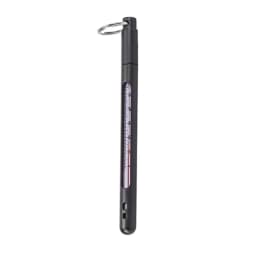
Stream & Lake Water Thermometer
The one piece of kit every spawn article on this site tells you to carry.
- Check price on Amazon

ChronicAnglers is reader-supported. When you buy through links on our site, we may earn an affiliate commission at no extra cost to you.