When Do Snook Spawn in Florida?
Florida snook spawn through the warm months, roughly May into September, aggregating in the passes and river mouths on new and full moons. That predictability is precisely why harvest closes over the spawn.
Published
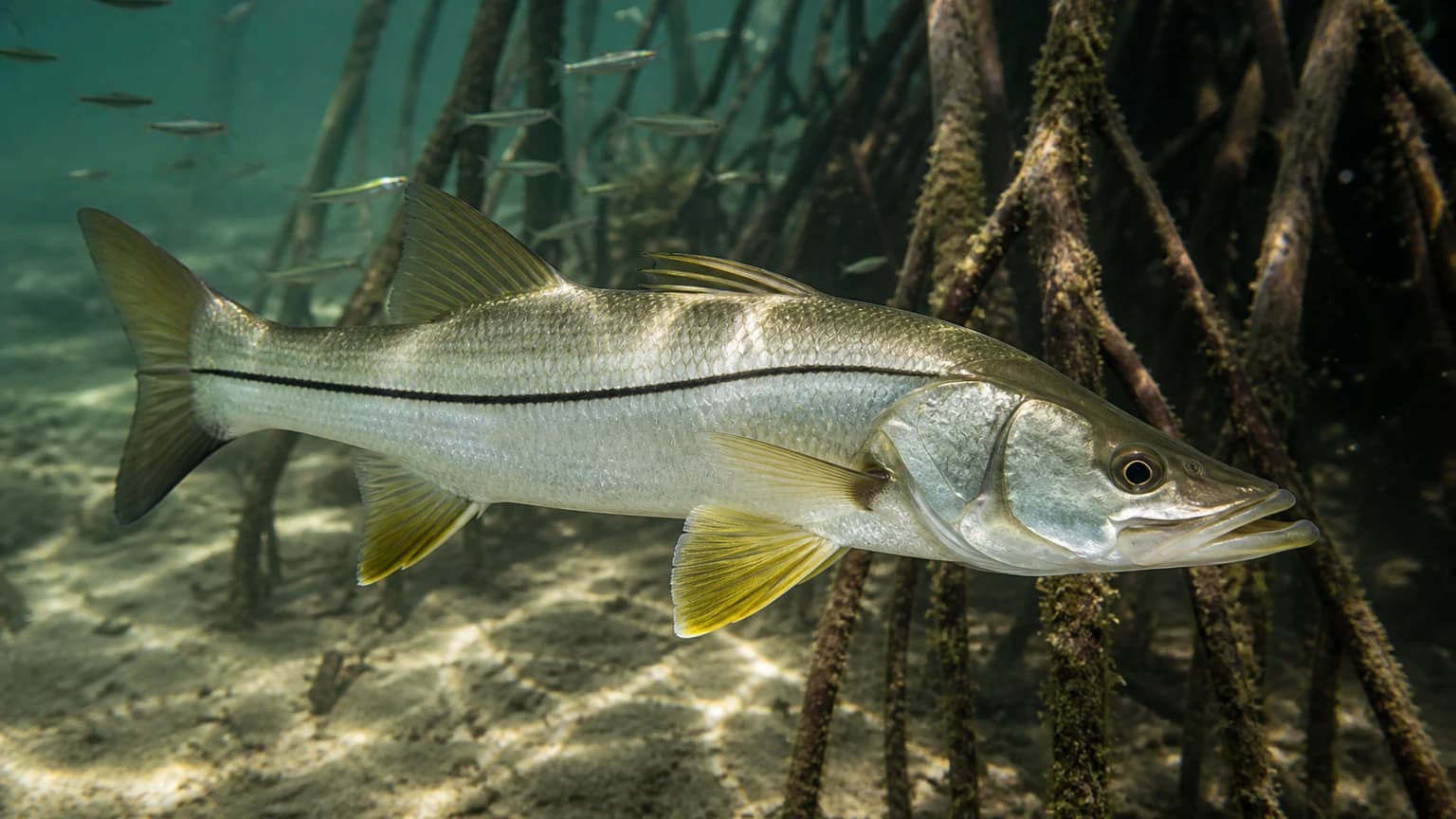
Florida snook spawn through the warm months — roughly April or May into September or October, varying with climate and water temperature. They do it by aggregating at the mouths of coastal rivers and in the major passes and inlets, concentrating around the new and full moons.
That predictability is the whole story, and it is why the season closes.
They gather in known places on a known schedule
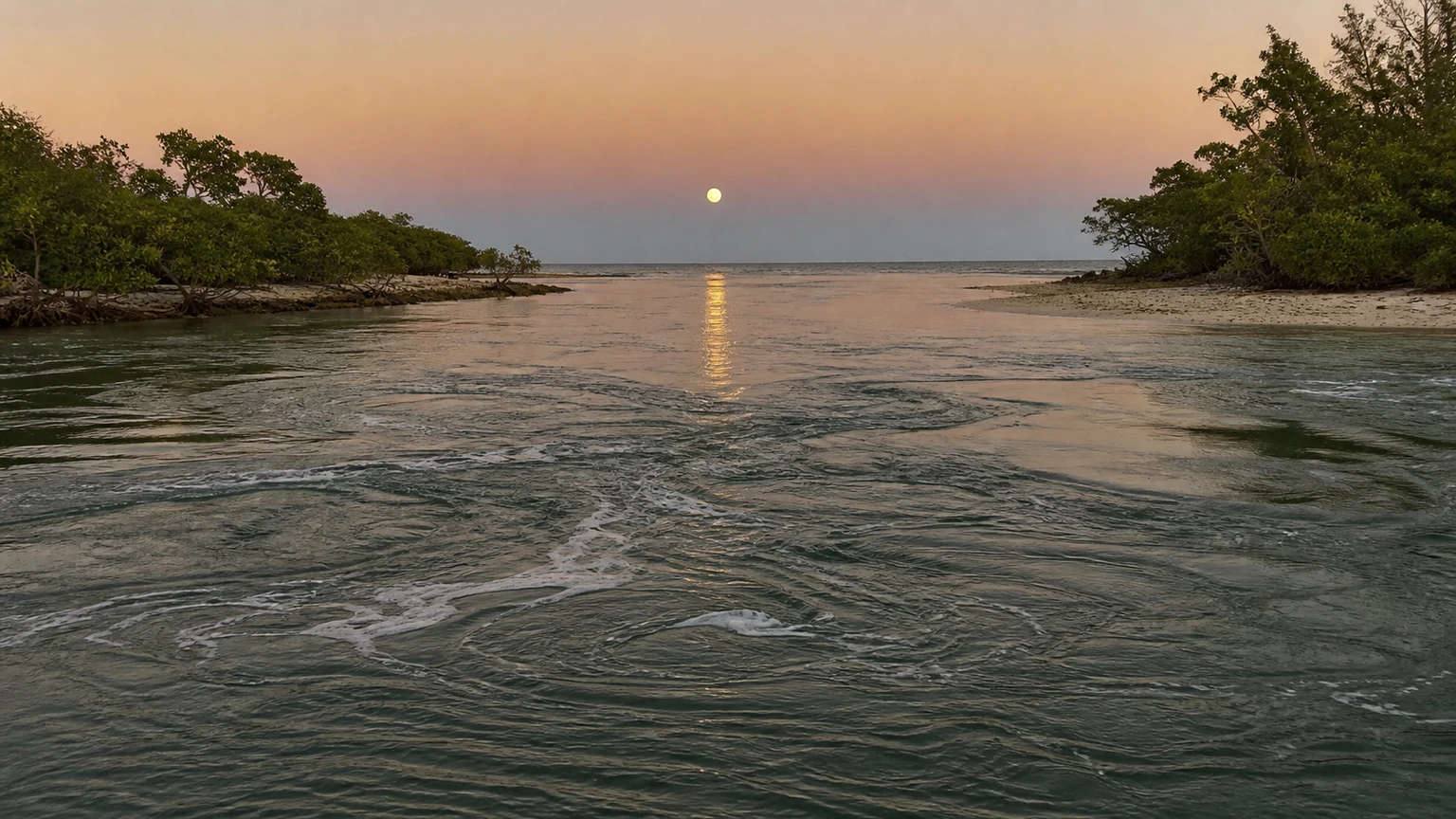
Most fish on this site spawn by spreading out — a bass on its own nest in a quiet pocket, a walleye broadcasting over a windswept reef. Snook do the opposite. They pile into the passes.
Pre-spawn fish stage at passes, inlet mouths and along the beaches as water climbs into the high 70s in late spring. Then, through summer, they stack in those passes to spawn, concentrating on the new and full moons.
The biological logic is tidal: spawning at a pass on a big moon tide means eggs and larvae get carried where they need to go, back into the estuary systems where juveniles grow up in the mangroves.
The fisheries consequence is obvious, and it is why the rules exist. A species that gathers in large numbers, in a handful of well-known places, on a schedule anyone with a calendar can predict, is exactly the species that harvest pressure can flatten. So Florida closes snook harvest over the summer spawn.
The size-and-sex problem
This is the part that makes the closures more than precautionary.
Snook are protandric. Most begin life as males and change sex as they grow, which means most fish over about 30 inches are female.
Put that together with the aggregation behaviour and you get the problem in full: the fish stacked in a pass in July are spawning, the biggest of them are the females, and the females are the reproductive capacity of the entire population. Harvesting the largest fish out of a spawning aggregation removes precisely the individuals a snook population can least afford to lose.
It is a genuinely well-designed closure, and understanding why makes it much easier to accept.
Season dates: check FWC, not this page
Florida's snook regulations are regional and they change. Broadly:
- Harvest closes over the summer spawn across the state, with the Gulf and Atlantic regions running slightly different windows.
- Several regions also close in winter, protecting fish through cold-weather vulnerability.
- The Charlotte Harbor and southwest region has historically run its own, longer closures.
- A snook permit is required in addition to a saltwater fishing licence.
- Slot limits apply, and they differ between Gulf and Atlantic.
Do not take dates from any article, including this one. Go to FWC's snook regulations and read the current rules for your region before you fish. Snook is one of the most actively managed species in Florida and the specifics move.
Catch-and-release is generally permitted during harvest closures — which means the summer spawn is fishable, just not harvestable.
Fishing the spawn responsibly
Snook in summer are in warm water, and warm water is where release mortality climbs. Water temperatures around the passes run into the mid-80s, and release mortality increases with every second of air exposure.
If you fish the aggregations:
- Keep them wet. Unhook in the water where you can. If you must lift one, seconds, not minutes.
- Support the fish horizontally. A big female full of eggs does not need her own weight hanging off her jaw.
- Use heavier tackle than feels sporting. A long fight in 85°F water is what kills fish, not the hook.
- Revive properly before letting go, facing into current until she swims off under her own power.
- Crush the barbs. It costs you almost nothing and it halves the handling time.
Where and how to fish them
Snook sit on the down-current side of structure and let the tide bring food past. That single principle covers most of snook fishing:
- Bridge pilings and fenders — fish tuck behind them in the shadow line.
- Dock lights at night — the classic, and the best sight-fishing snook opportunity there is.
- Mangrove points on a falling tide, as bait gets flushed off the flat.
- Pass edges and beach troughs in late spring and summer, where pre-spawn and spawning fish stage.
Present with the current, not against it. A bait that swims up-current at a snook looks wrong and they will refuse it.
Live pilchards and pinfish are the standard. A white bucktail jig, a swimbait, or a baitfish fly all work well, particularly around lights at night.
Related
- Seasonal fishing and verified spawning temperatures — why water temperature usually predicts behaviour better than the month does.
Sources
- Snook — Florida Fish and Wildlife Conservation Commission — the authoritative source for current season dates, slot limits, regional differences and the snook permit requirement. FWC research places spawning from around April or May through September or October, varying with climate and water temperature, with aggregation at the mouths of coastal rivers and in the major passes.
No spawning water temperature threshold is given on this page because FWC publishes a seasonal window rather than a thermal trigger; the "high 70s" figure describes pre-spawn staging conditions, not a spawning threshold. Season dates and slot limits are deliberately not stated here — they are regional and they change, and the FWC page above is the only source worth relying on for them.
Frequently asked questions
- When do snook spawn in Florida?
- FWC research puts spawning from around April or May through September or October, varying with climate and water temperature. Fish aggregate at the mouths of coastal rivers and in the major passes and inlets, concentrating around the new and full moons.
- Why is snook season closed in summer?
- Because that is when they spawn, and because they spawn by gathering in large, predictable, easily reached aggregations in the passes. A species that concentrates in known places on a known schedule is exactly the kind that harvest pressure can damage quickly, so Florida closes harvest over the spawn.
- Where do snook spawn?
- At the mouths of coastal rivers and in the major passes and inlets, where tidal flow can carry eggs and larvae back into the estuary. Pre-spawn fish stage at passes, inlet mouths and along the beaches as water climbs into the high 70s in late spring.
- Are big snook male or female?
- Overwhelmingly female. Snook are protandric — most begin life as males and change sex as they grow, so most fish over about 30 inches are female. That is why the largest fish in a spawning aggregation are the ones a population can least afford to lose.
- Can I still fish for snook during the closed season?
- Catch-and-release fishing is generally permitted while harvest is closed, but the rules differ between the Gulf, Atlantic and southwest regions and they change. Check FWC's current snook regulations for your specific region before you go — do not rely on any article, including this one, for the dates.
Gear for this
ChronicAnglers is reader-supported. When you buy through links on our site, we may earn an affiliate commission at no extra cost to you.
Explore related
- SpeciesSnookIdentification, range, diet, and verified spawning window.
- FloridaHow to Catch Snook in Florida
- Also in FloridaBull Redfish: Why the Big Ones Go Back
- Also in FloridaThe Florida Keys Grand Slam
- Also in FloridaHow to Catch Flounder in Florida
- Also in FloridaHow to Catch Grouper in Florida
- Also in FloridaHow to Catch Redfish in Florida
- Also in FloridaHow to Catch Spanish Mackerel in Florida
- Also in FloridaHow to Catch Tarpon in Florida