When Do Rainbow Trout Spawn in Colorado?
Colorado rainbow trout spawn in spring, February to May, at 42–44°F. The complication: whirling disease eliminated most wild rainbow reproduction in the 1990s, so many of the state's rainbows never spawn successfully at all.
Published
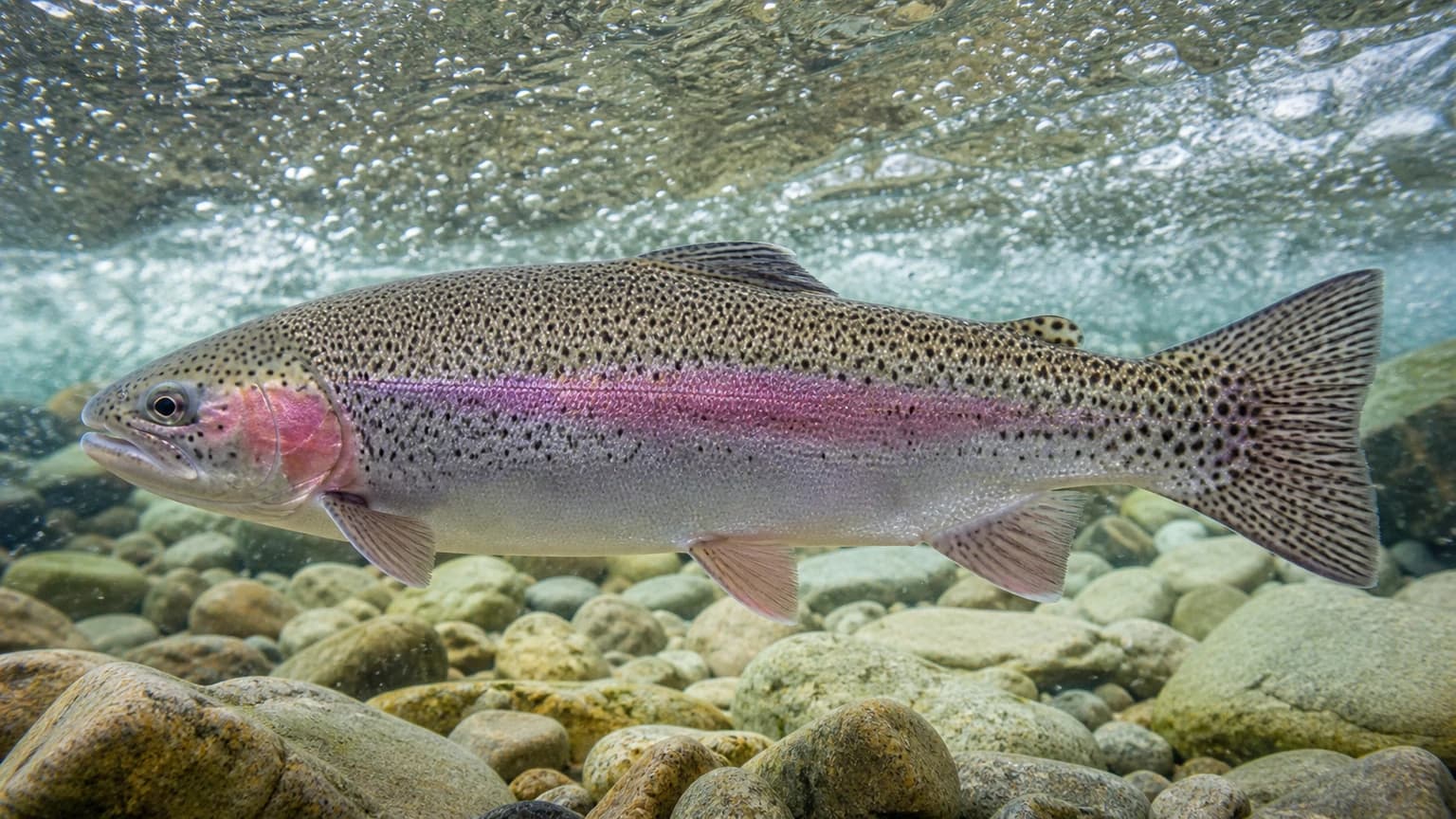
Colorado rainbow trout spawn in spring — February to May depending on elevation — with redd construction from about 42–44°F.
But the more important answer is that in many Colorado rivers, wild rainbows barely spawn successfully at all, and have not for thirty years.
Spring, not autumn — and this is where people go wrong
The single most common error in Colorado trout timing is assuming all trout spawn together. They do not, and they are six months apart:
| Species | Season | Trigger |
|---|---|---|
| Rainbow trout | Spring (Feb–May) | Water warming through 42–44°F |
| Brown trout | Autumn (Oct–Nov) | Water cooling through 42–48°F |
| Brook trout | Autumn (Sep–Nov) | Water cooling |
| Cutthroat trout | Spring | Water warming |
The temperature bands nearly overlap. The direction of travel is what differs. Rainbows and cutthroat spawn on rising water temperature; browns and brookies on falling.
So trout you see paired over clean gravel in a Colorado river in October are brown or brook trout. The same behaviour in April is rainbows or cutthroat. Same gravel, different fish, six months apart.
The part no other page tells you
Here is what actually determines whether "when do rainbow trout spawn in Colorado" has a practical answer on your river.
Whirling disease arrived in Colorado in the mid-1990s. It is a parasitic infection that attacks young trout, deforming the developing skeleton and producing the erratic tail-chasing swimming that gives it its name. Fish that survive are frequently deformed; most infected fry do not survive at all.
It is believed to be a major factor in the decline of wild rainbow trout populations across Colorado waters, and it eliminated many wild populations of the state's most popular sport fish.
The consequence for this question is direct: on a lot of Colorado water, the rainbows you catch are stocked fish that will never successfully reproduce. They go through the motions — they pair up, they cut redds, they spawn in April — and almost nothing recruits.
Which is why the timing question, for many rivers, is academic. The fish spawn. It just does not produce fish.
What Colorado has done about it
This is a genuinely impressive piece of fisheries work and it is the reason the picture is improving.
Colorado Parks and Wildlife has run a long research programme breeding whirling-disease-resistant rainbow trout strains, optimising them for hatchery production and for survival in the wild, and developing wild brood stocks of those resistant strains.
Since 2014, more than 500,000 eggs have been collected from these fish, to stock into whirling-disease-positive rivers and to build hatchery brood stocks.
The goal is not more stocked fish. It is self-sustaining wild rainbow populations again — rainbows that spawn in April and actually produce a year class.
If you fish Colorado regularly, this is worth following, because it changes river by river. Some drainages now hold reproducing resistant rainbows; others remain put-and-take.
Timing by elevation
Colorado's elevation range does to the rainbow spawn what it does to everything else — spreads it across months.
| Water type | Spawning |
|---|---|
| Lower-elevation rivers and plains reservoirs | February – March |
| Tailwaters below dams | March – April |
| Mid-elevation freestone | April – May |
| High-country streams and lakes | May, occasionally into June |
This table is modelled, not measured. It applies the 42–44°F threshold to Colorado's spring warming by elevation. High-country water is still locked up or running full snowmelt when the plains rivers have finished, and runoff is the wildcard — a heavy melt can blow out a spawn that was already underway.
Fish the thermometer. In Colorado more than most places, elevation beats the calendar.
Fishing around it
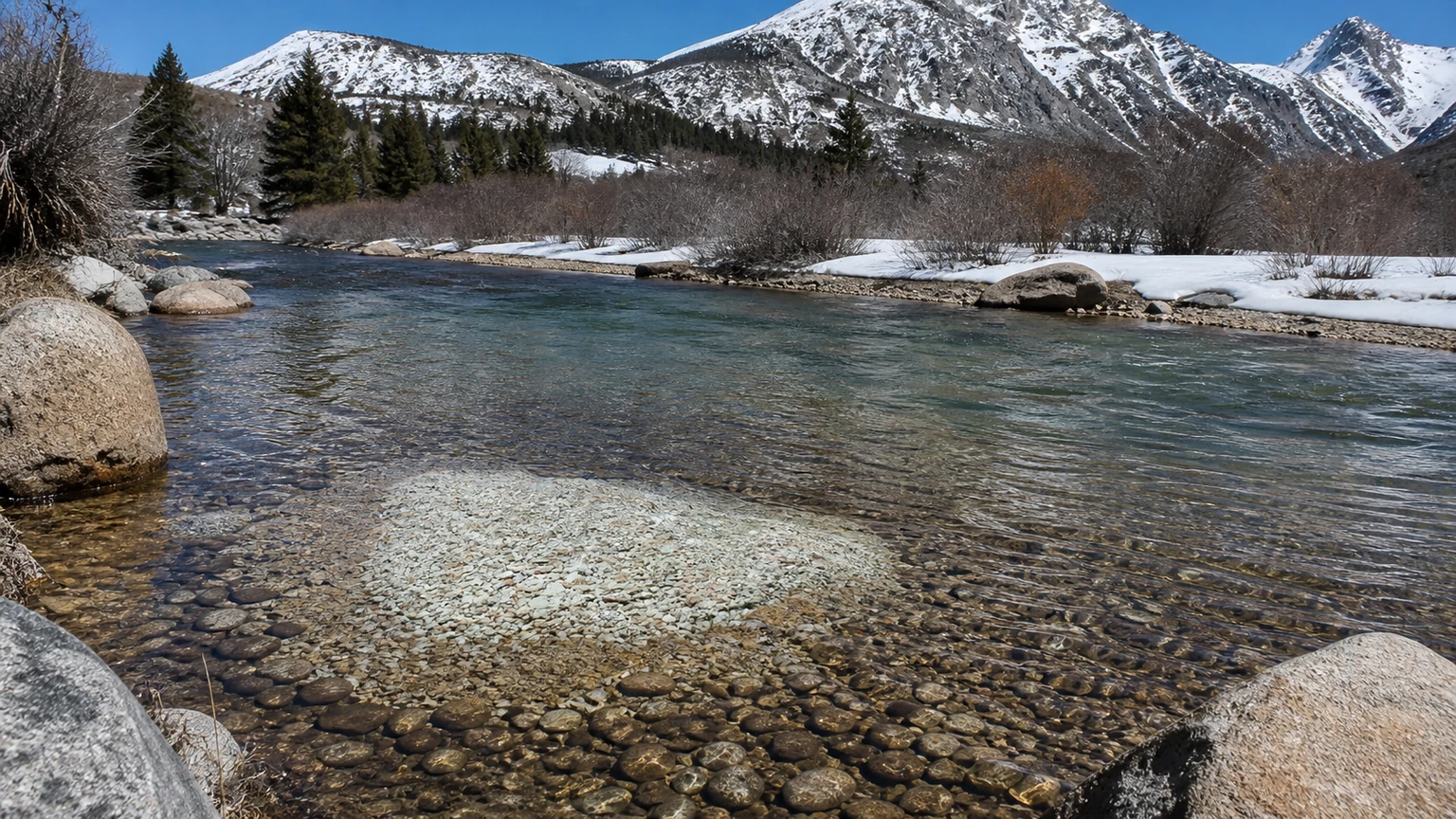
Pre-spawn. Fish stage below spawning gravel and feed hard. Good fishing, and no ethical complication.
Spawn. Fish below the redds, not on them. Trout holding downstream of a clean pale gravel patch are eating drifting eggs and are legitimate targets. Paired fish working the gravel are not.
A redd is easy to spot once you know it — a distinctly clean, pale oval standing out against darker, algae-stained streambed, in shallow water with moderate current, usually at a pool tail-out.
Do not wade across clean gravel. This matters more in Colorado than almost anywhere, because on whirling-disease-affected water the wild recruitment that does happen is precious and there is not much of it.
Post-spawn. Spent fish drop back to deeper holding water, thin and hungry, and feed opportunistically.
Check the current Colorado fishing regulations — several Colorado waters carry seasonal closures or gear restrictions specifically to protect spawning fish, and Gold Medal and wild-trout waters have their own rules.
Related
- When do brown trout spawn in Colorado? — the autumn half of the same rivers, and the same elevation logic in reverse.
Sources
- Aquatic Research — Colorado Parks and Wildlife — CPW's research programme on whirling-disease-resistant rainbow trout strains, optimisation for hatchery production and wild survival, and development of wild brood stocks.
- Colorado's Whirling Disease Resistant Rainbows — Colorado Outdoors — whirling disease as a major factor in wild rainbow decline, its arrival in the mid-1990s, and more than 500,000 eggs collected since 2014 for stocking into whirling-disease-positive rivers and for hatchery brood stocks.
- Montana Field Guide — Brown Trout, Montana FWP — the 42–48°F brown trout spawning band used in the season comparison above.
The elevation timing table is modelled from the 42–44°F spawning threshold applied to Colorado's spring warming by elevation; no Colorado agency source publishes a per-elevation rainbow spawning calendar. Runoff timing can override it entirely. Confirm with a thermometer or a USGS gauge.
Frequently asked questions
- When do rainbow trout spawn in Colorado?
- In spring — anywhere from February to May depending on elevation — with redd construction from about 42–44°F. Low-elevation and tailwater fish go earliest; high-country streams still under snowmelt run into May and occasionally June.
- Do wild rainbow trout still spawn successfully in Colorado?
- In many rivers, not really. Whirling disease arrived in the mid-1990s and eliminated many of Colorado's wild rainbow populations, so a large share of the rainbows you catch are stocked fish. Colorado Parks and Wildlife has spent decades breeding disease-resistant strains to rebuild self-sustaining populations.
- What water temperature do rainbow trout spawn at?
- Around 42–44°F, on rising temperature in spring. That is close to the brown trout figure of 42–48°F, but the direction is opposite: rainbows spawn as water warms, browns as it cools.
- Do rainbow trout spawn in the fall in Colorado?
- No. Rainbow trout are spring spawners. Trout you see on gravel in Colorado in October and November are brown trout or brook trout, both autumn spawners. Getting this wrong is the most common mistake in Colorado trout timing.
- What is whirling disease?
- A parasitic disease that attacks young trout, deforming the skeleton and causing the whirling swimming behaviour it is named for. It first hit Colorado's rainbow trout in the mid-1990s and destroyed many wild populations. Since 2014, Colorado Parks and Wildlife has collected over 500,000 eggs from resistant fish to stock into affected rivers.
Gear for this
 AccessoriesCheck price on Amazon
Stream & Lake Water Thermometer
The one piece of kit every spawn article on this site tells you to carry.
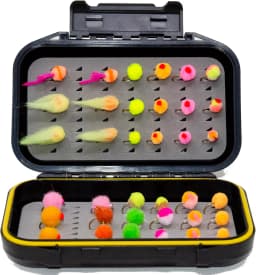 LuresCheck price on Amazon
Egg Patterns & Beads
The presentation every spawn article here points you at — fished below the redds, not on them.
- Check price on Amazon
ChronicAnglers is reader-supported. When you buy through links on our site, we may earn an affiliate commission at no extra cost to you.