When Do Brown Trout Spawn in Colorado?
Colorado brown trout peak in October, earlier than almost anywhere else in the country. Elevation is the reason — and it splits the state's timing by nearly a month.
Published
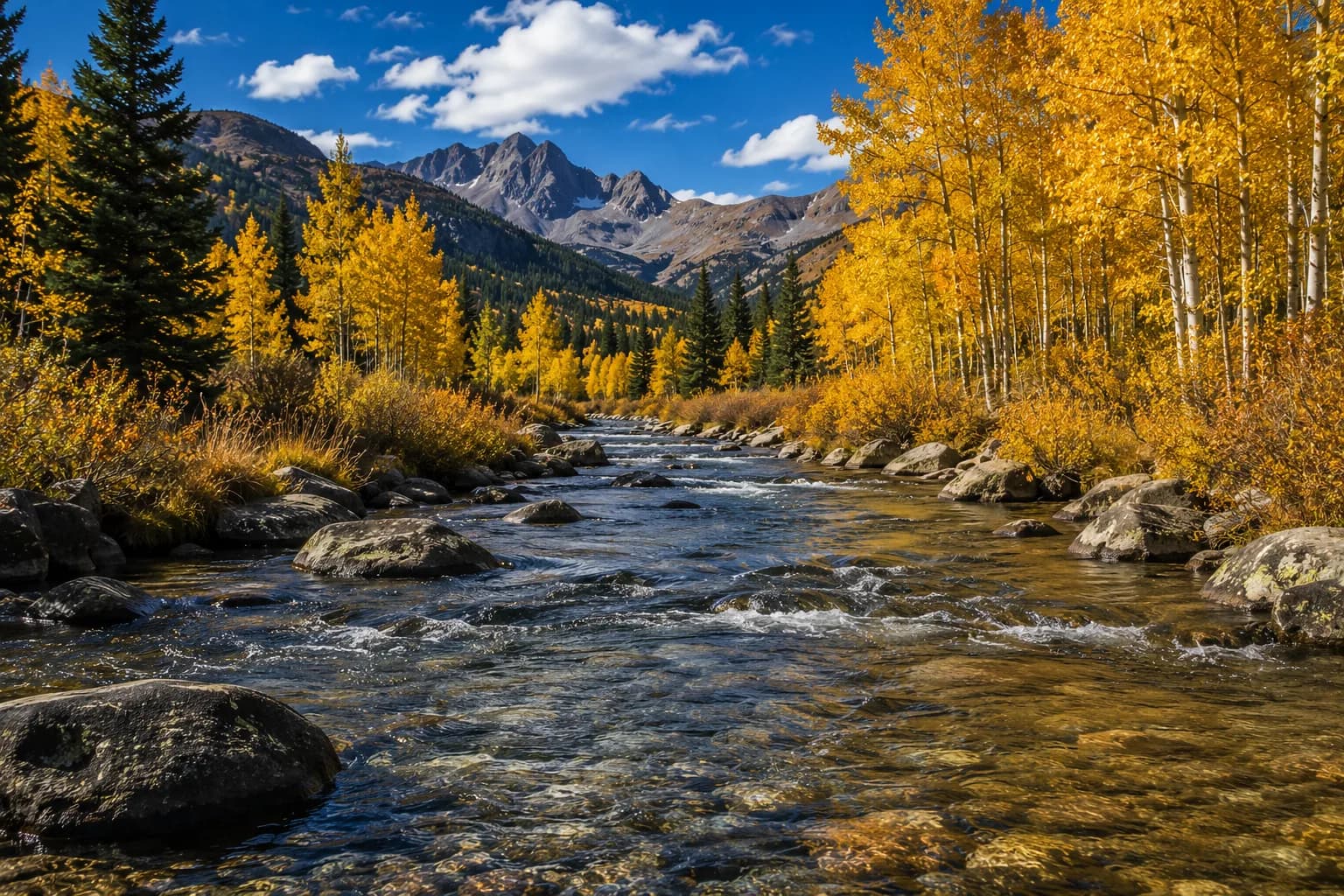
Colorado brown trout spawn from October into November, and the peak lands in October — earlier than almost anywhere else in the country. The trigger is water temperature: redds go in at 42–48°F (6–9°C).
The reason Colorado runs early is elevation, not latitude. High-country water hits the spawning threshold weeks before a river out on the plains at the same latitude, and that single fact splits the state's timing by nearly a month.
Elevation is the whole story
Colorado Parks and Wildlife describes brown trout habitat in the state as running "from high mountain streams to broad rivers flowing onto the plains." That range is roughly 9,000 feet of vertical, and autumn arrives at the top of it long before the bottom.
| Water | Elevation band | Redds start | Peak |
|---|---|---|---|
| High mountain streams | 8,000–10,000 ft | Late September | Early-to-mid October |
| Mid-elevation freestone — Gunnison, upper Colorado | 6,500–8,000 ft | Mid October | Late October |
| Tailwaters — Frying Pan, Taylor, Blue | varies | Late October | November |
| Plains rivers — lower South Platte, lower Arkansas | under 6,000 ft | Early November | Mid November |
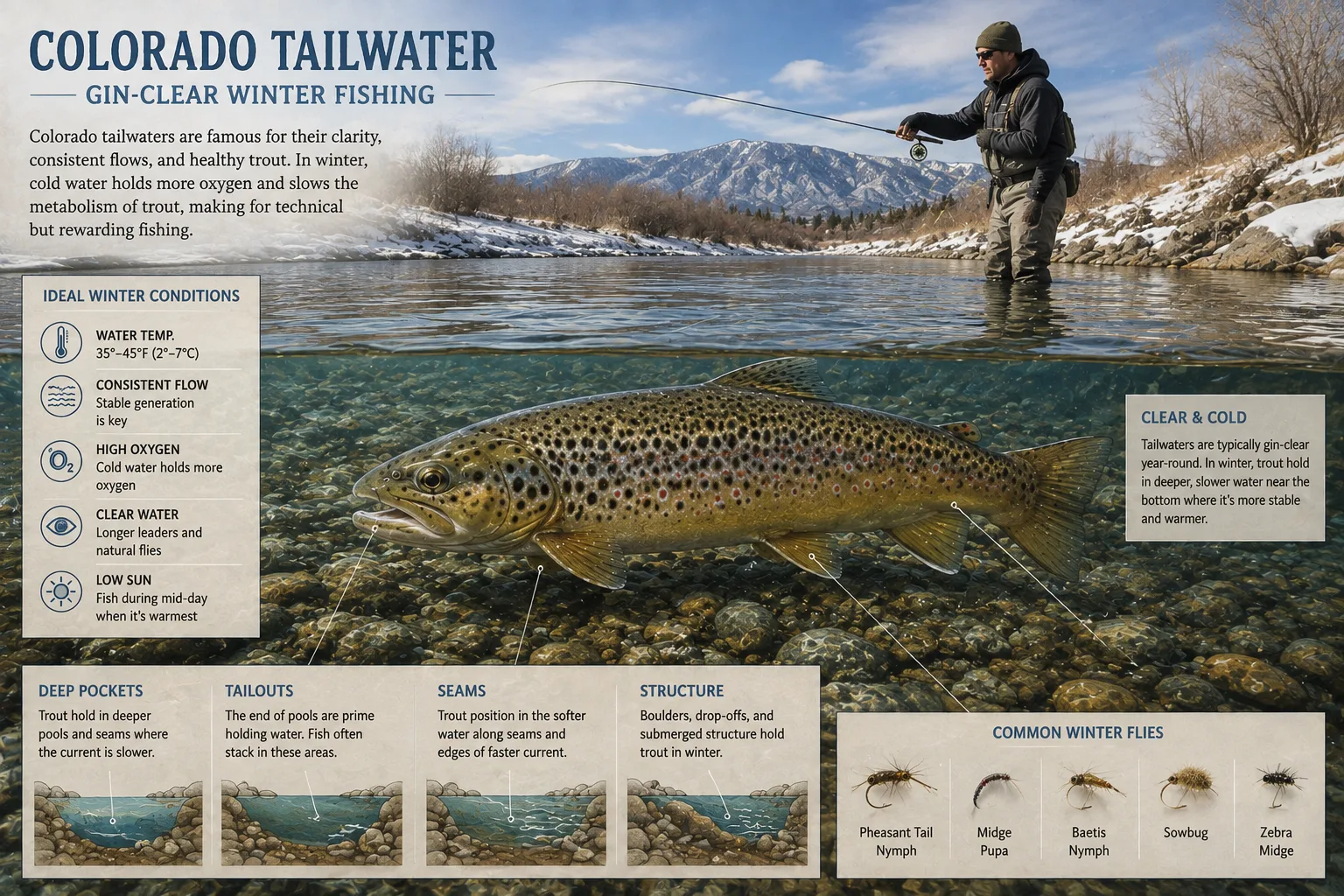
Tailwaters break the pattern, and this is the part worth internalising. A bottom-release dam pulls water from deep in the reservoir, so the river below it holds a much steadier temperature than a freestone that tracks the air. The Frying Pan below Ruedi Reservoir is the classic example — gin-clear, thermally buffered, and running on its own schedule.
The practical consequence: on a tailwater the spawn arrives later, spreads over a longer window, and is far less predictable from a calendar. Carry a thermometer. On a freestone, the calendar is a reasonable guide; on a tailwater, it is close to useless.
This table is a model, not a measurement. It applies the 42–48°F threshold to Colorado's elevation gradient. Confirm on the water before committing to a trip.
What triggers it
Two signals together.
Falling water temperature. Browns move toward spawning water as the river drops through 45–50°F, and cut redds at 42–48°F.
Shortening daylight. Photoperiod sets the seasonal clock — the spawn happens every autumn regardless of how warm the year was. Daylight decides the season; temperature decides the week.
Eggs go into the gravel in autumn and hatch the following spring, roughly February through April depending on water temperature.
Where Colorado's brown trout come from
Worth knowing, because it explains why they are everywhere: brown trout are not native to Colorado. They are now abundant statewide and among the most popular fish with anglers, and CPW restocks them widely.
Every autumn, CPW biologists run a spawn-take operation at North Delaney Butte Lake near Walden, collecting more than a million brown trout eggs and shipping them to state hatcheries for distribution across Colorado's creeks, rivers and reservoirs.
If you fish North Delaney in the fall, expect that operation to be underway and expect the fish to be behaving accordingly.
How to find redds — and stay off them
A redd is a clean, pale, oval patch of gravel, clearly brighter than the streambed around it. The female's digging strips off algae and silt, so it looks scrubbed. In Colorado's low, clear autumn water they are easy to spot from the bank once you know the shape.
Look at pool tail-outs, where current accelerates over clean gravel before dropping into the next run.
Do not wade across pale gravel. Eggs sit in it from October until fry emerge in spring, and a single boot destroys a nest. In gin-clear tailwater you can see exactly what you are about to step on — there is no excuse.
Leave fish that are actively on redds. They are not feeding, and pressuring them is neither sport nor good for the fishery.
How to fish each phase
Pre-spawn — the aggressive window (late September to mid-October)
The best fishing of the cycle. Fish are staging, territorial, and willing to chase.
- Streamers fished across and down.
- Deep holding water: pools, undercut banks, structure.
- Low light — first and last hour.
- Big browns will hit something out of aggression that they would ignore in August.
During the spawn — fish below the gravel
Work the runs downstream of redds, where trout stack up to eat drifting eggs.
- Egg patterns and small nymphs, dead-drifted.
- Focus on the seam where a tail-out drops into the next pool.
- On Colorado's clear tailwaters, go lighter on tippet than instinct suggests.
Post-spawn — the quiet window (November into winter)
Browns survive the spawn and come off it thin and hungry.
- They drop into slow, deep water to recover.
- Slow the presentation right down.
- Fish the warmest part of the day.
- Colorado tailwaters fish through the winter, and the crowds are gone.
Sources
- Colorado Parks and Wildlife — Brown Trout
- Colorado Parks and Wildlife — South Platte River
- Montana Field Guide — Brown Trout, Montana FWP (spawn window and incubation timing)
- Brown Trout Spawn Timing, Redd Locations, and Stream Characteristics in Spearfish Creek, South Dakota (2020) (redd timing and habitat data)
The elevation timing table is modelled from the 42–48°F spawning threshold applied to Colorado's elevation gradient, not measured. Confirm with a thermometer before planning a trip, and check current CPW regulations for the water you intend to fish.
Frequently asked questions
- When do brown trout spawn in Colorado?
- October into November, with the peak in October. That is earlier than most of the country because Colorado's elevation cools water to the 42–48°F spawning range sooner in the autumn.
- Why do Colorado brown trout spawn earlier than in other states?
- Elevation, not latitude. A stream at 9,000 feet reaches the 42–48°F spawning threshold weeks before a plains river at the same latitude, so high-country water spawns first.
- Do brown trout spawn later in Colorado tailwaters?
- Yes. Bottom-release dams draw water from deep in the reservoir, so tailwaters like the Frying Pan below Ruedi hold a far steadier temperature than freestone rivers. That delays the spawn, stretches it out, and makes calendar predictions unreliable — use a thermometer.
- Are brown trout native to Colorado?
- No. Brown trout are non-native to Colorado but are now abundant statewide and among the most popular fish with anglers. Colorado Parks and Wildlife restocks them in waters across the state.
- Where does Colorado get its brown trout eggs?
- From a CPW spawn-take operation at North Delaney Butte Lake near Walden, where biologists collect more than a million eggs each year and ship them to CPW hatcheries for statewide distribution.
Gear for this
 AccessoriesCheck price on Amazon
Stream & Lake Water Thermometer
The one piece of kit every spawn article on this site tells you to carry.
 LuresCheck price on Amazon
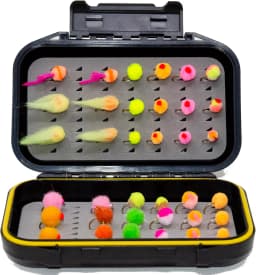
Egg Patterns & Beads
The presentation every spawn article here points you at — fished below the redds, not on them.
- Check price on Amazon
ChronicAnglers is reader-supported. When you buy through links on our site, we may earn an affiliate commission at no extra cost to you.
Explore related
- SpeciesBrown troutIdentification, range, diet, and verified spawning window.
- UtahWhen Do Brown Trout Spawn in Utah?
- WisconsinWhen Do Brown Trout Spawn in Wisconsin?
- MichiganWhen Do Brown Trout Spawn in Michigan?
- MontanaWhen Do Brown Trout Spawn in Montana?
- Also in ColoradoWhen Do Rainbow Trout Spawn in Colorado?