When Do White Bass Spawn in Missouri?
Missouri white bass enter the tributaries in March and stay into the middle or latter part of April. Males arrive about a month ahead of the females — and any given stretch of river is done in five to ten days.
Published
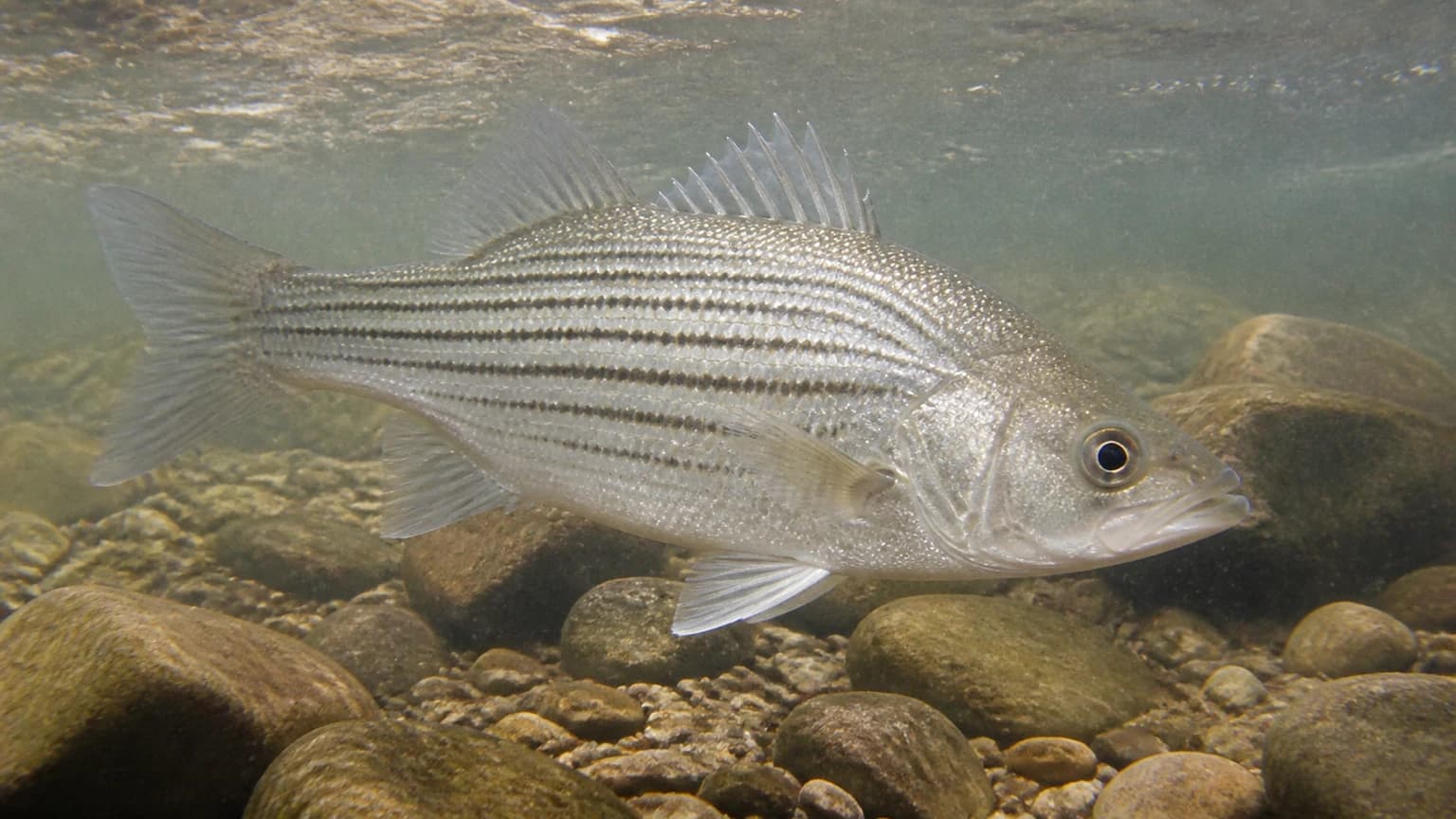
Missouri white bass enter the tributaries in March and remain until the middle or latter part of April. Spawning is triggered around 50–55°F.
But the number that decides whether your trip works is this one: in any given locality, spawning is completed over five to ten days.
Five to ten days, and then it's gone
Missouri Department of Conservation states it directly. Any one stretch of river — one hole, one riffle, one access point — holds spawning white bass for about a week.
This is why white bass reports are so wildly inconsistent. Two anglers describing the same river a fortnight apart are both telling the truth, and neither is describing the same event.
The run as a whole lasts a month, because fish keep pushing upstream and different reaches reach temperature at different times. Any one spot lasts a week.
So the technique is not to pick a date. It is to follow the fish upstream as your spot goes quiet. Missouri's tributary systems — the arms feeding Truman, Stockton, Table Rock, Bull Shoals, Pomme de Terre, and the smaller river runs — all work the same way.
Males first, by about a month
This is MDC's most useful observation and it explains the annual disappointment:
Males arrive approximately a month before females.
Before reaching the spawning grounds, mature fish congregate in single-sex schools, with the females staying in deeper water near the spawning areas until their time.
So an early run full of 10-inch fish is not a poor year. It is a normal year, seen early. The two-pounders are downstream in deeper water, and they arrive later.
That gives you two distinct fisheries:
- Early run — numbers, all males, fast fishing, small fish.
- Later run — fewer fish, much better average size, as the females push up.
How they actually spawn
No nest. No parental care. Nothing guarded.
MDC: spawning happens "in midwater or near the surface, over a gravelly or rocky bottom, often in a current, and without preparation of a nest."
The eggs then settle to the bottom, become attached to rocks, and hatch in about two days.
Two days is remarkably fast — compare it with a largemouth bass at three to four days plus a month of guarding, or a brown trout whose eggs sit in gravel all winter.
And the trade-off is volume: a single large female can produce nearly a million eggs in one spawning season. Enormous output, zero investment. It is the opposite reproductive strategy to almost every other fish in the same river.
The "often in a current" part is practical. Like walleye and unlike largemouth bass, white bass need moving water over clean rock — nothing tends those eggs, so the current has to keep them oxygenated and silt-free.
Timing across Missouri
| Region | Fish entering tributaries | Spawning |
|---|---|---|
| Southern Missouri / Ozarks | Early March | Mid-to-late March |
| Central Missouri | Mid-March | Late March – early April |
| Northern Missouri | Late March | Early-to-mid April |
This table is modelled, not measured. MDC publishes a statewide March-to-mid-or-late-April window without a per-region breakdown; the rows apply the 50–55°F trigger to Missouri's normal spring warming. A warm early March pulls everything forward by a fortnight; a cold one pushes it back.
Watch the water temperature of the lake the tributary feeds. At 50°F, go.
Fishing the run
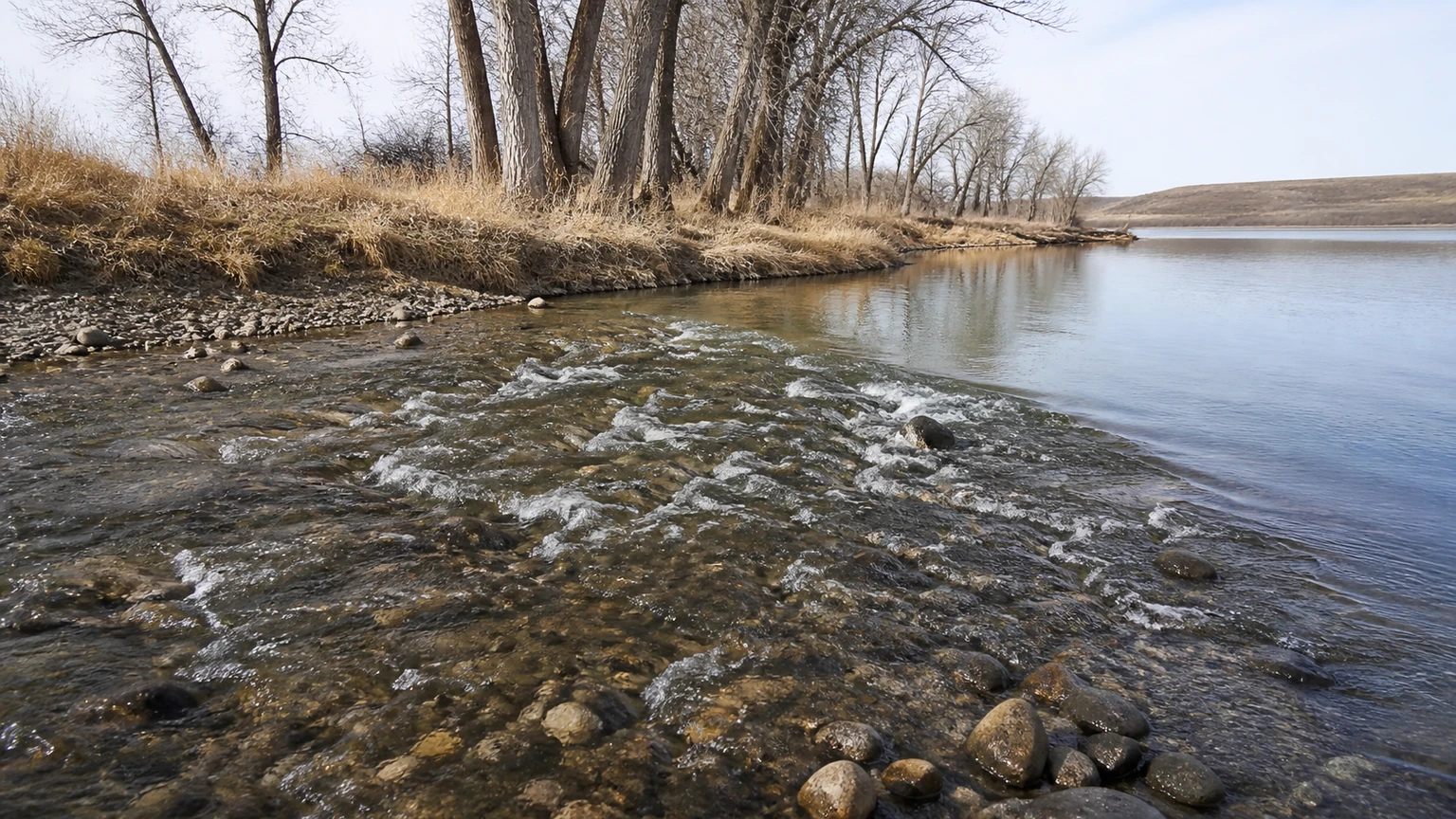
This is the most accessible fishing Missouri offers. For most of the year white bass are an open-water reservoir fish that wants a boat and electronics. For a few weeks they crowd into shallow, narrow, wadeable tributary water.
Where to stand:
- Below the first real barrier — a low-water crossing, a shoal, a bridge — that stacks fish up.
- Outside bends where the channel runs deep against the bank.
- The first deeper hole below a shallow gravel run.
- Current seams where fast water meets slow.
What to throw: small and white. A 1/8 oz white or chartreuse jig, a small inline spinner, a spoon, or a small crankbait. Fish are schooled and aggressive — find one and you have found fifty. Fan-cast to locate the lane, then work it hard.
Check the current Missouri fishing regulations for creel limits. White bass are excellent eating fresh, and limits are generally generous.
Related
- When do walleye spawn in Minnesota? — another broadcast spawner needing current, with the same males-first pattern.
- When do catfish spawn in Missouri? — the opposite strategy, in the same water.
Sources
- White Bass — Missouri Department of Conservation field guide — an early spring spawner entering tributaries in March and remaining into the middle or latter part of April; males arriving approximately a month before females; single-sex schools with females in deeper water near the spawning areas; spawning in midwater or near the surface over gravelly or rocky bottom, often in current, without nest preparation; eggs settling, attaching to rocks and hatching in about two days; a large female producing nearly a million eggs; spawning completed in any given locality over five to ten days.
- Bass, White — Oklahoma Department of Wildlife Conservation — reproductive activity triggered by water temperatures of 50 to 55°F; upstream migration preferred where tributary streams are available.
- White Bass forecast — Kansas Department of Wildlife and Parks — the run beginning near 50°F with spawning around 55°F, and photoperiod mattering alongside temperature.
The regional timing table is modelled: MDC publishes a statewide March-to-April window without a per-region breakdown, so the rows apply the 50–55°F trigger to Missouri's spring warming. Track the temperature of the reservoir the tributary feeds.
Frequently asked questions
- When do white bass spawn in Missouri?
- Missouri Department of Conservation records white bass entering tributaries in March and remaining until the middle or latter part of April. Spawning is triggered around 50–55°F, so the exact week moves with the spring.
- How long does the white bass run last in one spot?
- Five to ten days. MDC states that in any given locality, spawning is completed over that period. The run through a whole river system lasts weeks because different stretches warm at different times, but any one hole is short-lived.
- Why are all the early white bass small?
- Because males arrive roughly a month before the females. MDC notes that before reaching the spawning grounds mature fish gather in single-sex schools, with the females holding in deeper water near the spawning areas until later.
- Do white bass build nests?
- No. They spawn in midwater or near the surface over a gravelly or rocky bottom, often in current, without preparing a nest and with no parental care. The eggs settle, stick to the rocks, and hatch in about two days.
- How many eggs does a white bass lay?
- MDC records that a single large female can produce nearly a million eggs in one spawning season — an enormous output that offsets the complete absence of parental care.
Gear for this
 AccessoriesCheck price on Amazon
Stream & Lake Water Thermometer
The one piece of kit every spawn article on this site tells you to carry.
ChronicAnglers is reader-supported. When you buy through links on our site, we may earn an affiliate commission at no extra cost to you.
Explore related
- SpeciesWhite bassIdentification, range, diet, and verified spawning window.
- KansasWhen Do White Bass Spawn in Kansas?
- OklahomaWhen Do White Bass Spawn in Oklahoma?
- Also in MissouriWhen Do Catfish Spawn in Missouri?
- Also in MissouriWhen Do Flathead Catfish Spawn in Missouri?
- Also in MissouriWhen Do Largemouth Bass Spawn in Missouri?