Blue Catfish: The One Fish You Are Asked to Keep
Almost every fish on this site comes with an argument for putting it back. Blue catfish in the Chesapeake are the exception, and it is not a matter of opinion — they were stocked on a wrong assumption about salinity, spread across the Bay, and NOAA now describes them as apex predators throwing the food web off balance.
Published
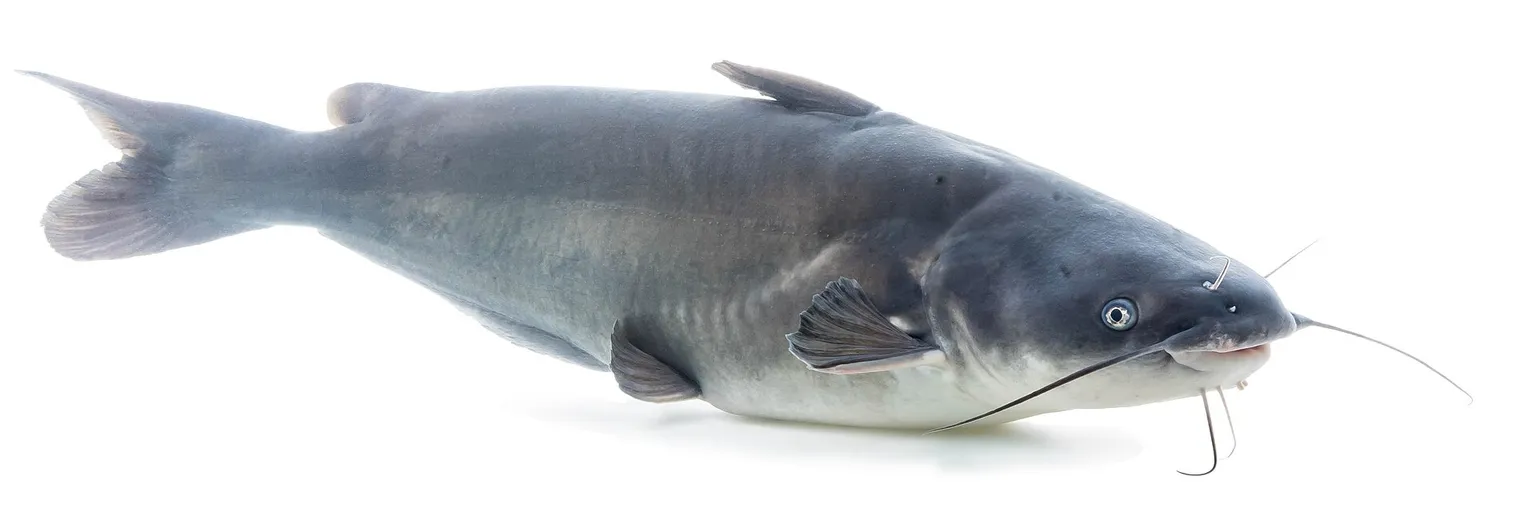
Almost every fish on this site comes with an argument for putting it back. Blue catfish in the Chesapeake are the exception, and it is not a matter of taste.
They were stocked into Virginia rivers decades ago on an assumption that turned out to be wrong, and NOAA now describes them as apex predators throwing the food web off balance.
The assumption that failed
NOAA's account is short and worth reading closely. Blue catfish were introduced to several rivers on Virginia's Western Shore, and the people who stocked them "thought that these fish, which like fresh water, would stay in those rivers."
They did not, because they tolerate higher salinity than anticipated.
That single miscalculation is the whole story. Salt was supposed to be the fence. It was not, so the fish moved into the Bay itself and from there into river after river — helped along by people moving them deliberately. They are now in most of the Bay's river systems, on both the Maryland and Virginia shores.
What they do once they are there
NOAA, on their diet: they "eat basically everything, including blue crabs and other fish." They compete with larger fish for food and also eat them.
USGS diet work in the lower Mississippi puts numbers on the general pattern — fishes 47 percent, molluscs 15 percent, chironomids and oligochaetes 12 percent — and describes the species as highly omnivorous. The mix shifts with size: small blues take bivalves, amphipods and plant matter, while large ones are mostly eating other fish.
In a bay whose signature species are blue crab and striped bass, a large, abundant, generalist predator is a structural problem rather than a nuisance.
So keep them
This is the unusual part, and it is why this page exists.
The Bay states are working together to encourage recreational fishing for blue catfish and to grow a commercial fishery, because harvest is one of the few levers available against an established population. You cannot remove them. You can hold the numbers down.
What size to keep. NOAA's article cites Maryland advising anglers fishing for dinner to keep fish smaller than 30 inches, and elsewhere on the same page gives under 24 inches. The page is not internally consistent, so take the current figure from your state agency — but both point the same way, and smaller fish are better eating regardless.
Larger fish also accumulate more contaminants, which is the usual reason size guidance exists on an estuary.
Telling it from a channel catfish
This matters because the two overlap and the rules can differ.
| Blue catfish | Channel catfish | |
|---|---|---|
| Anal fin | Straight along the bottom edge, ~30–36 rays | Rounded |
| Spots | None | Usually spotted, but adults often lose them |
| Colour | Slate to pale blue-grey | Olive to grey |
| Tail | Forked | Forked |
| Max size | 165 cm / 40–50 kg | Much smaller |
Use the anal fin. Both have forked tails, and an older channel cat can lose its spots entirely, so colour and spotting will fail you on exactly the fish where it matters. The fin shape does not change.
See our blue catfish species page for the full identification, and carp species in North America for the same approach applied to another group people routinely mix up.
How to catch them
Fish current. Blues hold where moving water concentrates shad — below dams, on main channel edges, in the deeper bends of tidal rivers. That is the single most useful instruction on this page.
- Fresh cut shad is the bait. Freshness beats everything, including the specific species.
- Static presentation. They nest in cavities and feed on things that are not running away. This is bait on the bottom, not a retrieve.
- Circle hooks, and do not strike. A blue picks the bait up and moves off with it, which is exactly the behaviour a circle hook is designed around. Let the rod load and start reeling. Striking pulls it out before it can turn. Our FishTrip inline circle hooks page covers the geometry.
- Heavy enough line for current and structure. Trilene Big Game is the usual answer for abrasive water.
- Night, in summer. Winter and early spring produce the biggest fish in tailwaters, where they stack below dams.
When
Year-round, which is unusual and is part of the appeal — the Chesapeake's striped bass season has an August closure and a spring spawning closure, and blue catfish fill both gaps.
They spawn late spring into early summer at 21 to 25°C (70 to 77°F), seeking a protected site with minimal current, with the male guarding the eggs and then the fry.
Our live conditions tool reads water temperature at the nearest NOAA station, which is the variable that moves them.
One rule that is not negotiable
Do not move them. Not to another river, not to a pond, not alive in a livewell to a different launch.
Human movement between river systems is part of how they spread across the Bay in the first place. The same principle governs live bait and invasive carp — see carp species in North America, where USGS makes the identical point about a different fish.
Related
- Blue catfish — identification, range, diet and the verified spawning window
- Chesapeake Bay — the regulations, including the August closure
- Top 5 circle hooks — why you do not strike
- Carp species in North America — the other invasion, and why USGS changed what it calls them
Sources
- Blue Catfish: Invasive and Delicious — NOAA Fisheries — that blue catfish were introduced to several rivers on Virginia's Western Shore decades ago; that people thought these fish, which like fresh water, would stay in those rivers; that they were able to tolerate higher salinity than anticipated; that they eat basically everything, including blue crabs and other fish, and that these apex predators are throwing the food web off balance; and the eating-size guidance citing Maryland's advice to keep fish smaller than 30 inches, with under 24 inches given elsewhere on the same page.
- Blue Catfish (Ictalurus furcatus) — USGS Nonindigenous Aquatic Species, factsheet 740 — the native range across the Mississippi River basin from western Pennsylvania to southern South Dakota, Gulf tributaries from Mobile Bay to the Rio Grande and the Atlantic slope of Mexico; nonindigenous occurrences recorded in 33 states with first observations from 1900 to 2018, largely from intentional stocking for food and sport; a maximum length of 165 cm and weight of 40–50 kg; spawning in late spring to early summer at water temperatures of 21 to 25°C, at protected sites with minimal current, with males guarding the eggs and fry; a lower Mississippi diet of 47 percent fishes, 15 percent molluscs and 12 percent chironomids and oligochaetes, the species being highly omnivorous; and hybridisation with the threatened Yaqui catfish as a documented impact of introduction.
Frequently asked questions
- How do you tell a blue catfish from a channel catfish?
- The anal fin. On a blue it runs straight across the bottom edge with roughly 30 to 36 rays; on a channel catfish it is rounded. Both have forked tails, and an adult channel cat can lose its spots, so colour is unreliable. Use the fin.
- Why should you keep blue catfish in the Chesapeake?
- Because harvest is being used as partial control of an invasive population. NOAA describes blue catfish in the Bay as apex predators throwing the food web off balance, eating basically everything including blue crabs and other fish, and the Bay states are working together to encourage recreational fishing for them and to grow a commercial fishery.
- What size blue catfish are best to eat?
- Smaller ones. NOAA's article cites Maryland advising anglers fishing for dinner to keep fish smaller than 30 inches, and elsewhere on the same page gives under 24 inches. The page is not consistent, so take the figure from your state agency — but the direction is unambiguous: smaller fish eat better.
- What is the best bait for blue catfish?
- Fresh cut shad, fished static in current. Blues hold where moving water concentrates bait, which means below dams and along main channel edges. Freshness matters more than the specific bait fish.
- Do you strike when a blue catfish bites?
- No, not on a circle hook. A blue picks a bait up and moves off with it, and the hook rotates into the jaw hinge as the line comes tight. Striking pulls it out of the mouth before it can turn. Let the rod load and start reeling.
- How big do blue catfish get?
- USGS gives a maximum of 165 cm — about 5 feet 5 inches — and 40 to 50 kg, roughly 88 to 110 pounds. That makes it the largest catfish in North America. Most rod-caught fish are 5 to 30 pounds.
- Where are blue catfish native?
- The Mississippi River basin from western Pennsylvania to southern South Dakota, Gulf tributaries from Mobile Bay to the Rio Grande, and the Atlantic slope of Mexico. USGS records them as nonindigenous in 33 states, almost all from deliberate stocking for food and sport.
- When do blue catfish spawn?
- Late spring into early summer at 21 to 25°C, which is 70 to 77°F. They nest in a cavity or protected site with minimal current, and the male guards the eggs and then the fry.