When Do Northern Pike Spawn in Wisconsin?
Wisconsin northern pike spawn from late March to early April at 34–40°F, as soon as the ice starts breaking up. They're the first fish in the state to spawn — weeks ahead of walleye in the same lake.
Published
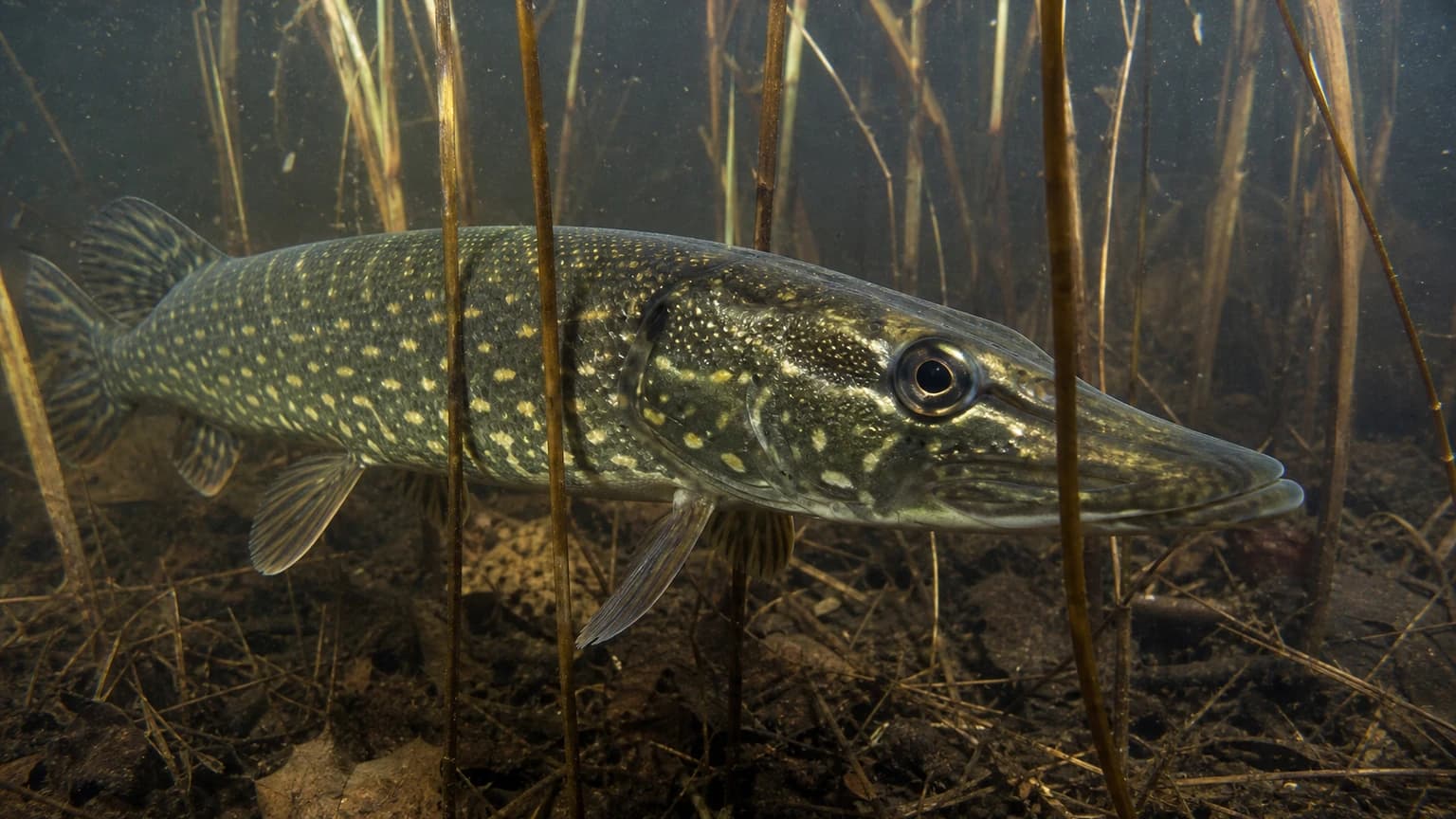
Wisconsin northern pike spawn from late March to early April, at water temperatures of 34–40°F, as soon as the ice begins to break up. Wisconsin DNR notes 36–37°F seems to be the preferred range.
That is only a few degrees above freezing — and it makes pike the first major gamefish in the state to spawn.
Pike are done before walleye start
This is the comparison worth having, because both fish share the same lakes and most anglers think of the spring spawn as one event.
| Northern pike | Walleye | |
|---|---|---|
| Spawning temperature | 34–40°F (prefers 36–37°F) | 42–50°F at peak |
| Timing | Late March – early April, at ice break-up | Mid-April – early May |
| Where | Flooded emergent vegetation | Rock, rubble and gravel; rivers and windswept shallows |
| Eggs | Adhere to plants | Broadcast over rock |
| Parental care | None | None |
Both figures are Wisconsin DNR's. The pike are finished before the walleye begin.
Practically, that means the flooded marsh you find full of pike in the first week of April will be empty of them by the time the walleye run gets going — and it means pike are the reason to get on the water absurdly early.
Flooded vegetation is the whole game
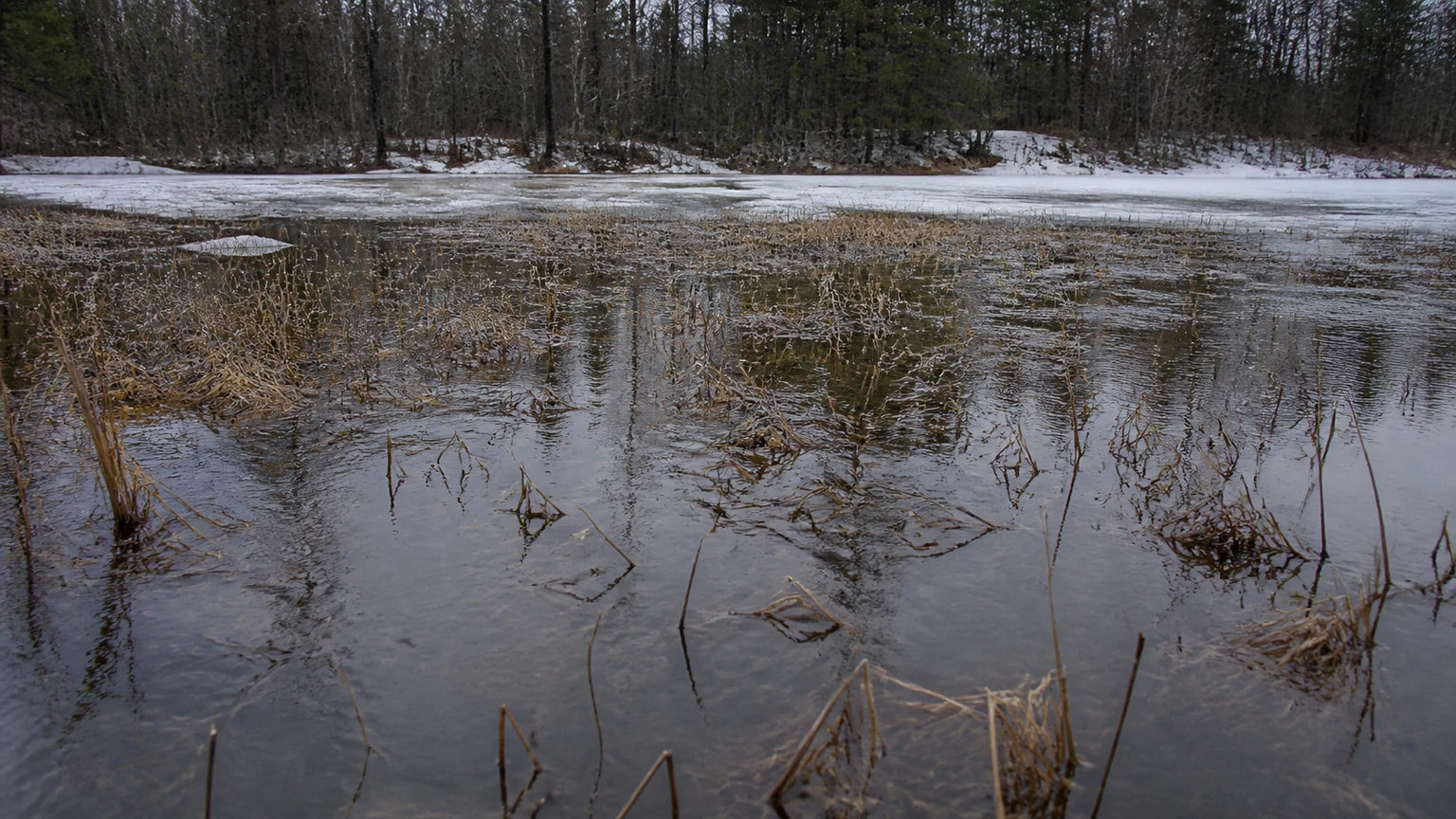
Pike do not use gravel. They spawn in flooded areas with emergent vegetation, and the eggs adhere to the plants.
That single fact tells you where to look and it tells you why some years are better than others:
- Marshes and boggy bays at the back of a lake.
- Flooded shoreline grass — water that is dry ground in August.
- Backwaters and drowned river-mouth flats.
- Shallow, dark-bottomed bays on the north side, which warm first.
And the consequence: a high-water spring is a good pike year. More flooded vegetation means more surface for eggs to stick to, and better survival. A low-water spring with the marshes still dry is not.
Spawning itself involves one female and one to three attendant males, thrashing through shallow vegetation. There is no parental care — the eggs are scattered and abandoned. Nothing guards them, which is why the vegetation matters so much.
Timing across Wisconsin
| Region | Ice break-up | Spawning |
|---|---|---|
| Southern Wisconsin | Early-to-mid March | Mid-to-late March |
| Central Wisconsin | Mid-to-late March | Late March – early April |
| Northern Wisconsin | Late March – mid April | Early-to-mid April |
This table is modelled, not measured. Wisconsin DNR publishes late March to early April statewide without a regional split; the rows apply the 34–40°F range to Wisconsin's normal ice-out gradient. Ice-out varies enormously year to year — a late, cold spring can push northern lakes two or three weeks — so track ice conditions rather than dates.
The useful shortcut: pike spawn essentially at ice-out. If you know when the ice went out on your water, you know when the pike spawned.
Fishing around it
Wisconsin's northern pike season and regulations vary by zone and by water, and some waters carry closed seasons that overlap the spawn while others are open year-round. Check the current Wisconsin fishing regulations for the specific lake before you go — this is not a state where one answer covers everything.
Where fishing is open:
Pre-spawn (as ice goes out). Big females stage at the mouths of spawning bays and creek channels before pushing in. This is the best big-fish window of the year, and it is short. Work the first drop outside a marsh entrance with large soft plastics or suspending jerkbaits, retrieved slowly — the water is barely above freezing and nothing is chasing hard.
During the spawn. Fish are in inches of water among the vegetation and are not feeding meaningfully. Leave them to it.
Post-spawn (mid-April onward). Fish are spent, thin and hungry, and they drop back to the first weed edges and adjacent flats. They feed hard for a couple of weeks. Slow presentations still — the water is cold — but this is very good fishing.
Handle big females carefully. A large spring pike is almost certainly a female full of eggs or just spent from producing them, and pike of that size take many years to grow. Support the body horizontally, keep her out of the water for seconds not minutes, and put her back.
Related
- Seasonal fishing and verified spawning temperatures — the verified spawning temperature table, with pike at the cold end of it.
Sources
- Northern pike — Fishes of Wisconsin, Wisconsin DNR — spawning from late March to early April as the ice begins to break up; 34–40°F with 36–37°F preferred; flooded areas with emergent vegetation and eggs adhering to plants; one female with one to three attendant males; no parental care.
- Walleye — Fishes of Wisconsin, Wisconsin DNR — the walleye comparison: migration beginning at 38–44°F after ice-out, spawning peaking at 42–50°F, generally mid-April to early May in Wisconsin.
The regional timing table is modelled: Wisconsin DNR publishes a statewide late-March-to-early-April window without a per-region breakdown, so the rows apply the 34–40°F range to Wisconsin's normal ice-out gradient. Ice-out timing varies by weeks between years — track ice conditions, not the calendar.
Frequently asked questions
- When do northern pike spawn in Wisconsin?
- Wisconsin DNR gives late March to early April, as soon as the ice begins to break up. Spawning occurs at water temperatures between 34 and 40°F, with 36 to 37°F the preferred range.
- What water temperature do northern pike spawn at?
- Between 34 and 40°F, and Wisconsin DNR notes 36 to 37°F seems to be preferred. That is only a few degrees above freezing — pike spawn earlier and colder than any other major Wisconsin gamefish.
- Do pike spawn before walleye?
- Yes, by weeks. Pike spawn at 34–40°F as the ice goes out. Walleye migration only begins at 38–44°F and walleye spawning peaks at 42–50°F, which in Wisconsin generally means mid-April to early May. In the same lake, the pike are finished before the walleye start.
- Where do northern pike spawn?
- In flooded areas with emergent vegetation, where the eggs adhere to the plants. Marshes, flooded backwaters, bays and drowned shoreline grass — not gravel or open water. Spawning involves one female and one to three attendant males, and there is no parental care.
- Do pike guard their eggs?
- No. Wisconsin DNR is explicit that there is no parental care. The eggs are scattered onto vegetation and abandoned, which is why the quality of the flooded vegetation matters so much to how many survive.
Gear for this
 AccessoriesCheck price on Amazon
Stream & Lake Water Thermometer
The one piece of kit every spawn article on this site tells you to carry.
ChronicAnglers is reader-supported. When you buy through links on our site, we may earn an affiliate commission at no extra cost to you.
Explore related
- SpeciesNorthern pikeIdentification, range, diet, and verified spawning window.
- RelatedNorthern Pike: Identification and How to Catch Them
- Also in WisconsinWhen Do Bluegill Spawn in Wisconsin?
- Also in WisconsinWhen Do Brook Trout Spawn in Wisconsin?
- Also in WisconsinWhen Do Brown Trout Spawn in Wisconsin?