When Do Brown Trout Spawn in Wisconsin?
Wisconsin brown trout spawn from late October into November, triggered at 42–48°F. The complication is legal, not biological: inland trout season closes on 15 October, before the peak.
Published
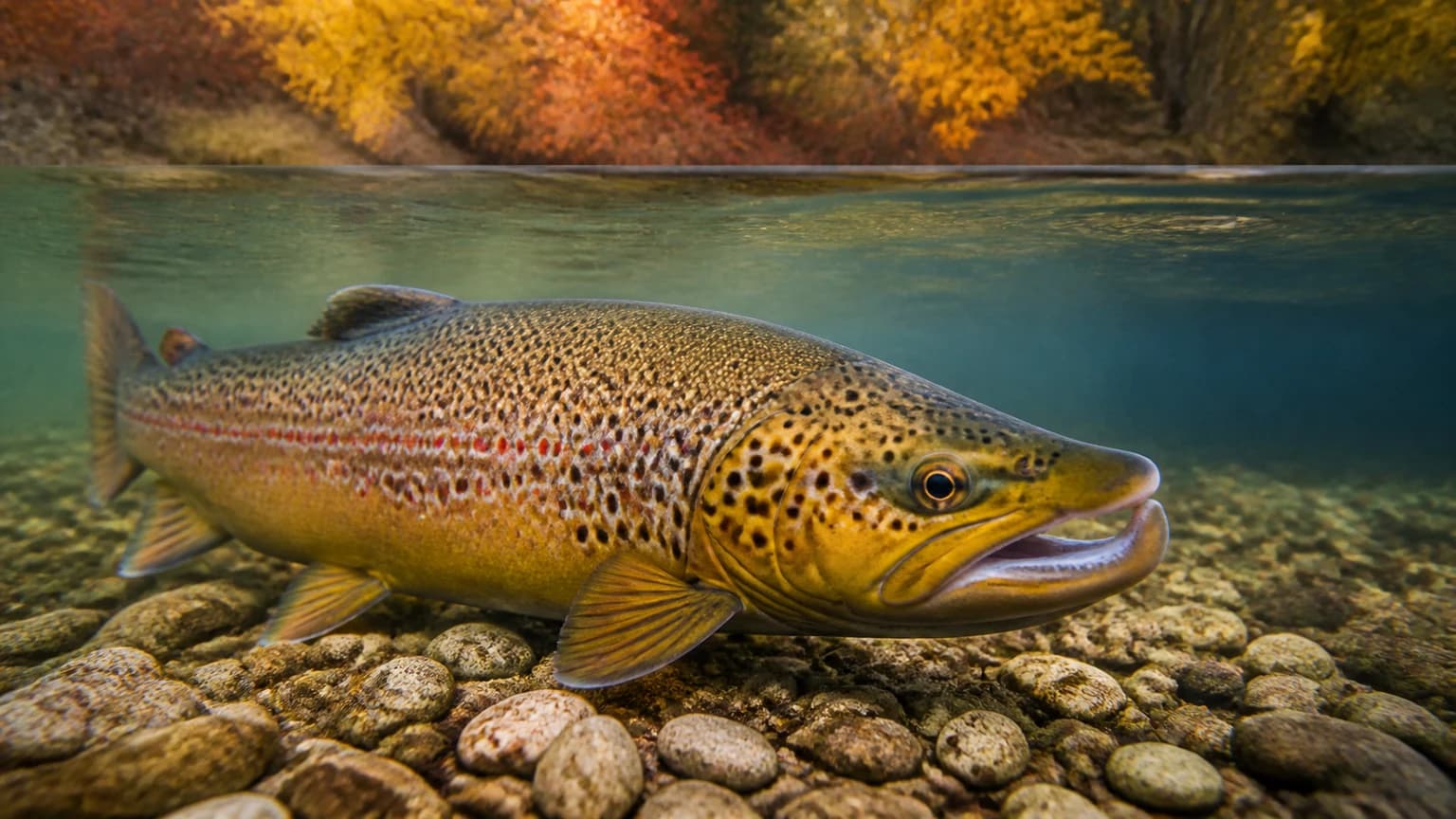
Wisconsin brown trout spawn from late October into November, when water falls to 42–48°F. The complication is not biological. Wisconsin's inland trout season closes on 15 October — before the peak — so the spawn you can legally fish is not the one in your local stream.
The season closes before the spawn does
This is the fact that matters most in Wisconsin and the one every general "when do brown trout spawn" page misses, because it is a state regulation rather than biology.
The inland trout harvest season for streams, springs and spring ponds runs through 15 October. Brown trout in those same streams do most of their spawning after that date. So on inland running water, the peak of the spawn happens with the season shut.
That is not an accident. It is a straightforward protection of spawning fish and redds, and it removes the ethical question that dominates brown trout articles in other states — in Wisconsin's inland streams the answer is made for you.
Two consequences worth planning around:
- Late September into mid-October is your legal window on inland streams, and it lands squarely on the pre-spawn migration, when fish are moving, aggressive and not yet on gravel. This is arguably better fishing than the spawn itself.
- Inland lakes and ponds follow different rules and many stay open past 15 October. So do Lake Michigan and Green Bay waters.
Always check the Guide to Wisconsin's Trout Fishing Regulations for the specific water — Wisconsin's trout regulations are water-by-water and change.
The run and the spawn are different events
Wisconsin DNR describes brown trout returning "in the autumn to spawn," and September–October fish already showing spawning colour — tan to reddish-brown with black and red spots. That sentence is what most pages paraphrase into "brown trout spawn in September and October."
What it describes is the migration. The biology is separate:
| Event | Water temperature | Typical Wisconsin timing |
|---|---|---|
| Fish begin moving into tributaries | 45–50°F, falling | Late September – October |
| Redd construction and egg deposition | 42–48°F | Late October – November |
| Eggs incubate in gravel | — | Through winter |
| Fry emerge | — | Roughly February – April |
The two events are commonly four to six weeks apart. An angler who reads "September and October" and shows up expecting spawning fish is arriving for the run — which is fine, but it is a different fishery with different tactics.
⚠️ You will see "38–44°F" quoted as the peak spawning range on a number of sites. It is uncorroborated and it contradicts the agency and peer-reviewed sources. Use 42–48°F.
Timing by region
| Region | Fish moving | Redds start | Peak |
|---|---|---|---|
| Southern Wisconsin (Driftless spring creeks) | Late September | Late October | Early-to-mid November |
| Central Wisconsin | Mid-September | Mid-to-late October | Late October – early November |
| Northern Wisconsin | Early-to-mid September | Mid-October | Late October |
| Lake Michigan / Green Bay tributaries | September – October | Late October | November |
This table is modelled, not measured. It applies the 42–48°F threshold to Wisconsin's normal autumn cooling pattern. Driftless spring creeks are the deliberate exception: constant groundwater input holds them far more stable than freestone streams, so they cool later and more slowly, and their spawn runs correspondingly late. A thermometer beats this table every time.
Lake Michigan browns go back to where they were stocked
Here is the Wisconsin-specific detail that is genuinely actionable, and it comes straight from the DNR.
Wisconsin's Lake Michigan brown trout fishery is a stocked fishery. In the DNR's own words, little successful natural reproduction occurs, so fish must be stocked each year to maintain it. And mature fish — at two to four years old — return in autumn to the sites where they were stocked, not to natal streams they never came from.
That changes how you find them. You are not reading a watershed for spawning gravel. You are looking up where the DNR put fish two to four years ago, because that is where they will pile up in October and November.
They spawn, or attempt to, in shallow gravelly stream headwaters or on rocky reefs near shore.
One more Wisconsin peculiarity worth knowing: between October and June, the cooling-water discharge plumes of power plants from Kewaunee south hold an excellent brown trout fishery. Warm water in a cold lake concentrates fish, and it overlaps the entire spawning period.
How to fish each phase
Pre-spawn — the run (September to mid-October)
The legal window on inland streams, and the aggressive one. Fish are moving and territorial rather than locked on gravel. Streamers swung down and across, larger than you would fish in summer. Rising water after autumn rain is the trigger — go when the river bumps and starts to clear.
Spawn (late October into November)
Inland streams are closed. On open water, the rule is simple: do not fish the redds. A redd is a clean, pale oval of gravel in shallow fast water at the tail of a pool, obvious once you know the shape. Fish holding on it are spawning; fish holding below it are feeding on drifting eggs and are fair game.
Do not wade through gravel that looks freshly cleaned. Eggs sit in it until spring, and a boot ends that.
Post-spawn (late November into winter)
Spent fish are thin, tired and hungry. They drop back to deeper holding water and feed opportunistically. Egg patterns and small streamers, fished slow and deep.
Related
- Brown trout species profile — identification, range, and the verified spawning window.
- When do brown trout spawn in Michigan? — the run-versus-spawn distinction in detail.
- Seasonal fishing and verified spawning temperatures
Sources
- Brown Trout — Wisconsin DNR (PDF) — spawning colour in September–October; maturity at 2–4 years; return to stocking sites; spawning in shallow gravelly headwaters and rocky nearshore reefs; little successful natural reproduction; the October–June power-plant plume fishery from Kewaunee south.
- DNR Reminds Anglers That Inland Trout Fishing Season Closes Oct. 15 — Wisconsin DNR — the inland stream, spring and spring-pond closing date, and that inland lakes and ponds differ.
- Fishing seasons — Wisconsin DNR — current season dates.
- Montana Field Guide — Brown Trout, Montana FWP — 42–48°F spawning threshold.
- Brown Trout Spawn Timing, Redd Locations, and Stream Characteristics in Spearfish Creek, South Dakota (2020) — redd survey at comparable latitude: first redds 15 October, peak in the first week of November, none after 12 November.
The regional timing table is modelled from the 42–48°F spawning threshold applied to Wisconsin's autumn cooling pattern, calibrated against the Spearfish Creek redd survey at comparable latitude. Driftless spring creeks run later than the table suggests because groundwater holds them warm. Confirm with a thermometer or USGS gauge before planning a trip.
Frequently asked questions
- When do brown trout spawn in Wisconsin?
- Late October into November in most Wisconsin water, triggered when temperature falls to 42–48°F. Fish begin moving as water drops through 45–50°F, which is typically late September into October, so the run and the spawn are separated by several weeks.
- Can you fish for brown trout during the spawn in Wisconsin?
- Not on inland streams. The inland trout harvest season for streams, springs and spring ponds closes on 15 October, which is before the spawning peak. Lake Michigan and Green Bay tributaries run on different rules, and that is where Wisconsin's legally fishable fall brown trout fishery is.
- What water temperature do brown trout spawn at?
- 42–48°F (6–9°C). Migration into tributaries begins as water falls through 45–50°F. The frequently repeated figure of 38–44°F for peak spawning is uncorroborated and should not be relied on.
- Where do Lake Michigan brown trout spawn in Wisconsin?
- Mostly they do not spawn successfully at all. Wisconsin DNR notes that little successful natural reproduction occurs, so the fishery is maintained by stocking — and mature fish return in autumn to the sites where they were stocked rather than to natal streams. Those stocking sites are the places to fish.
- Do brown trout die after spawning?
- No. Unlike Pacific salmon, brown trout survive spawning and return in later seasons. Males do develop a kype, a hooked lower jaw, during the spawning season.
Gear for this
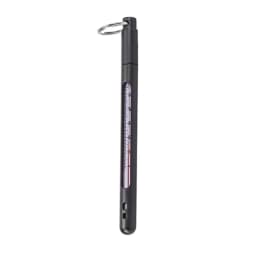 AccessoriesCheck price on Amazon
Stream & Lake Water Thermometer
The one piece of kit every spawn article on this site tells you to carry.
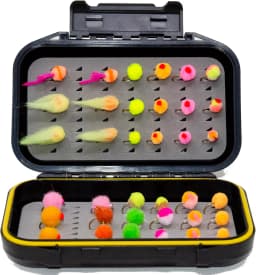 LuresCheck price on Amazon
Egg Patterns & Beads
The presentation every spawn article here points you at — fished below the redds, not on them.
- Check price on Amazon
ChronicAnglers is reader-supported. When you buy through links on our site, we may earn an affiliate commission at no extra cost to you.
Explore related
- SpeciesBrown troutIdentification, range, diet, and verified spawning window.
- UtahWhen Do Brown Trout Spawn in Utah?
- ColoradoWhen Do Brown Trout Spawn in Colorado?
- MichiganWhen Do Brown Trout Spawn in Michigan?
- MontanaWhen Do Brown Trout Spawn in Montana?
- Also in WisconsinWhen Do Bluegill Spawn in Wisconsin?
- Also in WisconsinWhen Do Brook Trout Spawn in Wisconsin?
- Also in WisconsinWhen Do Northern Pike Spawn in Wisconsin?