When Do Bluegill Spawn in Wisconsin?
Wisconsin bluegill spawn from late May through early August, peaking in June. But they don't spawn once — they spawn in 4 to 11 separate bouts, which is why the beds keep coming back all summer.
Published
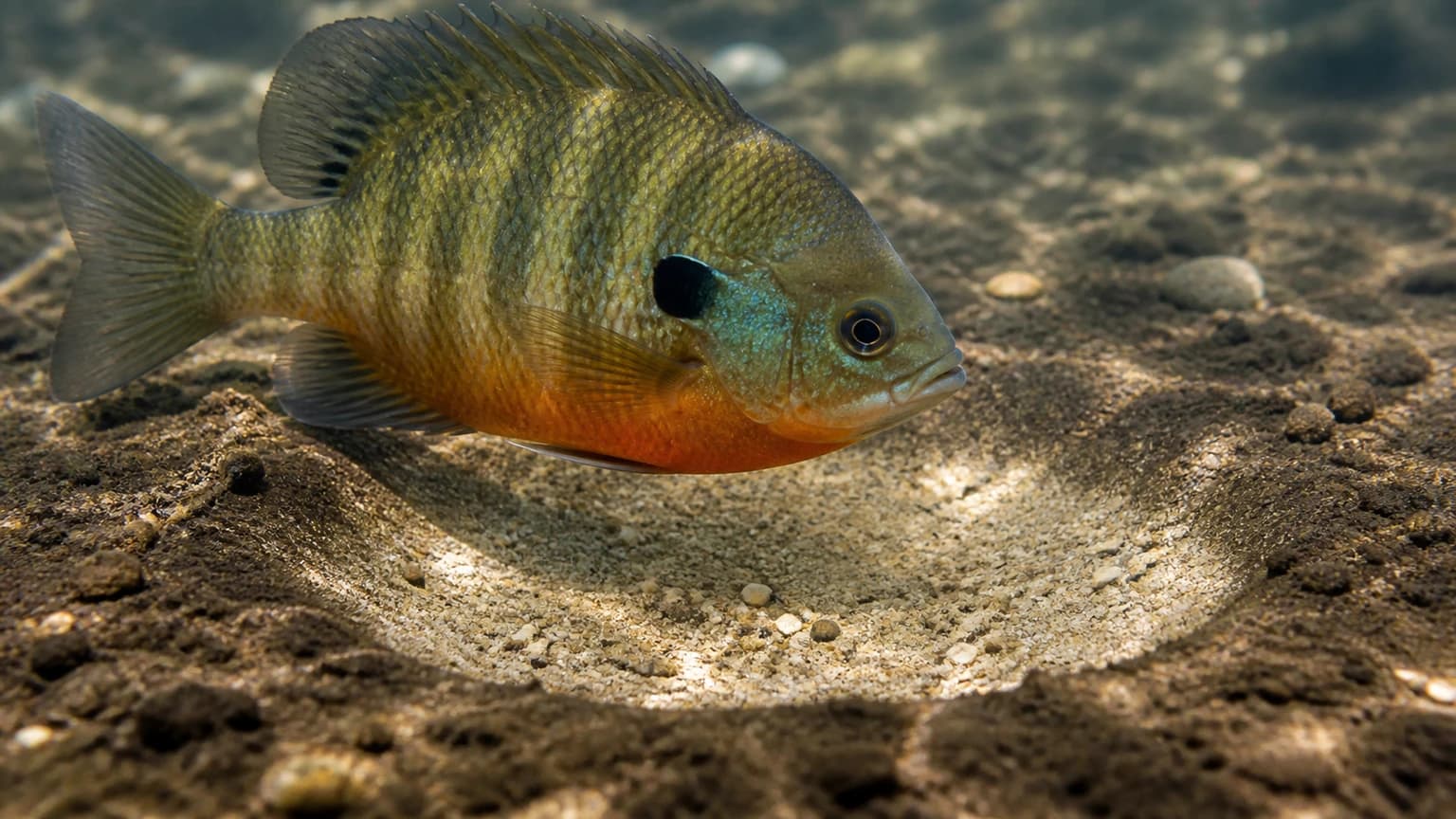
Wisconsin bluegill spawn from late May through early August, peaking in June, at water temperatures of 67–80°F. But the useful answer is that they do not spawn once. They spawn in 4 to 11 separate bouts, which is why you keep finding fresh beds in July.
They don't spawn once — that's the whole thing
Nearly every page you will read gives you a single date for "the bluegill spawn." That is not how the fish behave, and it is why the answers never quite match what you see on the water.
Wisconsin DNR research on three small lakes in the northwest of the state tracked spawning across multiple seasons and found multiple discrete bouts running from late May through early August. The seasons ranged from:
- 31 days long, with 4 spawning bouts, to
- 112 days long, with 11 spawning bouts
Same lakes. Nearly a fourfold difference in how long the spawn lasted, and roughly triple the number of waves.
So if you found bedding fish over Memorial Day and the beds were empty two weeks later, you did not miss the spawn. You caught the gap between waves. Come back.
The two temperatures that actually matter
The number that circulates everywhere is "bluegill spawn at 65°F." The research splits that into two separate thresholds, and the distinction is the practical part.
| What's happening | Water temperature |
|---|---|
| Fish move shallow; males start fanning nests | ~64°F |
| Spawning season opens in Wisconsin | 67°F, in May |
| Eggs actually go in the gravel | 70°F and above |
| Spawning becomes rare above | 80°F |
The critical line: a Wisconsin DNR study found actual spawning did not occur below 70°F, and only rarely above 80°F.
So a bed you find at 65°F is under construction, not in use. That is not a disappointment — it is the pre-spawn window, when the biggest males are on the beds, aggressive, and have not yet been fished over.
Carry a thermometer. Surface temperature off the side of the boat is enough; you are looking for the low 70s in the shallows, which will run several degrees warmer than the main lake on a sunny afternoon.
Timing by region
Southern Wisconsin waters cross 70°F before northern ones, and small shallow lakes cross before large deep ones. The observed anchor is the northwest: late May through early August.
| Region | Beds appear | Peak | Notes |
|---|---|---|---|
| Southern Wisconsin | Mid-to-late May | Early-to-mid June | Shallow, fertile lakes warm first |
| Central Wisconsin | Late May | Mid-June | |
| Northern Wisconsin | Late May to early June | Mid-to-late June | Observed range: late May to early August |
This table is modelled, not measured. It applies the 70°F threshold to Wisconsin's normal spring warming pattern, anchored on the northwestern lakes where the season was actually recorded. A warm April or a cold, windy May will move every row by a week or more.
Fish the thermometer, not the calendar. A shallow bay on a dark-bottomed lake in Vilas County can beat a big clear lake in Dane County, whatever the map says.
Where the beds are — and why depth is about clarity, not season
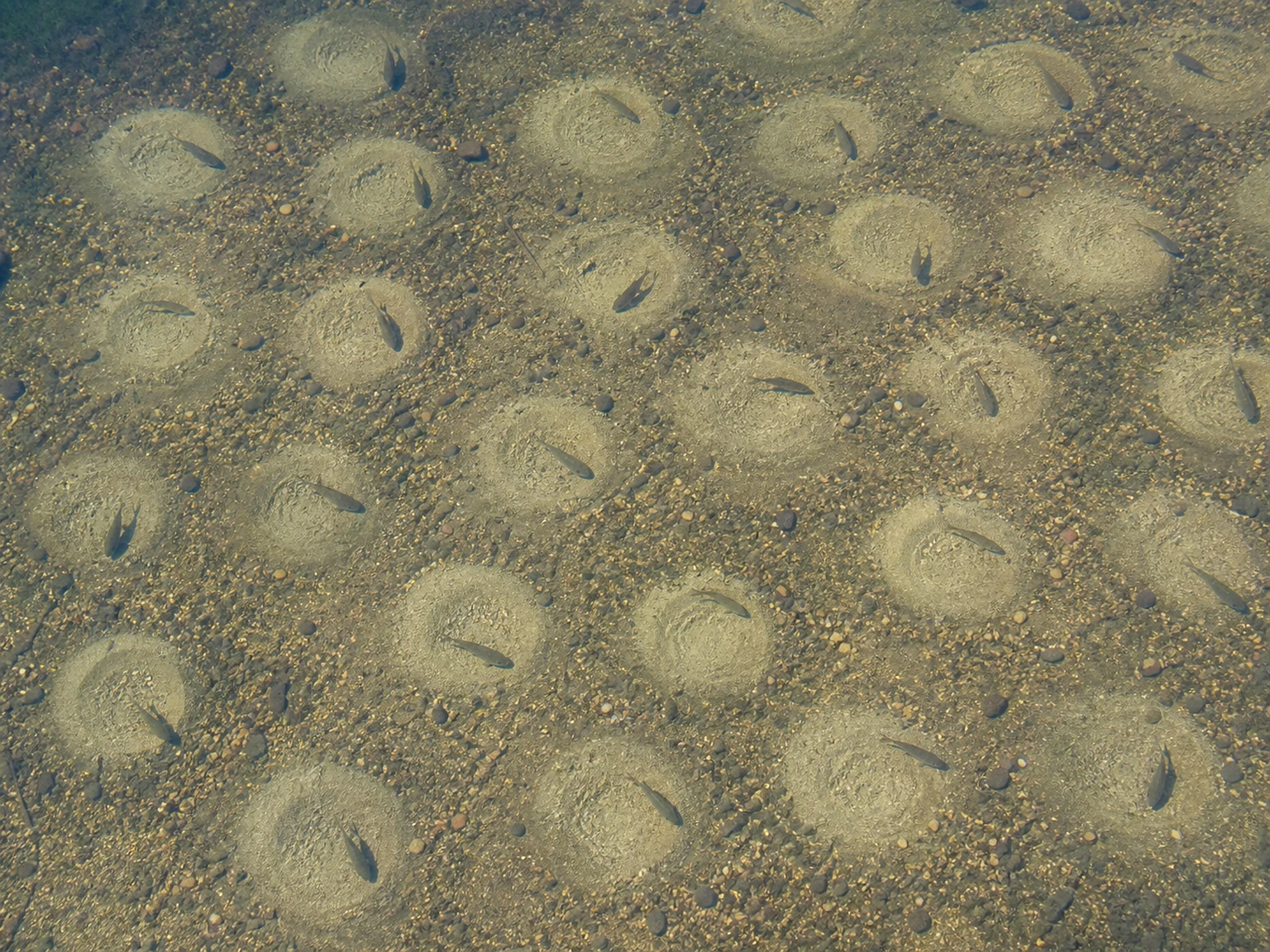
This is where most advice goes wrong. "Bluegill beds are in 1 to 3 feet of water" is true in stained lakes and badly wrong in clear ones.
Bluegill nest colonially — dozens of saucer-shaped nests packed together, which is why a bed is unmistakable once you find one. What varies is how deep they sit, and the variable is water clarity, because larval bluegill are vulnerable to ultraviolet light.
In a very clear Pennsylvania lake, researchers tracked nest depth across a single season:
- 8 June — 88% of nests were shallower than 5 feet.
- 23 June — 59% of nests were 13 to 15 feet deep.
- Deepest colony recorded: 19 feet.
Nest depth increased as the season went on. In stained or shallow water it is the opposite picture: most nests under 2 feet, on coarse gravel, and shallow-nesting fish deliberately site their beds under overhanging trees and shoreline structure to get out of the light.
Two rules that follow:
- Clear lake — look deeper than you expect, and deeper as summer goes on. If you are only checking the first 3 feet in late June on a clear northern lake, you are looking in the wrong place.
- Stained lake — stay shallow, and fish the shade. Overhanging brush, docks, laydowns.
Substrate is sand, gravel or firm muck, with a slight preference for gravel mixed with sticks. And colonies are reused year after year — so mark them. A bed you find this June is a starting point next June.
How to fish each phase
Pre-spawn — beds under construction (~64–69°F)
The best window of the year for size. Males are shallow, holding on nests they have cleared but not yet used, and they are territorial rather than pressured.
Work the outside edge of the flat with a small jig under a float, or cast a 1/32 oz jig past the bed and swim it through. Fish the biggest, darkest fish on the outside of the colony — those are the mature parental males.
Spawn — beds in use (70–80°F)
Fish are locked on and will strike almost anything entering the nest, which is exactly why this phase needs restraint (below). A cricket or a redworm under a slip float, or a small popper on the fly rod, is all it takes.
Between bouts, and post-spawn
The gap between waves is when most anglers conclude "the spawn is over." Fish pull to the first weed edge or drop adjacent to the colony and hold there until the next bout. Move 20 yards out and go down a few feet rather than leaving.
Fishing over bedding bluegill — the part worth saying
Bedding bluegill are the easiest fish in Wisconsin to catch, and the males on those beds are the ones that took seven or eight years to reach the size worth keeping.
A guarding male will not leave the nest. Remove him and the eggs and fry are unprotected — parental care is a real driver of larval survival, not a nicety. Take a few for a meal if you want them; cleaning out an entire colony is a different act, and its effect shows up in that lake's size structure for years.
Wisconsin has documented long-term declines in average bluegill size, and heavy harvest of large parental males is a substantial part of that picture. Recovery of size structure in an overexploited population has been estimated at 6 to 8 years even under tighter regulations.
Check the current Wisconsin DNR regulations for the water you are fishing — panfish bag limits vary by lake under Wisconsin's panfish management plan.
Related
- Bluegill species profile — identification, range, and the verified spawning window.
- Seasonal fishing and verified spawning temperatures — why water temperature predicts behaviour better than the month does.
Sources
- Bluegill — Fishes of Wisconsin, Wisconsin DNR — spawning late May to early August, peaking June, at 67–80°F.
- Bluegill Literature Review — Wisconsin DNR (PDF) — the review synthesising the studies below.
- Beard, T. D. 1982. Population dynamics of young-of-the-year bluegill. Wisconsin DNR Technical Bulletin 127 — the 70°F egg-deposition threshold, the 80°F upper bound, and the 4–11 bouts across 31–112 day seasons.
- Snow et al. (1970) — Wisconsin spawning begins in May at 67°F, peaks in June, continues into early August.
- Scott and Crossman (1973) — onset behaviour from about 64°F.
- Olson, M. H., et al. 2008. Patterns of ultraviolet radiation exposure in bluegill nests over the course of the spawning season. Transactions of the American Fisheries Society 137:1446–1454 — nest depth by date and clarity.
- Bain, M. B., and L. A. Helfrich. 1983. Role of male parental care in survival of larval bluegills. Transactions of the American Fisheries Society 112:47–52.
- Beard, T. D., Jr., and T. E. Essington. 2000. Effects of angling and life history processes on bluegill size structure. Transactions of the American Fisheries Society 129:561–568 — 6–8 year recovery estimate.
The regional timing table is modelled: it applies the 70°F egg-deposition threshold to Wisconsin's normal spring warming pattern, anchored on the northwestern lakes where the season was directly observed. Confirm with a thermometer before planning a trip.
Frequently asked questions
- When do bluegill spawn in Wisconsin?
- Late May through early August, peaking in June. Wisconsin DNR gives the spawning temperature range as 67–80°F. Because bluegill spawn in repeated bouts rather than once, beds are found across the whole of that window, not just at the June peak.
- What water temperature do bluegill spawn at?
- There are two thresholds. Fish move shallow and males begin fanning nests at around 64°F, but a Wisconsin DNR study found actual egg deposition did not occur below 70°F, and was rare above 80°F. Beds at 65°F are under construction, not in use.
- How many times do bluegill spawn in a season?
- Between 4 and 11 separate bouts. A Wisconsin DNR study of three northwestern lakes recorded spawning seasons ranging from 31 days with 4 bouts to 112 days with 11 bouts, from late May through early August.
- How deep are bluegill beds in Wisconsin?
- In stained water most nests sit in under 2 to 3 feet. In clear lakes they go far deeper, and they get deeper as the season progresses — one Pennsylvania study recorded 59 percent of nests at 13 to 15 feet by late June, with colonies as deep as 19 feet. Water clarity sets the depth, not the calendar.
- Do bluegill use the same beds every year?
- Yes. Bluegill nest colonially and specific colony sites are used repeatedly across years. A bedding area located one June is worth checking the next.
Gear for this
 AccessoriesCheck price on Amazon
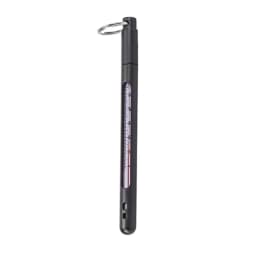
Stream & Lake Water Thermometer
The one piece of kit every spawn article on this site tells you to carry.
- Check price on Amazon
- Check price on Amazon

- Check price on Amazon
ChronicAnglers is reader-supported. When you buy through links on our site, we may earn an affiliate commission at no extra cost to you.
Explore related
- SpeciesBluegillIdentification, range, diet, and verified spawning window.
- IllinoisWhen Do Bluegill Spawn in Illinois?
- MichiganWhen Do Bluegill Spawn in Michigan?
- Also in WisconsinWhen Do Brook Trout Spawn in Wisconsin?
- Also in WisconsinWhen Do Brown Trout Spawn in Wisconsin?
- Also in WisconsinWhen Do Northern Pike Spawn in Wisconsin?