When Do Brook Trout Spawn in Wisconsin?
Wisconsin brook trout spawn from late September into November over groundwater seeps. As with brown trout, the inland stream season closes 15 October — so much of the spawn happens with the season shut.
Published
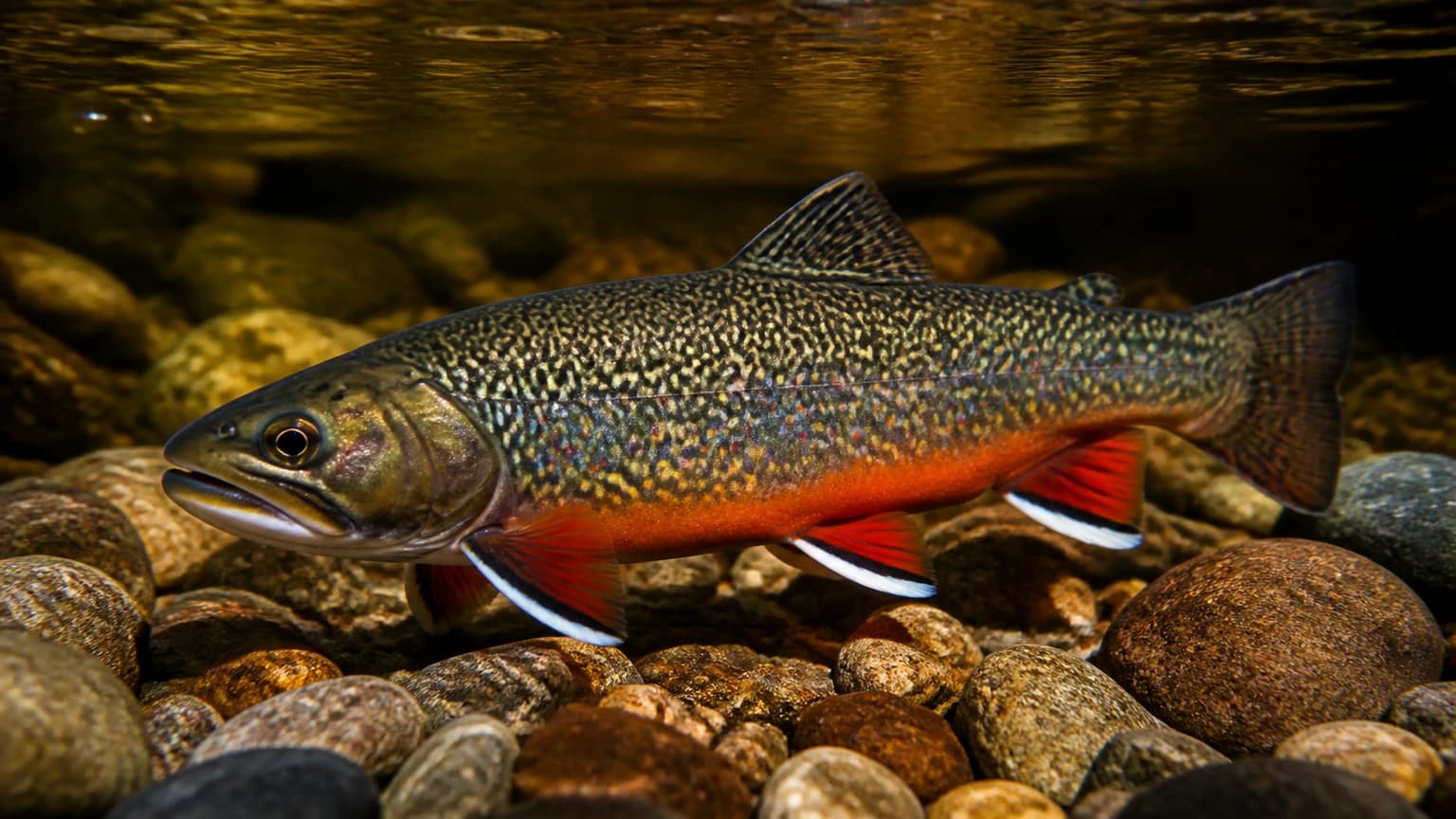
Wisconsin brook trout spawn from late September into November, over gravel sited on upwelling groundwater. As with brown trout, the practical complication is legal: the inland trout season for streams closes on 15 October, and much of the spawn happens after that.
The season shuts partway through the spawn
Wisconsin's inland trout harvest season for streams, springs and spring ponds runs through 15 October. Brook trout in those streams begin spawning in late September and continue into November.
So the season and the spawn overlap for a couple of weeks and then the water closes. This is deliberate: closing running water in mid-October protects fish on redds through the bulk of the spawn.
What that gives you is a clean answer to the question anglers usually have to wrestle with themselves. On Wisconsin inland streams:
- Late September to 15 October is your window, and it lands on the early spawn and the pre-spawn — fish concentrated in the upper reaches, feeding hard, not yet all paired.
- After 15 October, inland streams are shut. Inland lakes and ponds follow different rules and many stay open.
Check the Guide to Wisconsin's Trout Fishing Regulations for the specific water — Wisconsin's trout rules are water-by-water and they change.
The seep, not the date
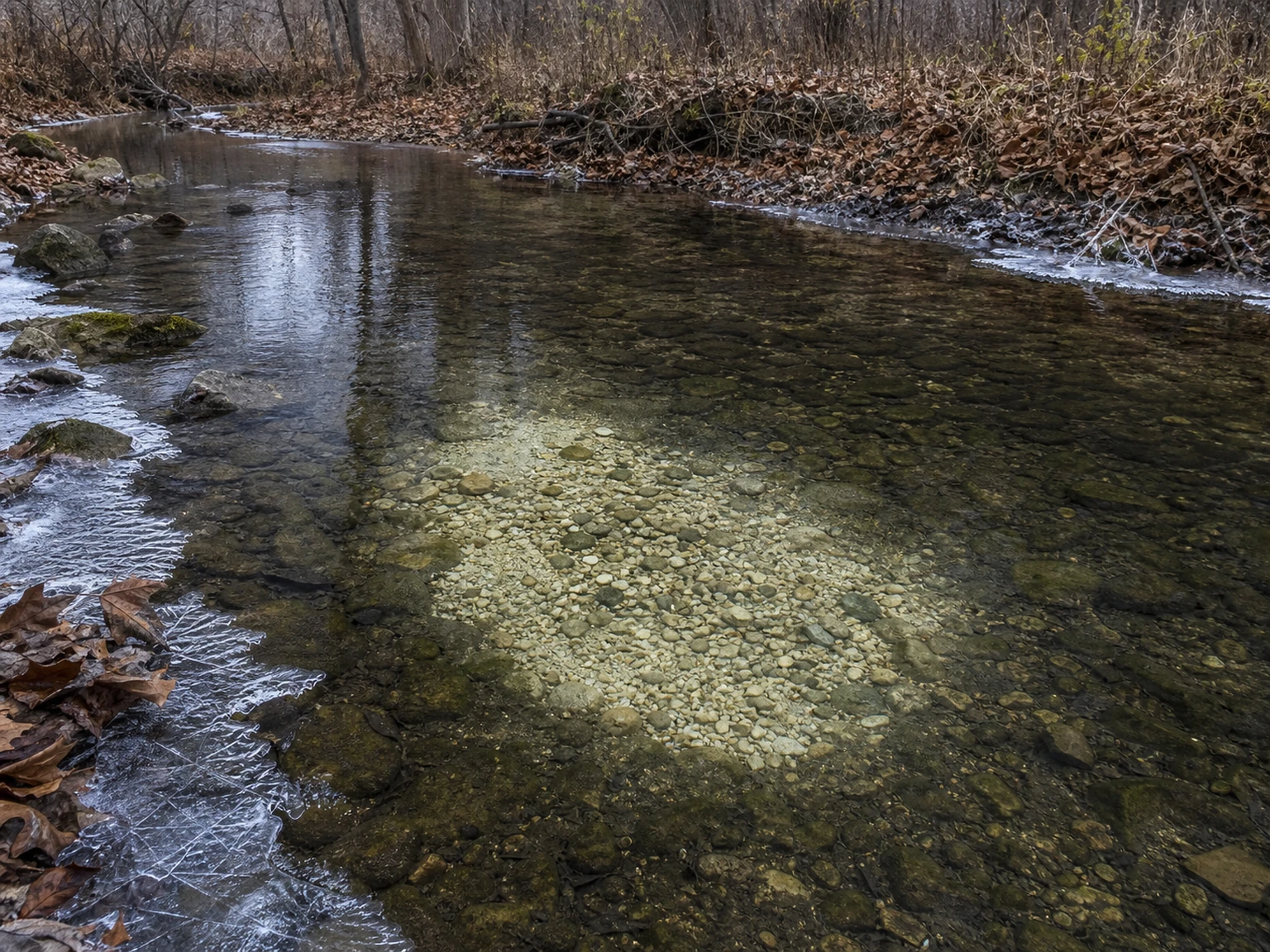
Brook trout do not spawn at a temperature so much as they spawn over one. A study of their thermal requirements found:
| Threshold | Temperature |
|---|---|
| Ovulation and spawning still occur at | 61°F and below |
| Viable eggs per female drop by half above | 53°F |
| Normal hatch drops by half above | 55°F |
| Optimum for embryo survival | ~43°F |
They can spawn at 61°F, but the eggs will not survive it. And those eggs then sit in gravel from October until spring, through everything a Wisconsin winter does.
The solution is groundwater upwelling. Water coming up through gravel emerges near the local mean annual temperature and stays there — close to the 43°F optimum, in October and in February. It also keeps the eggs from freezing and supplies oxygen.
Which is why brook trout redds are in spring-fed water, and why finding the spring finds the fish:
- Streambed that stays ice-free when the margins freeze.
- Gravel that steams or fogs on a cold morning.
- Clean gravel in an otherwise silted bed.
- The heads of spring-fed feeder creeks and small hard-bottomed side channels.
Wisconsin is unusually well supplied with this. The Driftless Area spring creeks in the southwest are groundwater-driven almost by definition, and the northern forest streams run over sand and gravel with abundant seepage.
Timing across the state
Brook trout invert the usual expectation: the coldest water reaches spawning condition first, so the north and the spring-fed headwaters go early.
| Region | Redds start | Peak |
|---|---|---|
| Northern Wisconsin forest streams | Late September | Mid-October |
| Central Wisconsin | Early October | Mid-to-late October |
| Driftless Area spring creeks | Early-to-mid October | Late October – early November |
This table is modelled, not measured. It applies the "coldest water first" rule to Wisconsin's autumn cooling. The Driftless is the deliberate exception at the bottom: constant groundwater input holds those creeks far more thermally stable than forest freestones, so they arrive at spawning temperature later and more gradually.
In practice individual streams vary more than regions do, because a spring-fed creek sits within a couple of degrees of its groundwater temperature all year. Carry a thermometer.
Brook Trout Reserves
Wisconsin runs a designation worth knowing about: Brook Trout Reserves — waters managed by the DNR specifically for wild brook trout and the habitat they need.
If you want wild fish rather than stocked ones, that is the list to work from. It also tends to identify exactly the kind of water this article is about: cold, spring-fed, with the groundwater influence that brook trout reproduction depends on.
Telling them apart
Brook trout are char, not trout — genus Salvelinus, alongside lake trout and Arctic char — and they are Wisconsin's only native stream salmonid. Brown trout and rainbows were both introduced.
| Mark | Brook trout | Brown trout |
|---|---|---|
| Lower fin edges | White leading edge, then a dark band | No white edge |
| Back pattern | Pale worm-like vermiculations | Dark spots |
| Red spots | Ringed with blue halos | Ringed with pale halos |
Spawning males turn fiery red along the lower flank with black pigment and develop a kype. Unusually for a salmonid, brook trout court and spawn in daylight — so on an open water in October you can genuinely go and watch.
Fishing the window
Late September to mid-October is the whole of it on inland streams, and it is good fishing. Brook trout have already moved to the upper reaches through summer in search of cold water, so they are sitting where the spawning habitat is and feeding hard.
Work upstream, one or two casts per likely pocket, and keep moving. Small streamers, beadhead nymphs, or a small spinner on ultralight gear. Approach low — in clear headwater water they see you long before you see them.
Where you find clean pale gravel with paired fish over it, leave it. Fish the run below instead, where trout are picking up drifting eggs. And do not wade across clean gravel: eggs are in it until spring.
Related
- When do brown trout spawn in Wisconsin? — the same 15 October closure, a later spawn.
Sources
- Wisconsin's Brook Trout Reserves — Wisconsin DNR
- DNR Reminds Anglers That Inland Trout Fishing Season Closes Oct. 15 — Wisconsin DNR — the inland stream, spring and spring-pond closing date, and that inland lakes and ponds differ.
- Fishing seasons — Wisconsin DNR — current season dates.
- Brook Trout: Biology & Management — Maine Dept of Inland Fisheries and Wildlife (PDF) — late September–November spawning over upwelling groundwater and why; redd construction; daytime spawning; identification.
- Brook Trout in Michigan — Michigan DNR — gravel riffles in spring-fed streams, seepage areas and lake shores with groundwater seepage.
- Hokanson, K. E. F., J. H. McCormick, B. R. Jones, and J. H. Tucker. 1973. Thermal requirements for maturation, spawning, and embryo survival of the brook trout, Salvelinus fontinalis. Journal of the Fisheries Research Board of Canada 30(7):975–984 — spawning at ≤16°C (61°F), viability ET50 at 11.7°C (53°F), hatch TL50 at 12.7°C (55°F), optimum near 6°C (43°F).
The regional timing table is modelled: no Wisconsin agency source publishes a per-region brook trout spawning breakdown, so the rows apply the "coldest water reaches spawning condition first" rule to Wisconsin's autumn cooling, with Driftless spring creeks treated separately for their groundwater stability. Confirm with a thermometer before planning a trip.
Frequently asked questions
- When do brook trout spawn in Wisconsin?
- Late September into November, with northern and spring-fed headwater streams running earliest. Brook trout need cold water to spawn, so the coldest streams reach spawning condition first — which reverses the pattern most anglers expect.
- Can you fish for brook trout during the spawn in Wisconsin?
- Largely no, on inland running water. The inland trout harvest season for streams, springs and spring ponds closes on 15 October, and a substantial part of the brook trout spawn happens after that date. Inland lakes and ponds follow different rules.
- What water temperature do brook trout spawn at?
- Spawning occurs at 61°F and below, but egg viability is the number that matters: viable eggs per female drop by half above 53°F, normal hatch above 55°F, and the optimum for embryo survival is near 43°F — approximately what a groundwater seep delivers year-round.
- What are Wisconsin's Brook Trout Reserves?
- A Wisconsin DNR designation for waters managed specifically for wild brook trout, prioritising native populations and the habitat they depend on. They are the waters to seek out if you want wild brook trout rather than stocked fish.
- How do I tell a brook trout from a brown trout?
- Two marks. Brook trout have a white leading edge on the lower fins, which brown trout lack entirely, and pale worm-like vermiculations across the back. Both carry red spots, but the brook trout's are ringed with blue halos and the brown trout's with pale ones.
Gear for this
 AccessoriesCheck price on Amazon
Stream & Lake Water Thermometer
The one piece of kit every spawn article on this site tells you to carry.
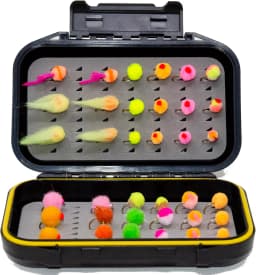 LuresCheck price on Amazon
Egg Patterns & Beads
The presentation every spawn article here points you at — fished below the redds, not on them.
- Check price on Amazon
ChronicAnglers is reader-supported. When you buy through links on our site, we may earn an affiliate commission at no extra cost to you.
Explore related
- SpeciesBrook troutIdentification, range, diet, and verified spawning window.
- MaineWhen Do Brook Trout Spawn in Maine?
- MichiganWhen Do Brook Trout Spawn in Michigan?
- Also in WisconsinWhen Do Bluegill Spawn in Wisconsin?
- Also in WisconsinWhen Do Brown Trout Spawn in Wisconsin?
- Also in WisconsinWhen Do Northern Pike Spawn in Wisconsin?