When Do Salmon Spawn in Alaska?
Alaska salmon run from May into November. Five species, four very different regions, two separate runs in many rivers — and on the Yukon, a fish that enters in July doesn't reach the border until September.
Published
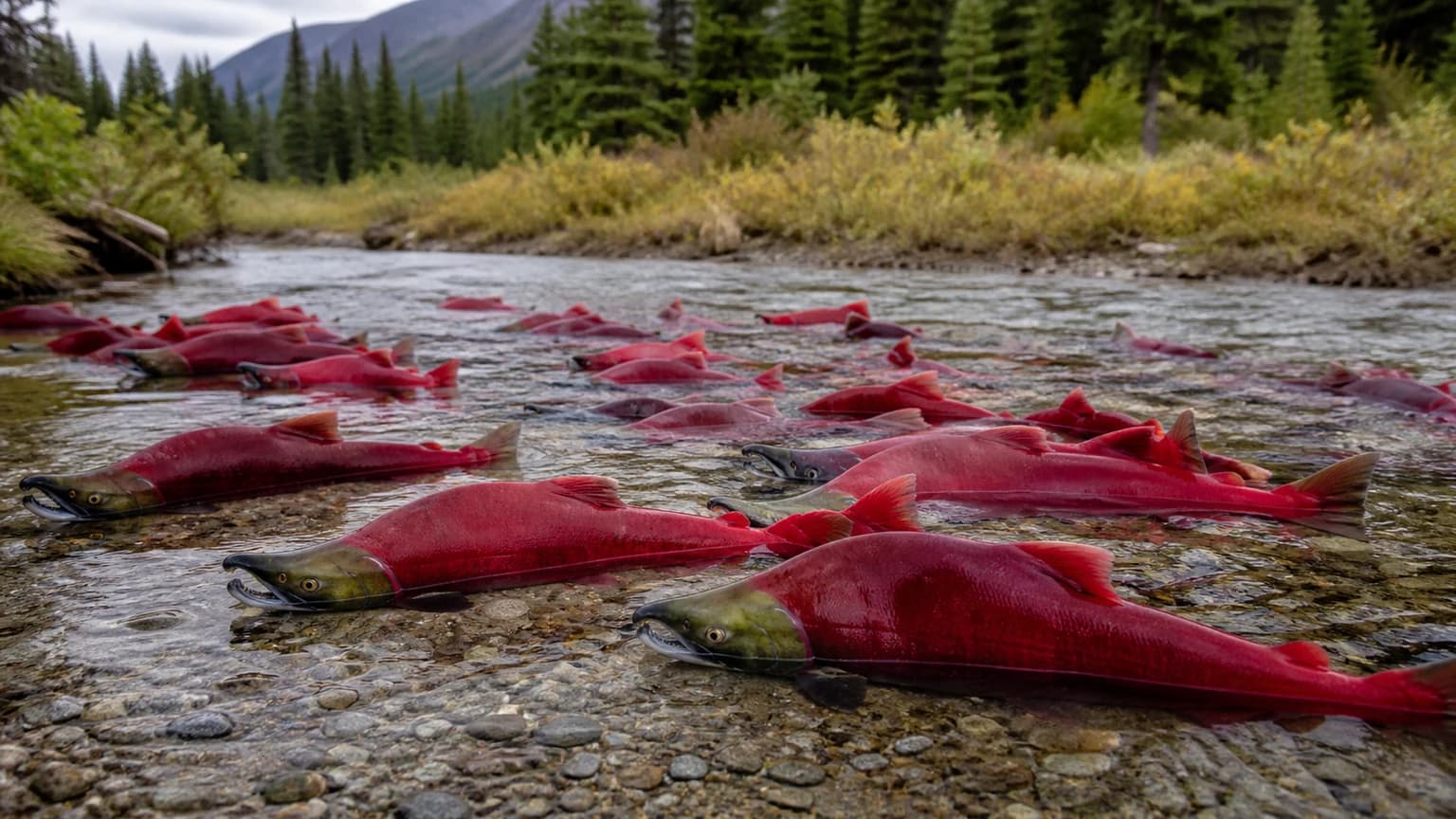
Alaska salmon run from May into November — but there is no statewide answer, and anyone giving you one is averaging away everything that matters. Five species, four very different regions, and many rivers carrying two separate runs of the same fish.
First: the run is not the spawn
Almost every article on this topic answers a different question from the one being asked.
Entering fresh water is the run. Spawning happens afterwards, and the gap depends entirely on how far upstream the spawning gravel is.
Alaska has the clearest illustration of this anywhere. ADF&G tracked fish that entered the Yukon River on 19 July, and projected them approaching:
| Location | Expected arrival |
|---|---|
| Huslia / Tanana | 10 August |
| Stevens Village | 15 August |
| Fort Yukon | 20 August |
| US–Canada border | 31 August |
Six weeks of upstream travel from one river mouth. The same fish is a July fish at the coast and a September fish upriver — and spawning is later still.
So on a big Alaskan river, "when do salmon spawn" depends on where you are standing as much as on the species.
By species, roughly
| Species | Broad Alaska timing |
|---|---|
| Chinook (king) | May – July, earliest of the five |
| Sockeye (red) | Mid-June – August, peaking early-to-mid July |
| Pink (humpy) | Mid-July – August |
| Chum (dog) | Mid-June – September, with distinct summer and fall runs |
| Coho (silver) | Late July – October, latest of the five |
That table is the most general thing on this page and it is already three months wide. Below is where it gets useful.
Southcentral: the Kenai Peninsula, river by river
This is the most-fished region in Alaska, and ADF&G publishes run timing water by water. Note how many rivers carry two separate runs.
| Water | Species | Run timing |
|---|---|---|
| Kenai River | Chinook | Early run: mid-May – late June · Late run: early July – closure end of July |
| Sockeye | Mid-July – mid-August | |
| Coho | Late July – mid-October | |
| Pink | Mid-July – August | |
| Russian River | Sockeye | Early run: mid-June – mid-July · Late run: mid-July – closure mid-August |
| Coho | Early August – end of September | |
| Kasilof River | Chinook | Late May – closure late July |
| Sockeye | June – August | |
| Coho | Late July – September | |
| Anchor R. / Deep Ck. / Ninilchik R. | Chinook | Late May – mid-June |
| Coho | Early August – mid-September | |
| Deep Creek (saltwater) | Chinook | Early: early May – late June · Late: late June – early August |
| Homer Spit | Chinook | Mid-May – early July |
| Coho | Early: mid-July – early August · Late: early August – mid-September |
Those early/late pairs are the point. The Kenai's chinook are two genetically distinct runs, and so are the Russian River's sockeye. Miss the early run and you have not missed the year — but you have missed a different set of fish.
Bristol Bay: sockeye, and a very tight schedule
Bristol Bay holds the largest sockeye run on earth, and it is one of the most closely monitored fisheries anywhere.
Sockeye are usually running in good numbers in the Naknek, Kvichak, Nushagak and Wood rivers by early July.
What is striking is the precision. ADF&G tracks run timing against a 20-year average: the 2025 run came in one day early, and 2024 was two days late against forecast.
Days, not weeks. For planning a Bristol Bay trip, early July is a genuinely reliable target — which is not true of most fisheries on this page.
The Yukon: two seasons, and serious conservation constraints
ADF&G manages the Yukon in two distinct seasons:
- Summer season — Chinook and summer chum enter the river from late May through mid-July in the lowest district. At the Pilot Station sonar, the summer chum run's quarter point, midpoint and third quarter fell on 26 June, 2 July and 7 July.
- Fall season — Lower Yukon districts transitioned to fall management on 13 July.
This is not a fishery to plan casually. Yukon fall chum are a designated Stock of Management Concern, and the fall season now opens three days early specifically to protect the run. Yukon Chinook have been under severe restriction for years.
If you are looking at the Yukon, the run timing is the least important thing to research. Check current ADF&G announcements and emergency orders first — the regulatory picture changes within seasons, not just between them.
Southeast: five species, months apart
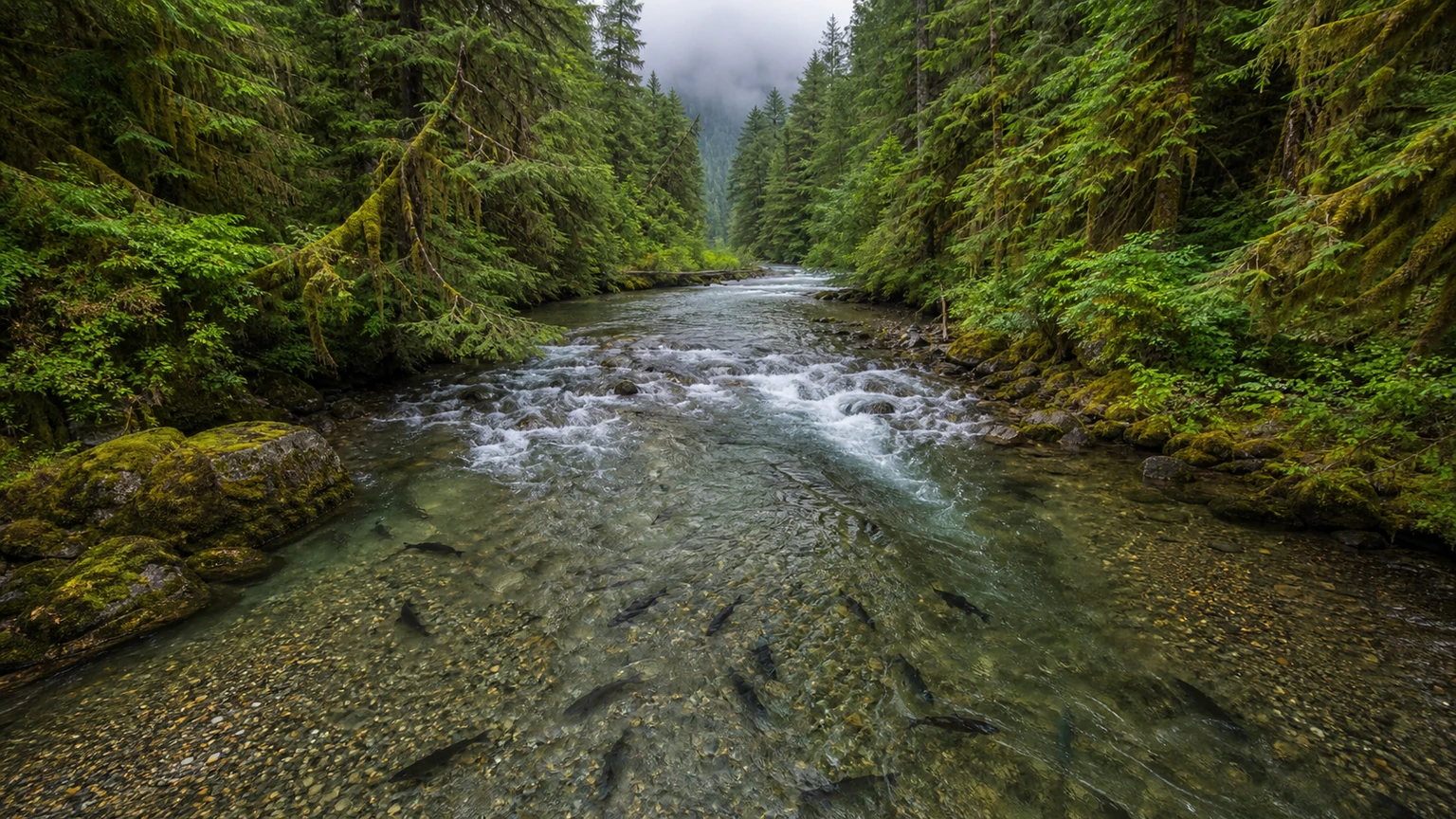
Southeast Alaska is the cruise-ship-and-charter region, and it shows the species spread most clearly. Around Ketchikan:
- Pink — enters streams in summer, schooled at stream mouths in August
- Chum — fresh water late August through early September
- Coho — summer-run from late June, but the main run enters mid-August to November
- Sockeye — caught in fresh water most often in July
- King — largely a saltwater fishery here, and freshwater king fishing is closed unless opened by emergency order
Ketchikan Creek itself "fills with spawning salmon each July and August."
There is a full breakdown in the Ketchikan article, including the king closure, which catches visitors out every year.
What this means for planning a trip
Pick the species first, then the region, then the date. In that order — the reverse is how people end up on a river three weeks after the fish they wanted.
- Chinook — May and June. Kenai early run, Deep Creek saltwater, Homer Spit.
- Sockeye — early-to-mid July. Bristol Bay for volume, Russian River for accessibility.
- Pink — mid-July through August, everywhere, and easiest of the five.
- Chum — August into September.
- Coho — late August into October. The Kenai runs coho into mid-October, the latest window on this page.
And check emergency orders. ADF&G states plainly that it may "close, restrict, open, or liberalize all or part of these fisheries at any given time." Alaska manages in-season and aggressively. A run that opened last year may not open this year.
They all die
All five Pacific salmon die after spawning — unlike steelhead, brown trout and brook trout, which survive and return.
Two practical consequences. Fish deteriorate fast once they commit to fresh water: flesh softens, colour changes, eating quality drops sharply. A bright fish in salt water and the same fish two weeks up a river are different products. And the run is finite — the fish spawning in front of you are the next cycle, and there is no second attempt.
Related
- When do salmon spawn in Ketchikan, Alaska? — the Southeast picture in full, species by species.
Sources
- Kenai, Soldotna & Homer Run Timing — ADF&G Division of Sport Fish, Southcentral Region (PDF) — the river-by-river Kenai Peninsula table, including the early and late run pairs, and ADF&G's statement that it may close, restrict, open or liberalize any of these fisheries at any time.
- 2025 Yukon River Salmon Summer Fishery Announcement — ADF&G (PDF) — the summer season definition, Pilot Station sonar run quartiles, the 13 July transition to fall management, fall chum as a Stock of Management Concern, and the upstream transit dates from 19 July to the US–Canada border on 31 August.
- Area Sport Fishing Reports: Bristol Bay — ADF&G — sockeye running in good numbers in the Naknek, Kvichak, Nushagak and Wood rivers by early July, and run timing tracked against a 20-year average.
- Ketchikan Area Salmon — ADF&G (PDF) — the Southeast per-species timing and the freshwater king salmon closure.
Every figure above is ADF&G run and fishery timing — when fish enter fresh water and when they are catchable — because that is what the agency publishes. Spawning follows river entry by days to weeks depending on how far upstream the gravel is, as the Yukon transit table shows. No spawning water temperature is given because ADF&G reports calendar timing rather than thermal triggers for these species. Kodiak, Prince William Sound, Norton Sound, the Kuskokwim and the Alaska Peninsula are not covered here — each needs its own regional source. Always check current ADF&G emergency orders before travelling.
Frequently asked questions
- When do salmon run in Alaska?
- From May into November, depending on species, region and river. Chinook lead in May and June, sockeye peak from mid-June through July, pinks and chum run through mid-summer, and coho finish the season from late July into October and November. There is no single statewide date.
- Which month is best for salmon fishing in Alaska?
- July covers the most species in the most places — sockeye are running in Bristol Bay and on the Kenai, pinks and chum are in, and the first coho arrive. But if you want a specific species, the month matters more than the average: chinook are a May and June fish, coho a late-August to October one.
- Do salmon spawn as soon as they enter the river?
- No. Entering fresh water is the run; spawning follows, and the gap depends on how far upstream the spawning grounds are. On the Yukon, fish that entered the river on 19 July were expected to reach the US–Canada border only on 31 August — six weeks of travel before they arrive to spawn.
- Why do some Alaska rivers have two runs of the same salmon?
- Because genetically distinct stocks return at different times. ADF&G tracks the Kenai River chinook as an early run from mid-May to late June and a late run from early July, and the Russian River sockeye as early and late runs. They are the same species in the same river on different schedules.
- Do Alaska salmon die after spawning?
- Yes. All five Pacific salmon species die after spawning. That is the key difference from steelhead and from brown and brook trout, which survive and can spawn in several seasons.