When Do Salmon Spawn in Ketchikan, Alaska?
Ketchikan Creek fills with spawning salmon each July and August. But that only describes two of the five species — chum run late August, and the main coho run goes from mid-August to November.
Published
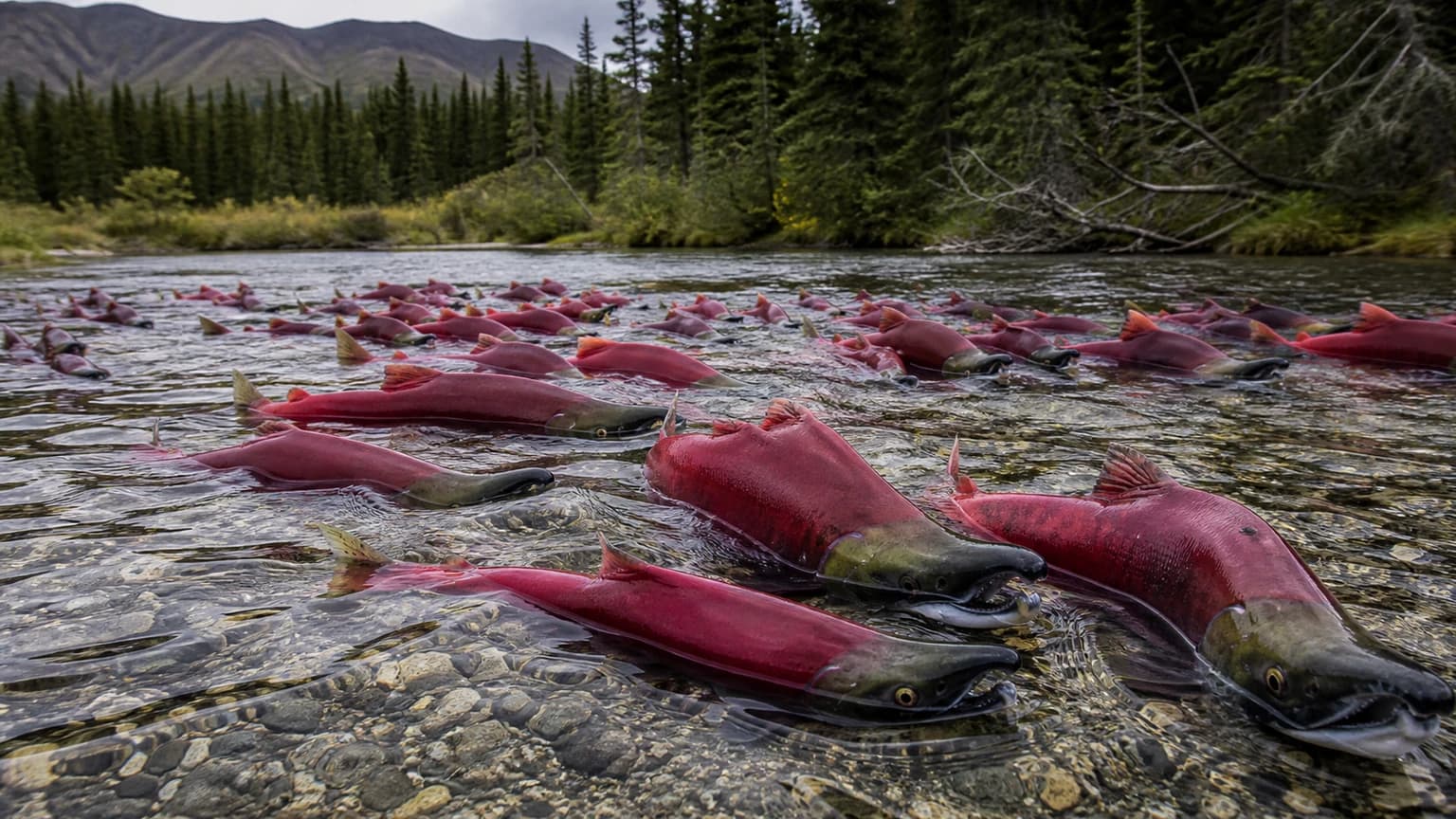
Ketchikan Creek fills with spawning salmon each July and August, according to Alaska Department of Fish and Game. But that answer only covers two of the five species — and the others are months apart.
Five species, one creek, five different answers
This is why the question keeps getting answered badly. "Salmon" is five fish here, and their timing barely overlaps.
| Species | Best in salt water | In fresh water |
|---|---|---|
| King (chinook) | Mature spawners late May – mid-August | Does not return in numbers to area streams except the Unuk and Chickamin |
| Sockeye (red) | Very limited fishery | Caught in fresh water most often in July |
| Pink (humpy) | Mid-July through August | Enters streams in summer; schooled at stream mouths in August |
| Chum (dog) | August | Late August through early September |
| Coho (silver) | July – September, best mid-July to mid-September | Summer-run from late June; the main run enters mid-August to November |
The coho row is the one that catches people out. A summer-run fish may enter a stream in late June, but the fall run is the majority and it keeps entering into November — so a mid-October trip is not late, it is aimed at the biggest run of the year.
The rule you have to know before you book anything
ADF&G puts this in capital letters in its own Ketchikan publication:
King salmon fishing in fresh water is closed unless opened by emergency order.
And it goes further. The two rivers that kings actually run in this area — the Unuk and the Chickamin — are themselves closed to king salmon fishing.
So around Ketchikan, kings are a saltwater fishery. Any guide telling you to go and find spawning kings in a Ketchikan-area river is describing something closed. If you want a shot at hatchery-produced kings in fresh water, ADF&G issues emergency-order openings for exactly that purpose — check with the local ADF&G office before the trip, not after.
Where to watch, if watching is the point
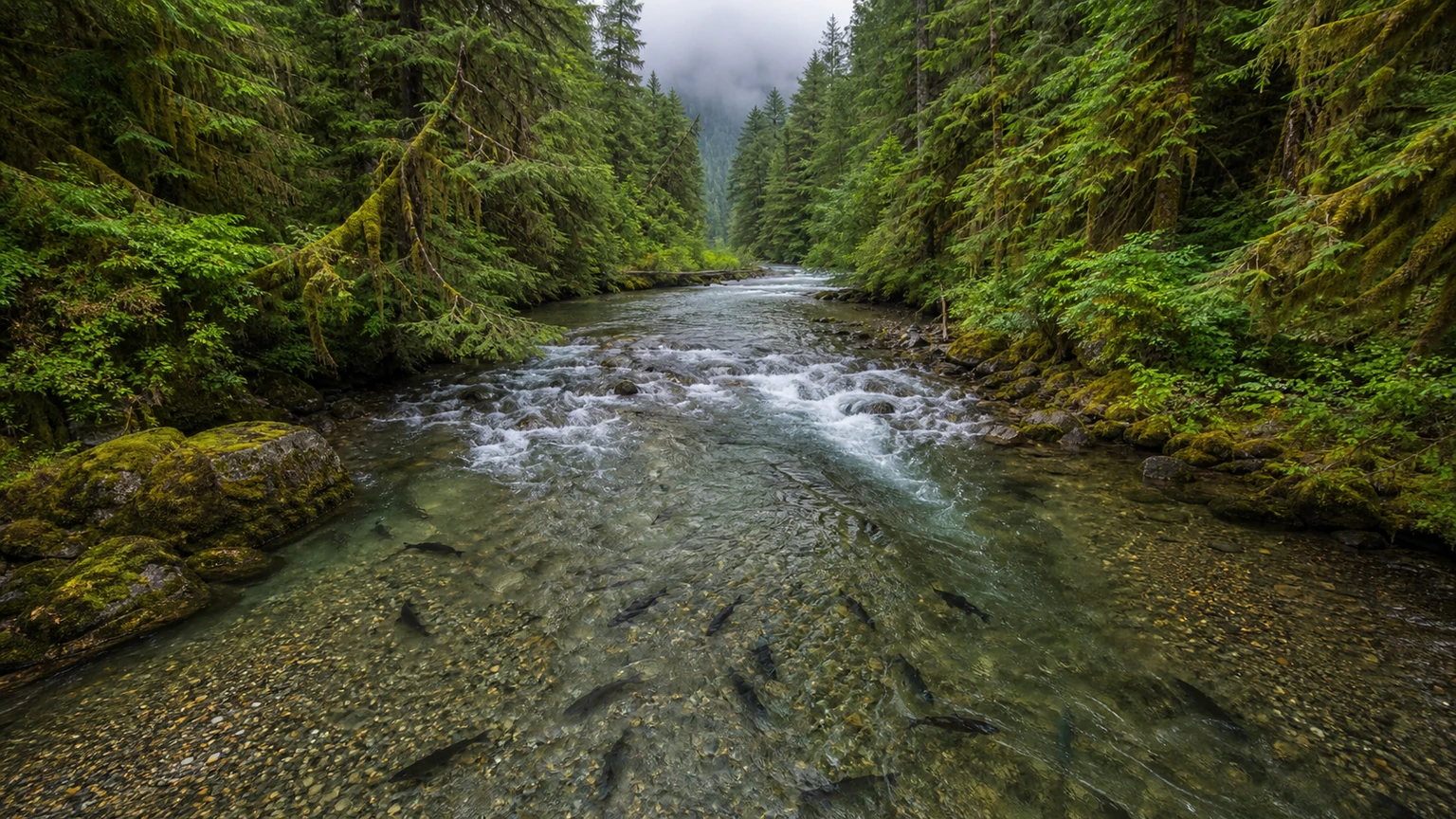
A lot of people searching this are getting off a ship for a day and want to see the fish, not catch them. Ketchikan is unusually good for that because the creek runs through the middle of town.
- Creek Street — the planks over Ketchikan Creek are a genuinely good vantage on fish working upstream.
- The Ketchikan Creek bridges — ADF&G specifically recommends standing on one for views of salmon struggling up.
- Deer Mountain Tribal Hatchery, on Salmon Street — a working hatchery with daily tours in summer.
- Southeast Alaska Discovery Center — a live underwater camera feed from the creek, which is the dry-and-warm option.
ADF&G lists July, August and September as the best viewing months, with chinook and coho the species you will see in the creek.
It is a hatchery fishery, and that tells you where to go
The Ketchikan sport fishery is strongly shaped by hatchery releases, which concentrates fish in predictable places rather than spreading them across the map.
The largest king contributors are Whitman Lake, Carroll Inlet and Neets Bay, followed by Deer Mountain and Tamgas Creek on Annette Island. Coho enhancement has run primarily through Neets Bay, Whitman Lake, Deer Mountain and Tamgas Creek.
For coho more generally, ADF&G notes that most area streams wider than about three feet that reach salt water support at least a small run. That is a lot of water, and it is why coho are the species a shore or small-boat angler can realistically plan around.
How to fish each species
Coho — the headline fishery. Aggressive, schooling, usually within 30 feet of the surface though they can be taken to 100 feet or deeper. Troll, mooch, fly fish, or cast lures. The single most useful timing tip: fishing is usually best within one or two hours of a tide change, in bays and estuaries near stream mouths, from late August into October.
Pink — the most abundant fish in the area and the easiest action, on a two-year life cycle at 2–6 lb. Best mid-July through August in salt water, and they school hard at stream mouths in August. Roadside fishing near jutting points can be productive in late July and early August. Take them bright, from open or coastal water, before they enter the streams — that is when they are worth eating, and it is also when males have not yet grown the dorsal hump that gives them the name.
Chum — August in salt water, late August through early September in fresh. Green or pink gear is the productive choice. Males grow the large teeth that earn them "dog salmon" on entering fresh water.
Sockeye — the hard one. They stop feeding once they enter fresh water, which is precisely why they are difficult to catch, and the saltwater sport fishery is small enough that ADF&G calls it experimental. Best odds are in fresh water in July, on flies or spinners.
King — salt water only, unless an emergency order says otherwise. Trolling, mooching or jigging. Look for bait: nearshore areas running out into tidal currents are ambush points, and diving seabirds or a fathometer will find the herring and needlefish schools that kings are working.
They die, and that changes the fishing
All five Pacific salmon die after spawning. This is worth saying plainly because it is the difference between these fish and every trout on this site — brown trout, brook trout and steelhead all survive and return.
It has two practical consequences. First, fish deteriorate fast once they commit to fresh water: flesh softens, colour changes, and eating quality drops sharply. Bright fish in salt water are a different product from the same fish two weeks later on the gravel. Second, the run is genuinely finite — those fish are not coming back next year, and the ones spawning in the creek in front of you are the next cycle.
Related
- Seasonal fishing and verified spawning temperatures — why water temperature usually predicts behaviour better than the month does.
Sources
- Ketchikan Area Salmon — Alaska Department of Fish and Game (PDF) — per-species run and fishery timing, the freshwater king closure and the Unuk/Chickamin closure, hatchery contributors, size ranges, and the tide-change and stream-mouth guidance.
- Southeast Alaska Wildlife Viewing: Downtown Ketchikan — ADF&G — Ketchikan Creek fills with spawning salmon each July and August; chinook and coho; Creek Street and bridge viewing; Deer Mountain Tribal Hatchery; the Discovery Center underwater camera; July–September as best viewing months.
Timing above is ADF&G's published fishery and run timing for the Ketchikan area. No spawning water-temperature figure is given here because ADF&G's Ketchikan publication reports calendar timing rather than thermal triggers, and importing a temperature from another species or region would be invented precision. Regulations, and especially emergency orders, change — check with the local ADF&G office before you travel.
Frequently asked questions
- When do salmon spawn in Ketchikan, Alaska?
- Alaska Department of Fish and Game states Ketchikan Creek fills with spawning salmon each July and August, with chinook and coho the viewable species. But timing is species-specific: pinks enter streams in summer, chum run in fresh water from late August through early September, and the main coho run enters between mid-August and November.
- Can you fish for king salmon in Ketchikan rivers?
- No. ADF&G is explicit that king salmon fishing in fresh water is closed unless opened by emergency order. On top of that, the two rivers kings actually run in this area — the Unuk and the Chickamin — are themselves closed to king salmon fishing. Kings are a saltwater fishery here.
- What is the best month for salmon in Ketchikan?
- Mid-July through mid-September covers the most species. Pinks are best mid-July through August, chum peak in August in salt water, and coho are abundant July through September with the best stream-mouth fishing from late August into October.
- Where can you watch salmon spawning in Ketchikan?
- The planks of Creek Street and the bridges over Ketchikan Creek both give good views of fish moving upstream. The Deer Mountain Tribal Hatchery on Salmon Street runs daily tours in summer, and the Southeast Alaska Discovery Center carries a live underwater camera feed from the creek.
- Do salmon die after spawning?
- Yes. All five Pacific salmon species die after spawning. This is the main difference from steelhead and from brown and brook trout, which survive and can spawn in several seasons.