Pacific Salmon
Oncorhynchus spp. · Salmonidae
Also known as: King / Chinook, Coho / Silver, Sockeye / Red, Pink / Humpy, Chum / Dog
Five species that share a river and a name but not a calendar. In a single Southeast Alaska creek the runs are months apart, which is why one answer to "when do salmon spawn" is always wrong for four of them.
- Typical size
- Pink 2–6 lb (3 lb average); coho 3–20 lb (8–10 lb average)
- Max size
- Mature king salmon to 60 lb and beyond.
- Water
- Anadromous
- Best season
- Mid-July through September in Southeast Alaska salt water; coho hold up latest, into October.
Identification
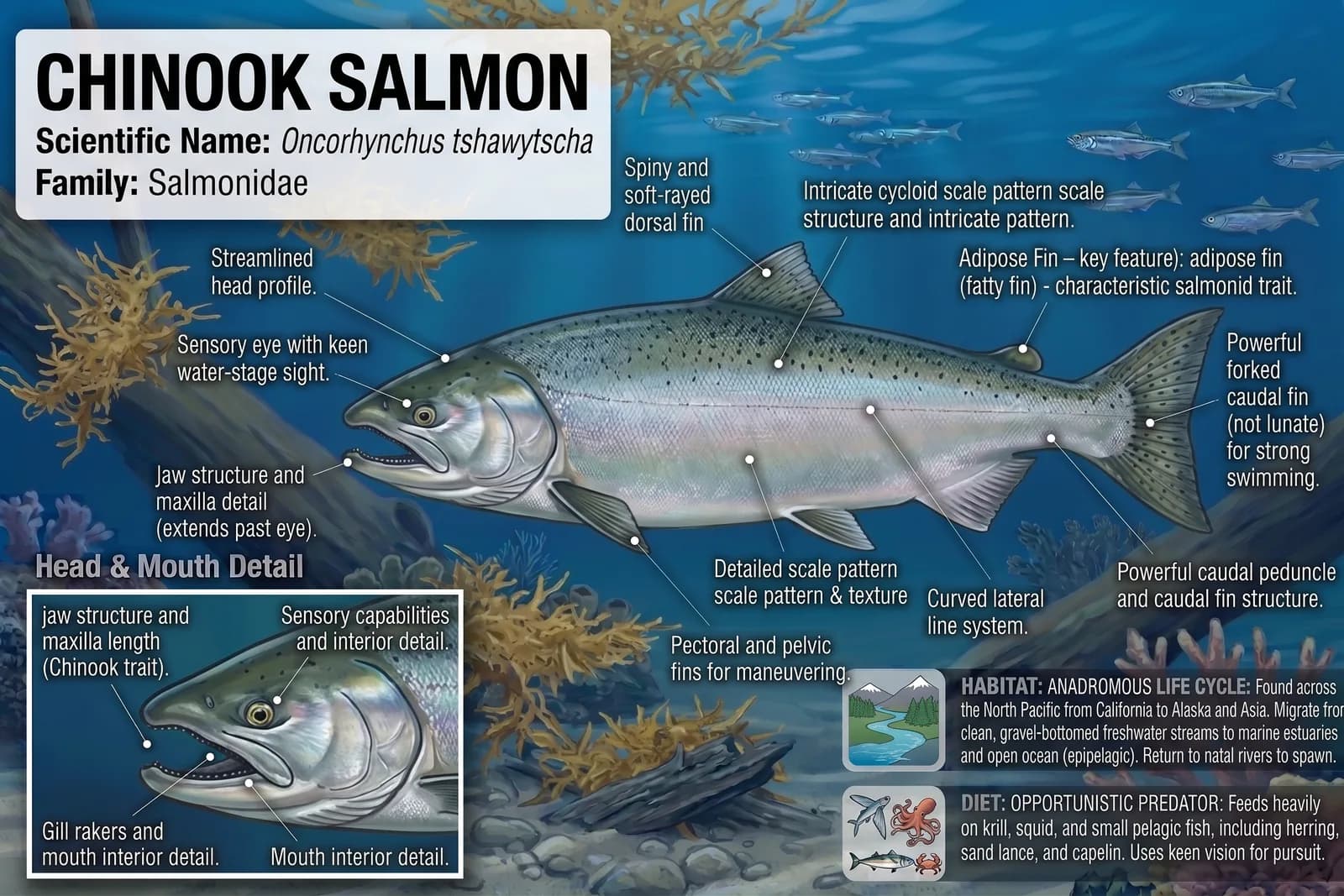
King: black gums and spots on both lobes of the tail, largest of the five. Coho: white gums with a black mouth, spots on the upper tail lobe only. Sockeye: no distinct spots, turning deep red with a green head to spawn. Pink: large oval spots and a pronounced dorsal hump in spawning males. Chum: vertical purple or olive bars and, in males, conspicuously large teeth.
Habitat & Range
Anadromous. Rear in fresh water or estuaries, mature at sea, and return to natal streams to spawn over gravel. In Southeast Alaska, most streams wider than about three feet that reach salt water support at least a small coho run.
North Pacific rim, from California through Alaska and across to Japan and Russia. Chinook, coho and pink are also naturalised in the Great Lakes.
Diet & Feeding
Zooplankton and small crustaceans when young; herring, needlefish, squid and other baitfish at sea. All five stop feeding once they enter fresh water to spawn.
Spawning & Reproduction
All Pacific salmon die after spawning — unlike steelhead, brown trout and brook trout, which survive and return. Timing is species-specific and can differ by three months in the same creek: around Ketchikan, pinks fill streams in summer, chum run late August into early September, and the main coho run enters between mid-August and November.
Spawning timing by location
Spawning tracks water temperature, so the calendar shifts with latitude and elevation. These break pacific salmon timing down by state and water body.
- The World Record King Salmon
On 17 May 1985 a 68-year-old car dealer from Soldotna landed a 97 lb 4 oz chinook on the Kenai River. Four decades later it is still the IGFA All-Tackle record. The detail worth keeping is why he rushed it to the scales — a record fish starts losing weight the moment it leaves the water.
- How to Catch Salmon in Lake Michigan
Chinook are in catchable numbers by mid-August, and Michigan DNR does not take their eggs until the first two weeks of October. That seven-week gap between the run and the spawn is the thing most guides collapse into one date, and it is why anglers turn up weeks late.
- When Do Salmon Spawn in Alaska?
Alaska salmon run from May into November. Five species, four very different regions, two separate runs in many rivers — and on the Yukon, a fish that enters in July doesn't reach the border until September.
- When Do Salmon Spawn in Ketchikan, Alaska?
Ketchikan Creek fills with spawning salmon each July and August. But that only describes two of the five species — chum run late August, and the main coho run goes from mid-August to November.
How to Catch
Fish the tide, not the clock — coho fishing is usually best within an hour or two of a tide change, in bays and estuaries near stream mouths. Pinks and chums are brightest and best eating while still in salt water, before they enter the spawning streams and their flesh softens.
Best techniques
- Trolling
- Mooching
- Jigging
- Drift fishing
- Fly fishing
Lures & baits
- Herring
- Spoons
- Spinners
- Green and pink gear (chum)
- Egg patterns
Best season: Mid-July through September in Southeast Alaska salt water; coho hold up latest, into October.