When Do Steelhead Spawn in Lake Erie?
Lake Erie steelhead spawn in March and April. They enter the tributaries from mid-September, six months earlier — and that gap is why every answer you've read seems to contradict the last one.
Published
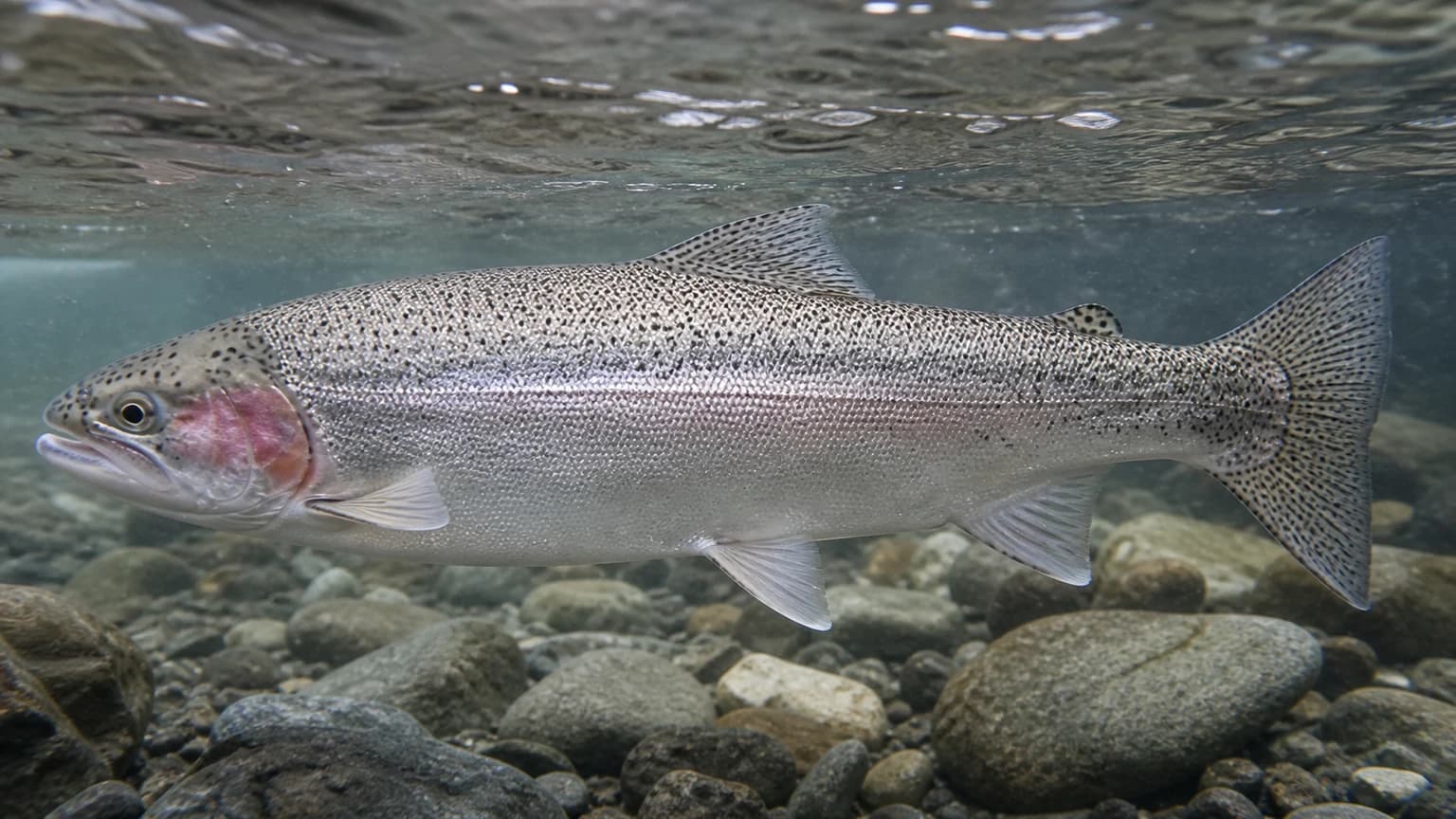
Lake Erie steelhead spawn in March and April. They enter the tributaries from mid-September, and the bulk of the run is in the river from mid-October onward — six months before they spawn.
That gap is why nothing you've read agrees
Search this question and you will get "November through March," "late March to early May," and "two distinct runs," all on the first page.
None of those sources is lying. They are describing different events, and none of them says which:
| Event | When | What it is |
|---|---|---|
| The run | Mid-September through April, bulk from mid-October | Migration out of the lake into the tributaries |
| The spawn | March – April | Actual reproduction on gravel |
A steelhead that runs a Pennsylvania tributary in late October is in that creek, chrome, catchable, and doing nothing reproductive, for five months. It spawns in spring. The autumn "steelhead run" is not the steelhead spawn, and almost every article about Lake Erie steelhead conflates the two.
Pennsylvania Fish and Boat Commission is unambiguous on the reproductive end: in March–April, steelhead move upstream to spawn.
What the agencies actually publish
New York (NYSDEC):
- Washington strain steelhead enter the Erie tributaries as early as mid-September.
- The bulk of the run occurs from mid-October through April.
- Skamania strain fish, where stocked, can enter earlier — late August through September.
- NYSDEC stocks about 230,000 Washington strain yearlings a year across nine major tributaries.
- Fish spend two years in the open lake and return as three-year-olds.
- Natural reproduction supplements the fishery, most notably in Cattaraugus Creek.
Pennsylvania (PFBC):
- October through April, steelhead move from the depths of Lake Erie into the tributaries.
- Fall run: October–December, peaking in November.
- Spawning: March–April.
- Fish remain in the tributaries through April, with a few into May, then drop back to the lake as water warms.
- PFBC stocks over a million juveniles a year, released in February and March, and has managed this fishery for more than forty years.
The two windows worth fishing
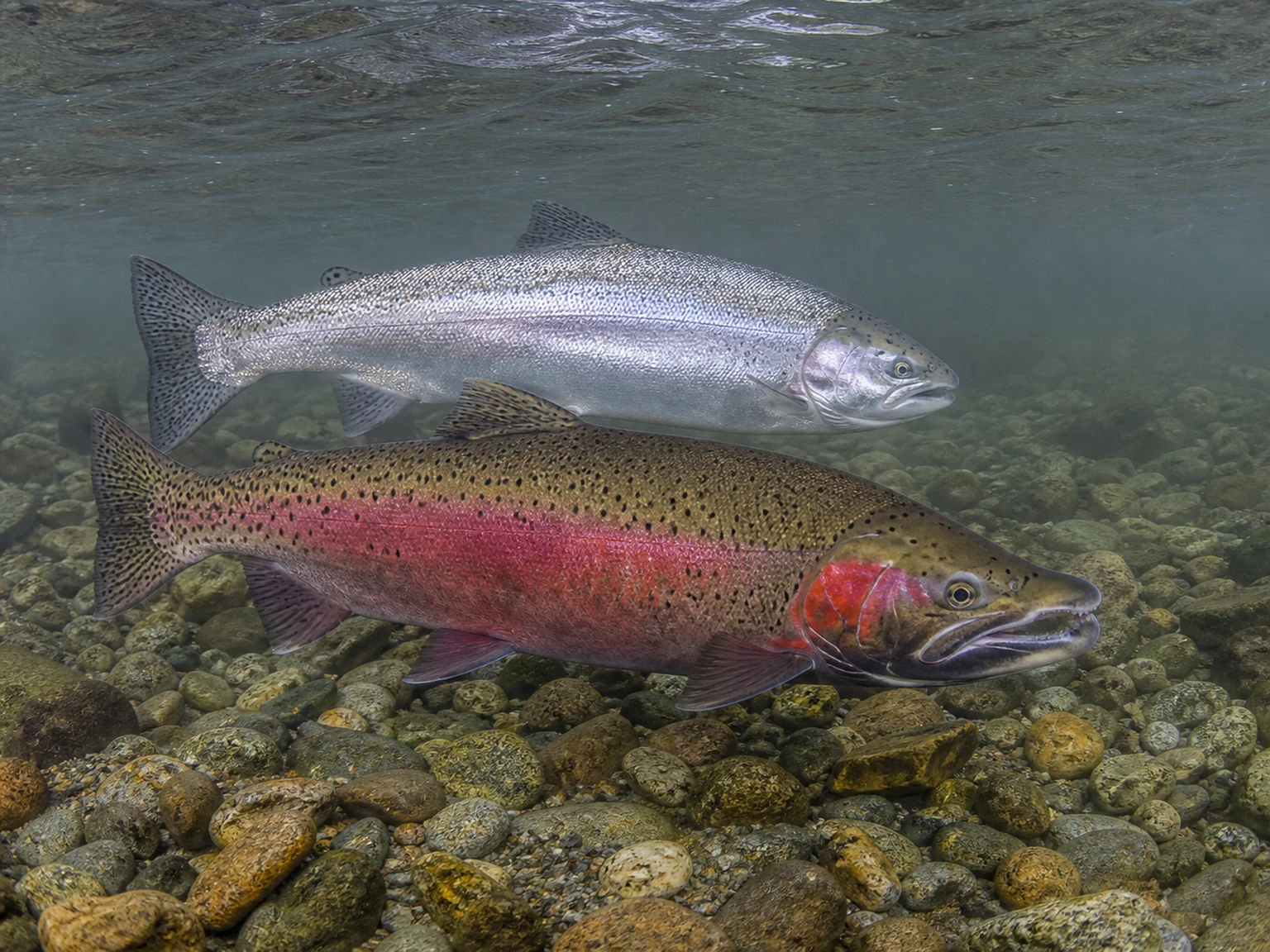
PFBC names them directly: late October, November and December, then March and April.
Autumn and early winter (late October – December). Fresh chrome fish pushing in from the lake, peak in November. These are the brightest, hardest-fighting fish of the year — they have just left open water and have months of river time ahead of them. This is the run, and it is the best fishing.
Spring (March – April). Fish moving upstream to spawn, plus drop-back fish heading home. Numbers are high because the whole winter's accumulation is still in the system.
The trigger, in both windows, is water. Steelhead move on rising flow. A rain event that bumps a tributary and then lets it start to clear is worth more than any calendar — it pulls a fresh push of fish in from the lake and it puts colour in the water that makes them far less spooky.
Fishing the spawn, carefully
March and April fish are on or near gravel, and Steelhead Alley gets heavy pressure. The convention is the same as for any spawning salmonid:
- Fish below the redds, not on them. Steelhead holding downstream of gravel are intercepting drifting eggs and are legitimate targets. Paired fish actively working a clean gravel patch are not.
- A redd is obvious — a pale, cleaned oval standing out against darker streambed, in shallow, moderate-current water.
- Do not wade across clean gravel. The eggs stay in it until they hatch.
The one genuinely good news about Lake Erie steelhead ethics: they do not die after spawning. Unlike coho and chinook, steelhead survive and return to the lake, and can spawn again — though most spawn only once or twice. A released spring fish is a fish that may come back.
What a steelhead actually is
A steelhead is a rainbow trout that migrated. Same species, Oncorhynchus mykiss. The difference is behavioural: steelhead undergo smolting, a physiological change that prepares them to leave the natal stream for open water, then return to spawn where they hatched.
In the Great Lakes, the lake substitutes for the ocean. Fish rear in tributaries, mature in Erie, and return to those tributaries to spawn — the whole anadromous life cycle, with no salt.
Fresh fish are bright chrome with a heavily spotted back and tail. Fish that have been in the river for months colour up to a strong pink or red lateral stripe. That stripe plus the heavily spotted tail is what separates them from a brown trout, which carries red spots ringed in pale halos and no stripe at all.
Related
- Seasonal fishing and verified spawning temperatures — why water temperature usually predicts behaviour better than the month does.
Sources
- Steelhead Fishing In Lake Erie Tributaries — New York State DEC — Washington strain entry from mid-September, bulk of run mid-October through April, Skamania late August–September, 230,000 yearlings across nine tributaries, two years in the lake and return as three-year-olds, Cattaraugus Creek natural reproduction.
- Fall is Time to Target Steelhead — Pennsylvania Fish and Boat Commission — October–April tributary period, March–April spawning, fall run October–December peaking November, fish holding through April with a few into May, over a million juveniles stocked annually.
- Wisconsin's Lake Michigan Steelhead Strains — Wisconsin DNR (PDF) — steelhead survive spawning and may spawn several times; smolting and the lake-as-ocean life cycle.
No spawning water temperature is given here because none of the three agency sources publishes one for Great Lakes steelhead, and importing a figure from Pacific steelhead literature would be invented precision. Run timing responds to flow; check a gauge after rain.
Frequently asked questions
- When do steelhead spawn in Lake Erie?
- In March and April. Pennsylvania Fish and Boat Commission states that steelhead move upstream to spawn in March–April. Fish enter the tributaries far earlier — from mid-September, with the bulk of the run from mid-October through April — which is why run timing and spawn timing are so often confused.
- Why do different sources give completely different steelhead spawning dates?
- Because they are describing different events. The autumn run is migration, not reproduction; the spawn is the following spring. A fish that entered a creek in October is in the river for five or six months before it spawns. Strain differences add to it — Skamania fish enter earlier than Washington strain.
- What is the best time to fish Lake Erie tributaries for steelhead?
- Two windows. Late October, November and December in the fall and winter, then March and April in the spring, when fish are moving upstream to spawn. Fish stay in the tributaries through April, with a few into May.
- Do Lake Erie steelhead die after spawning?
- No. Unlike coho and chinook salmon, steelhead survive spawning and return to the lake. They can spawn several times, though most spawn only once or twice.
- Are Lake Erie steelhead stocked or wild?
- Overwhelmingly stocked. New York stocks about 230,000 Washington strain yearlings a year across nine major tributaries, and Pennsylvania releases over a million juveniles annually. There is some natural reproduction, most notably in Cattaraugus Creek.
Gear for this
 LuresCheck price on Amazon
Egg Patterns & Beads
The presentation every spawn article here points you at — fished below the redds, not on them.
- Check price on Amazon

ChronicAnglers is reader-supported. When you buy through links on our site, we may earn an affiliate commission at no extra cost to you.