When Do Steelhead Spawn in Michigan?
Michigan steelhead spawn in late winter and early spring, roughly February through April. They enter the rivers months earlier — summer-run fish as early as June — and that gap explains most of the confusion.
Published
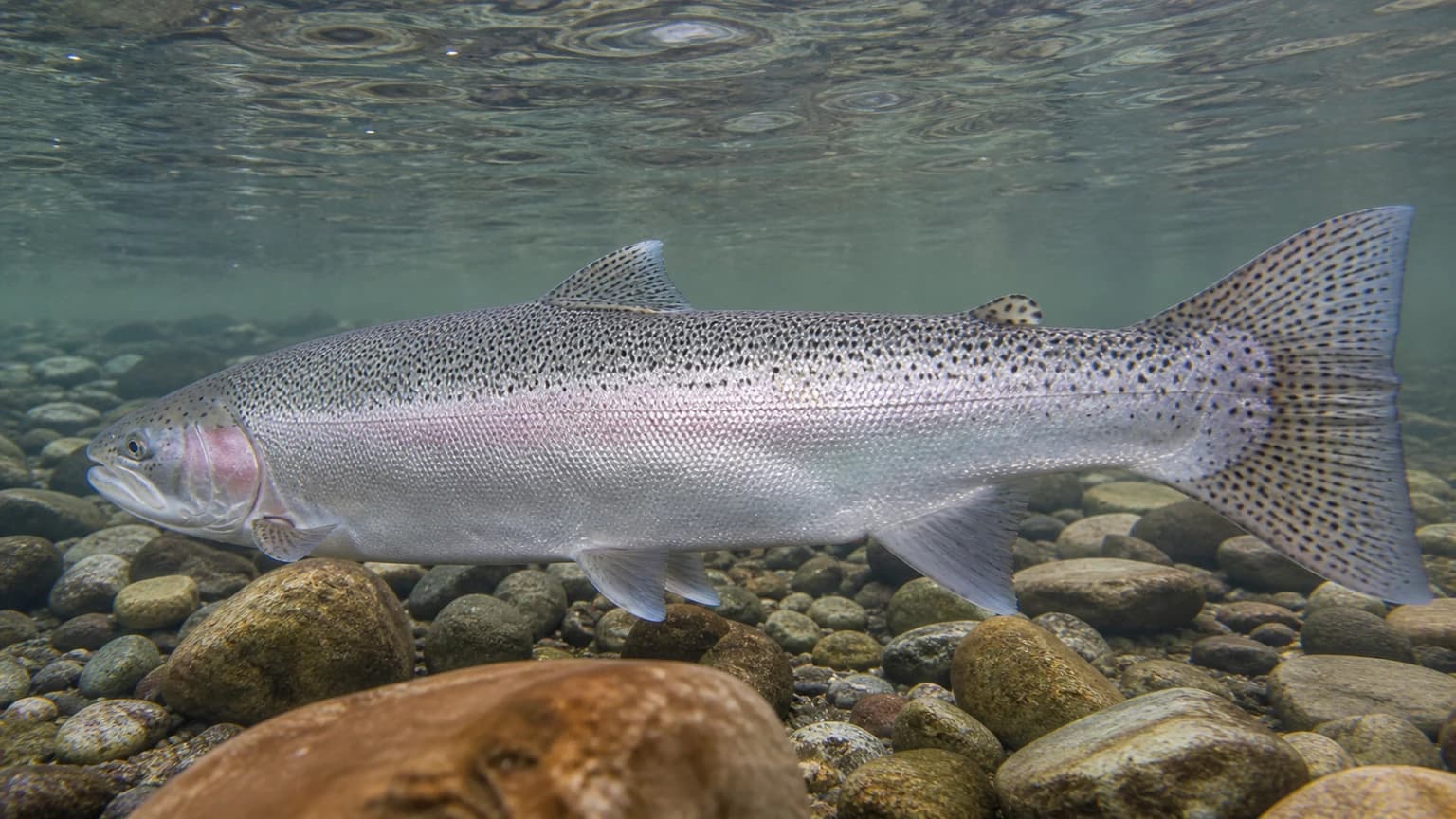
Michigan steelhead spawn in late winter and early spring — broadly February through April. They enter the rivers months earlier, and summer-run fish enter as early as June. That gap is where nearly all the confusion comes from.
The run is not the spawn
If you take one thing from this page: the autumn steelhead run is migration, not reproduction.
Michigan's rivers fill with steelhead in the fall. Those fish do not spawn in the fall. They overwinter in the river and spawn the following late winter or spring — in some cases six months after they arrived.
This is exactly the same distinction that governs brown trout in Michigan, except more extreme: a brown trout's run and spawn are four to six weeks apart, while a steelhead's can be half a year.
| Event | Roughly when | What it is |
|---|---|---|
| Summer-run entry (Skamania) | June – October | Migration. Fish hold in the river for months |
| Winter-run entry | Late autumn into spring | Migration |
| Spawning | Late winter – spring, ~February–April | Reproduction, on gravel |
Strain sets the schedule
Michigan's steelhead are a managed mix. The state stocks a winter-run strain — Little Manistee, which also reproduces naturally in the Little Manistee River — alongside the summer-run Skamania, which enter tributaries from June through October and hold for months before spawning in late winter.
The clearest published account of how much strain matters comes from Wisconsin DNR, which stocks three strains in the same lake and explains the reasoning: "the spawning migration of each strain occurs at a different time of the year, which makes fish available to anglers for an extended season." Their per-strain figures:
| Strain | Run begins | Spawning |
|---|---|---|
| Skamania (summer-run) | Late June / early July | Mid-December – mid-March, peak January–February |
| Chambers Creek (winter-run) | Late fall through early spring | Late winter / early spring |
| Ganaraska (winter-run) | November–December, then late March–April | Peak April – early May |
Same lake. Five months between the earliest and latest spawn.
So "when do steelhead spawn in Michigan" is genuinely strain-dependent, and the honest answer is a window rather than a date. If you want it narrower than February–April, you need to know what your particular river is stocked with — and that is a question for the Michigan DNR's stocking records, not for a general article.
A note on sourcing: the strain-by-strain timing above is Wisconsin DNR's, covering the same lake and the same strains. Michigan-specific stocking detail here comes from angling publications rather than a Michigan DNR page, so treat the Michigan strain specifics as indicative and the Wisconsin table as the agency-grade figures.
Why summer-run fish are in the river for months
Skamania are the strange ones. They begin their migration in late June and early July — the hottest part of the year — and then simply hold.
Wisconsin DNR notes that the good stream fishing does not begin until water temperatures start to cool, usually mid-September. So the fish are present and largely uncatchable for two and a half months, sitting in the deepest, coolest, most oxygenated water they can find.
For a Michigan angler that translates into a real tactic: in late summer, fish the coldest water in the system — deep holes, spring inputs, tailwater below dams, shaded bedrock runs. The fish are there. They are just refusing to behave until the river cools.
What actually moves fish: water, not dates
Steelhead migrate on flow. A rain event that bumps a river and then lets it start to clear does two things at once — it pulls a fresh push of fish up from the lake, and it puts colour in the water that makes them dramatically less spooky.
Michigan rivers are big and clear enough that a low, bright river in November can feel dead when it is actually full of fish that can see you from forty feet.
Practical version: watch a gauge, not a calendar. The day after a rise, on falling and clearing water, beats any particular week on the calendar.
Fishing the spawn
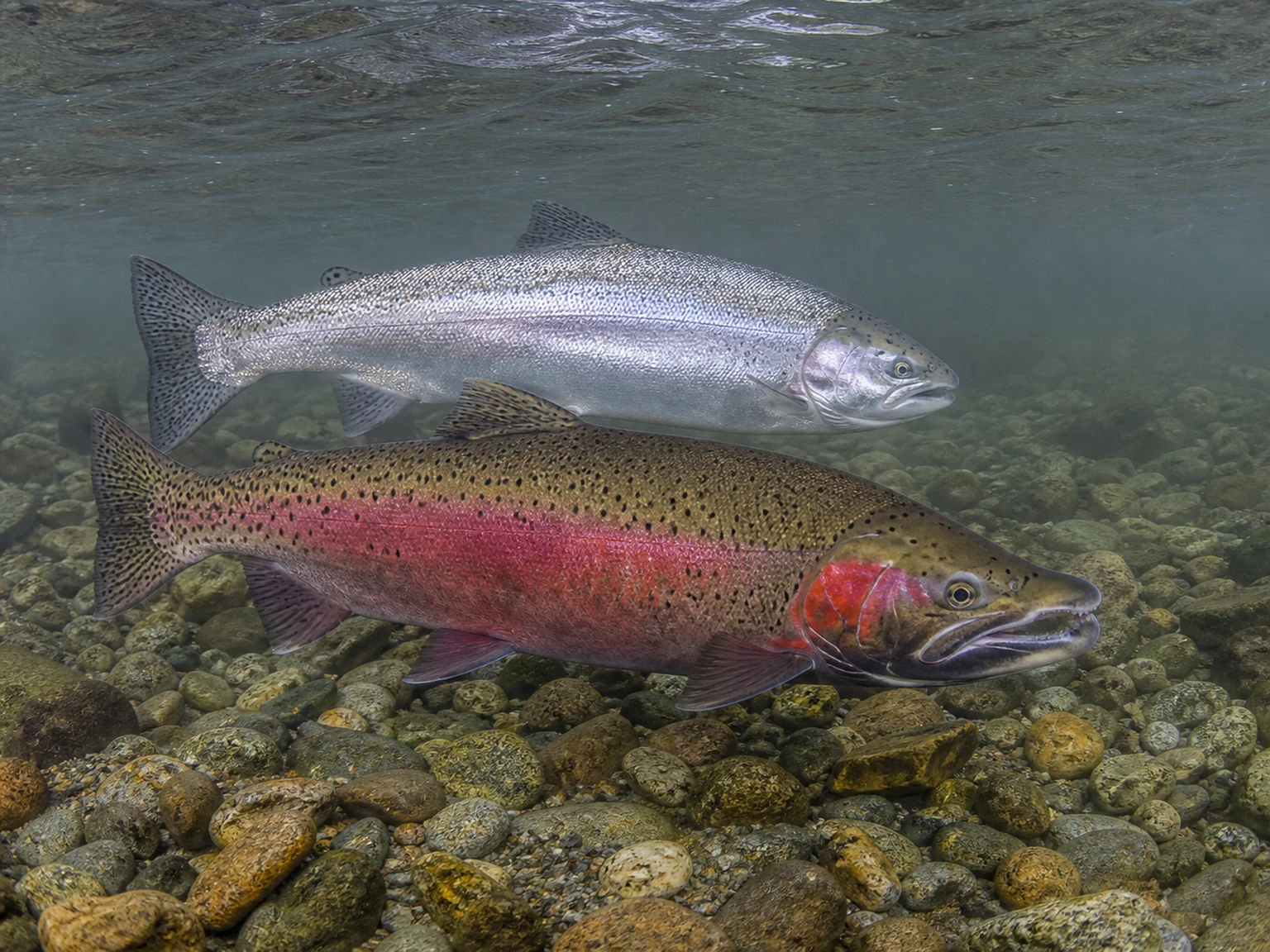
Late-winter and spring fish are on or near gravel, and Michigan's steelhead rivers get heavy pressure.
- Fish below the redds, not on them. Steelhead holding downstream of clean gravel are eating drifting eggs and are legitimate targets. Paired fish actively working a pale cleaned oval are not.
- A redd is unmistakable — a bright, cleaned patch of gravel standing out against a darker bed, in shallow water with moderate current.
- Do not wade across clean gravel. The eggs are in it.
And the part that makes catch-and-release meaningful here: steelhead do not die after spawning. Unlike chinook and coho — which die, and which share these same Michigan rivers in autumn — steelhead drop back to the lake and can return. Most spawn once or twice; some do it several times.
Steelhead and rainbow trout are the same fish
Oncorhynchus mykiss, both. A steelhead is a rainbow trout that smolted — went through the physiological change that lets it leave the natal stream for open water — matured in the lake, and came back to spawn where it hatched.
In the Great Lakes, the lake does the job the ocean does elsewhere.
Fresh fish are chrome-bright with a heavily spotted back and tail. Fish that have been in the river for months develop a strong pink or red lateral stripe. That stripe plus a heavily spotted tail is the identification — and it is exactly what distinguishes them from the brown trout sharing the same gravel in October, which carries red spots ringed in pale halos and no stripe at all.
Related
- Seasonal fishing and verified spawning temperatures — why water temperature usually predicts behaviour better than the month does.
Sources
- Wisconsin's Lake Michigan Steelhead Strains — Wisconsin DNR (PDF) — the three strains and the management rationale, per-strain run and spawn timing, the mid-September start to good Skamania stream fishing, and post-spawn survival.
- Steelhead Fishing In Lake Erie Tributaries — New York State DEC — strain-dependent entry timing and the smolting life cycle in a neighbouring Great Lake.
- Fall is Time to Target Steelhead — Pennsylvania Fish and Boat Commission — autumn run versus March–April spawning.
No spawning water temperature is given because no agency source publishes one for Great Lakes steelhead; importing a figure from Pacific steelhead literature would be invented precision. Michigan strain and stocking specifics are indicative rather than agency-sourced — see the note above. Movement responds to flow, so check a river gauge after rain.
Frequently asked questions
- When do steelhead spawn in Michigan?
- Late winter into early spring — broadly February through April, with the exact window set by strain. Summer-run Skamania fish enter rivers from June and hold for months before spawning; winter-run fish enter from autumn. In neighbouring Wisconsin, DNR records Skamania spawning from mid-December through mid-March and Ganaraska peaking in April into early May.
- Do steelhead spawn in the fall in Michigan?
- No. The autumn steelhead run is migration, not reproduction. Fish enter the rivers in autumn and spawn the following late winter or spring, which can be six months later. Almost every article that describes a fall 'steelhead spawn' is describing the run.
- What is the difference between summer-run and winter-run steelhead?
- The timing of the migration, not of the spawn. Summer-run Skamania enter rivers from June through October and hold there for months. Winter-run fish enter from late autumn onward. Both spawn in late winter or early spring.
- Do Michigan steelhead die after spawning?
- No. Steelhead survive spawning and return to the lake, and can spawn again — though most spawn only once or twice. This is the key difference from chinook and coho salmon, which die after spawning.
- What triggers steelhead to move upriver?
- Flow, more than date. Rain that bumps a river and then lets it begin to clear pulls a fresh push of fish up from the lake and puts enough colour in the water to make them far less spooky. A river gauge is more useful than a calendar.
Gear for this
 LuresCheck price on Amazon
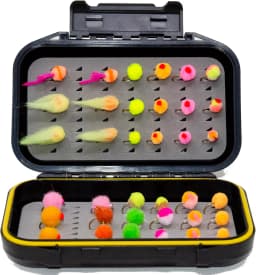
Egg Patterns & Beads
The presentation every spawn article here points you at — fished below the redds, not on them.
- Check price on Amazon
ChronicAnglers is reader-supported. When you buy through links on our site, we may earn an affiliate commission at no extra cost to you.
Explore related
- SpeciesSteelheadIdentification, range, diet, and verified spawning window.
- Lake ErieWhen Do Steelhead Spawn in Lake Erie?
- Lake MichiganWhen Do Steelhead Spawn in Lake Michigan?
- Also in MichiganWhen Do Bluegill Spawn in Michigan?
- Also in MichiganWhen Do Brook Trout Spawn in Michigan?
- Also in MichiganWhen Do Crappie Spawn in Michigan?
- Also in MichiganWhen Do Walleye Spawn in Michigan?
- Also in MichiganWhen Do Brown Trout Spawn in Michigan?