When Do Steelhead Spawn in Lake Michigan?
Lake Michigan steelhead spawn anywhere from mid-December to early May, and which end you get depends on strain, not on the calendar. Skamania peak in January; Ganaraska peak in late April.
Published
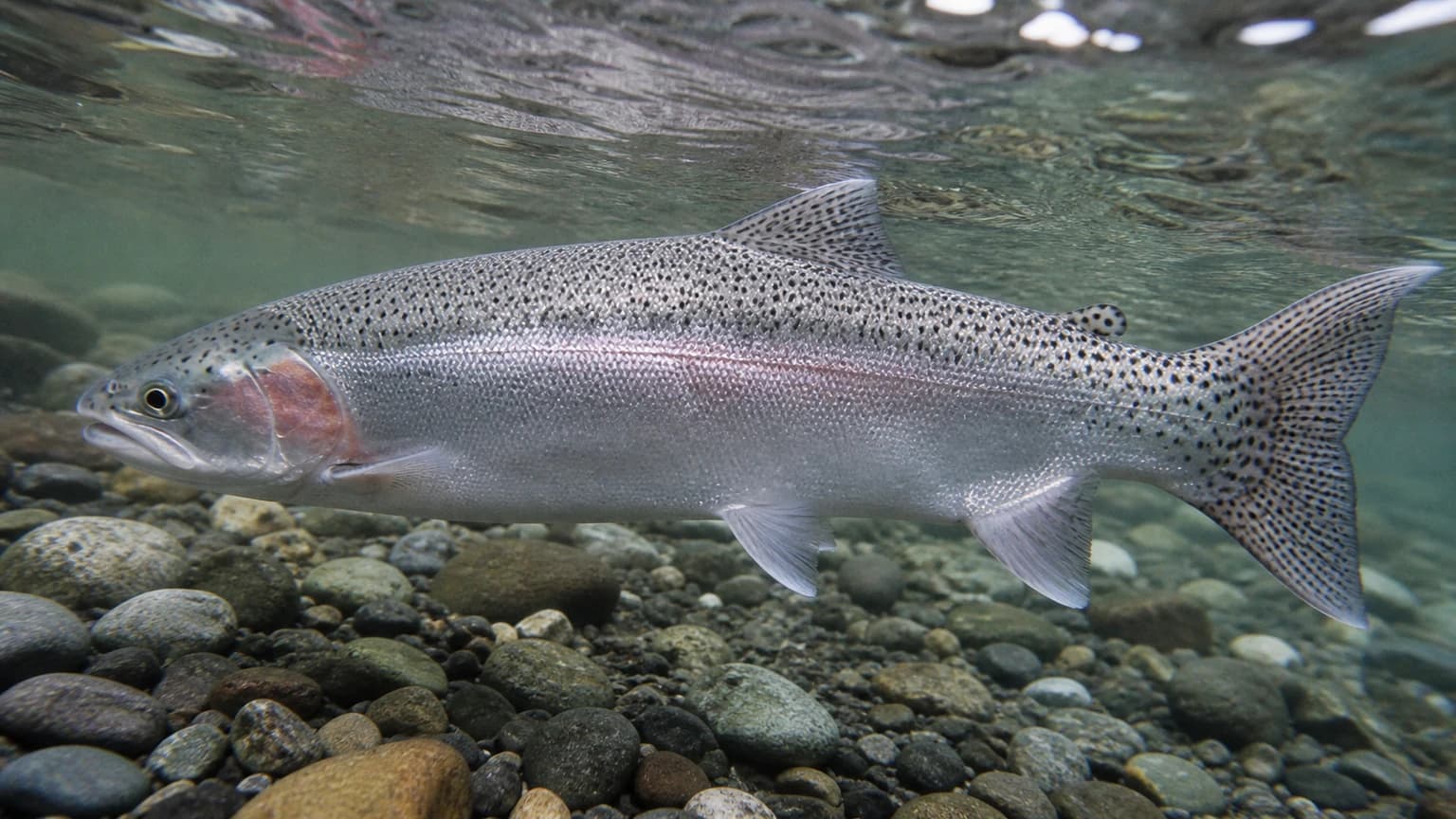
Lake Michigan steelhead spawn anywhere from mid-December to early May. Which end you get depends on strain, not on the calendar — and that is deliberate.
Three strains, three schedules, on purpose
Wisconsin DNR stocks three strains of steelhead in Lake Michigan and states exactly why:
The spawning migration of each strain occurs at a different time of the year, which makes fish available to anglers for an extended season.
That is fishery management, not biology being awkward. Here is what it produces:
| Strain | Run begins | Best stream fishing | Spawning |
|---|---|---|---|
| Skamania (summer-run) | Late June / early July | Not until water cools, usually mid-September | Mid-December – mid-March, peak January–February |
| Chambers Creek (winter-run) | Late fall, through winter and early spring | Mid-November – December, again March – early April | Late winter / early spring |
| Ganaraska (winter-run) | Pulses November–December and late March – April | — | Peak April – early May |
Look at the Skamania row. Those fish enter the river in late June and spawn in January. That is roughly six months in fresh water before they reproduce.
So when one article says Lake Michigan steelhead spawn in January and another says late April, both are right. They are describing different fish.
The run is not the spawn — and here it is provable
For most Great Lakes species this distinction takes some explaining. For Lake Michigan steelhead the agency data makes it plain: a Skamania is in the river for half a year before spawning.
Wisconsin DNR is also explicit that the summer-run fishery does not really begin when the fish arrive: the run starts in late June and early July, but "the good stream fishing doesn't begin until the water temperatures start to cool, usually in mid-September." Fish are present and largely uncatchable for two and a half months.
What that means for you: stop asking when steelhead "run" and start asking which strain your river gets and what phase those fish are in. A river stocked with Skamania fishes on a completely different schedule from one stocked with Ganaraska.
Fish size by strain
Wisconsin DNR publishes this too, and it is worth knowing before you pick a river:
- Skamania — most spawners are four and five year olds. Four-year-olds average 28 inches and 8 pounds.
- Chambers Creek — most spawners are three and four year olds. Three-year-olds average 25 inches and 6 pounds.
Skamania are the bigger average fish, which is a large part of their appeal despite being harder to catch in warm water.
Ganaraska: the strain that extends the season
Ganaraska originated on the west coast and became naturalised in Lake Ontario, where it uses the Ganaraska River on the lake's north shore. In Ontario it is thought of as a spring-run fish.
Stocked into Lake Michigan, it does something more useful: it contributes to the fall and winter stream fishery as well, with strong pulses running November to December and again late March through April, then spawns at the very end of the window, April into early May.
Wisconsin DNR: this is "the last strain to leave the stream and has extended the fishing opportunities an extra 2 to 4 weeks."
If your season feels like it should be over and fish are still there, this is usually why.
Fishing around the spawn
Steelhead on gravel are vulnerable and visible, and Lake Michigan tributaries carry serious pressure through the spring.
- Fish below the redds, not on them. Fish holding downstream of clean gravel are eating drifting eggs and are fair game. Paired fish working a pale cleaned oval are not.
- Do not wade across clean gravel.
- Move on rising water. Steelhead push on flow. Rain that bumps a tributary and lets it start to clear is the single best trigger there is, in any month.
The genuinely good news: steelhead do not die after spawning. Wisconsin DNR puts it directly — "unlike coho or chinook salmon it doesn't die after spawning, but returns to the sea." A steelhead may spawn several times, though most manage only once or twice. In the Great Lakes the lake plays the part of the sea.
Steelhead versus rainbow trout
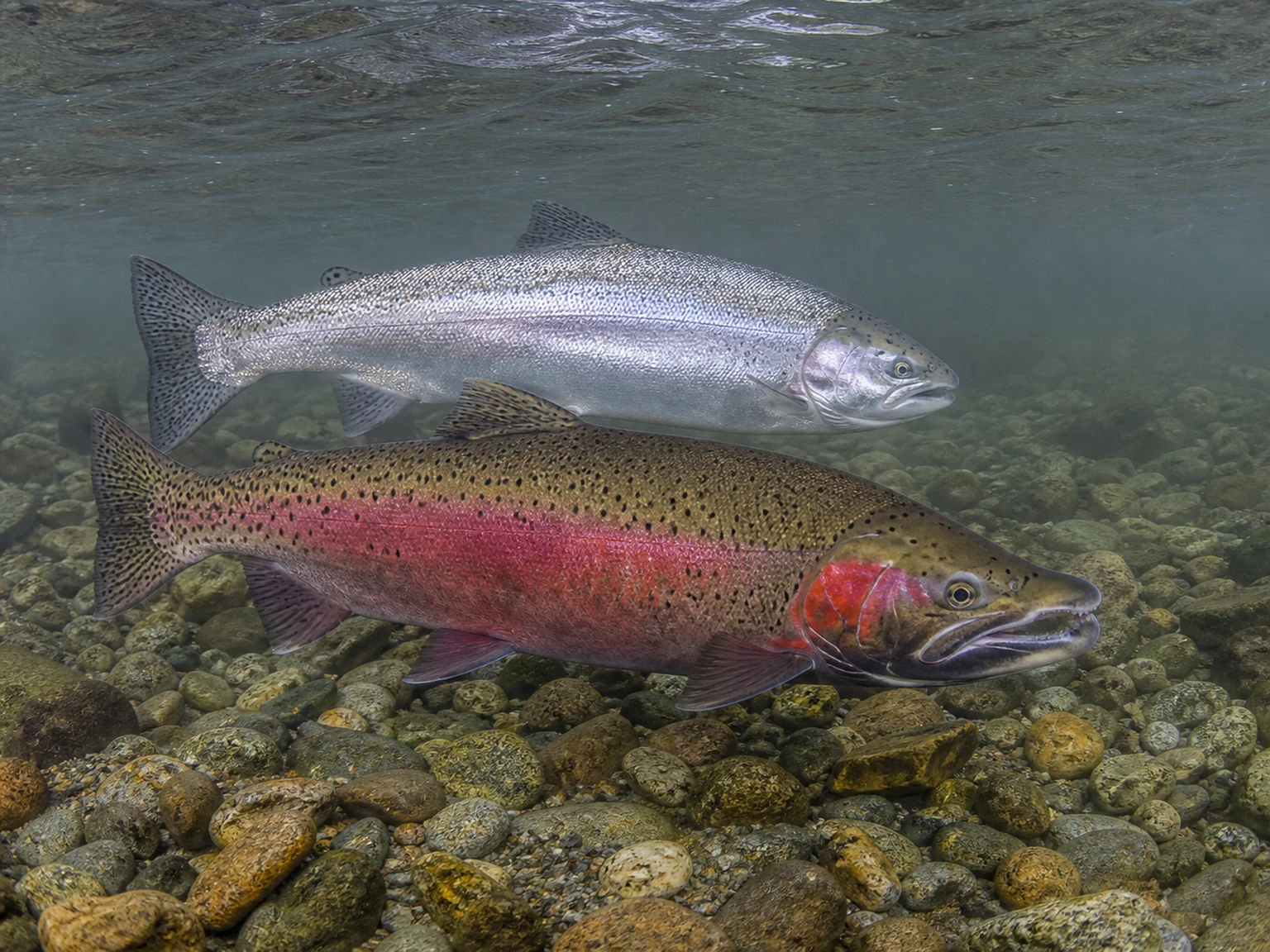
They are the same species, Oncorhynchus mykiss. The difference is that steelhead undergo smolting — the physiological change that lets them leave the natal stream for open water — mature in the lake, and return to spawn where they hatched.
Fresh fish are chrome with a heavily spotted back and tail. Fish that have held in the river for months colour up to a strong pink or red lateral stripe. That stripe with a heavily spotted tail is the mark; a brown trout has red spots ringed in pale halos and no stripe.
Related
- Seasonal fishing and verified spawning temperatures — why water temperature usually predicts behaviour better than the month does.
Sources
- Wisconsin's Lake Michigan Steelhead Strains — Wisconsin DNR (PDF) — the three strains and the rationale, per-strain run and spawn timing, the mid-September start to good Skamania stream fishing, spawner ages and average sizes, Ganaraska origin and the 2–4 week season extension, and post-spawn survival.
- Steelhead Fishing In Lake Erie Tributaries — New York State DEC — strain-dependent entry timing in a neighbouring Great Lake.
No spawning water temperature is given here because Wisconsin DNR's strain document reports calendar timing rather than thermal triggers, and no agency source publishes a Great Lakes steelhead spawning temperature. Movement responds to flow — check a gauge after rain.
Frequently asked questions
- When do steelhead spawn in Lake Michigan?
- Between mid-December and early May, depending on strain. Wisconsin DNR reports Skamania spawning from mid-December through mid-March with the peak in January and February, Chambers Creek in late winter and early spring, and Ganaraska peaking from April into early May.
- Why do Lake Michigan steelhead spawn at such different times?
- Because three different strains are stocked, and Wisconsin DNR states the reason plainly: the spawning migration of each strain occurs at a different time of year, which makes fish available to anglers for an extended season. It is deliberate management, not natural variation.
- When do steelhead run into Lake Michigan tributaries?
- The run and the spawn are separate events, sometimes six months apart. Skamania begin their migration in late June and early July but do not spawn until mid-December at the earliest. Chambers Creek fish run from late fall through early spring, and Ganaraska push hard in November–December and again from late March into April.
- What is the best time to fish Lake Michigan tributaries?
- For summer-run Skamania, stream fishing does not really start until the water cools in mid-September, despite fish having been in the river since July. For winter-run fish, mid-November through December and again March into early April. Ganaraska are the last to leave and extend the season by two to four weeks.
- How big are Lake Michigan steelhead?
- Wisconsin DNR gives four-year-old Skamania averaging 28 inches and 8 pounds, and three-year-old Chambers Creek fish averaging 25 inches and 6 pounds. Most spawning Skamania are four and five year olds; most Chambers Creek spawners are three and four.
Gear for this
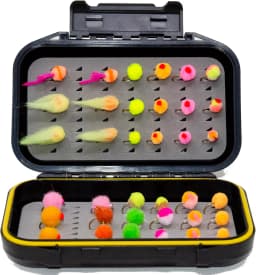 LuresCheck price on Amazon
Egg Patterns & Beads
The presentation every spawn article here points you at — fished below the redds, not on them.
- Check price on Amazon
ChronicAnglers is reader-supported. When you buy through links on our site, we may earn an affiliate commission at no extra cost to you.