Yellowfin Tuna: Find the Thing They Are Under
A yellowfin can reach 400 pounds and will be dead of old age at six or seven. It matures at two and then spawns nearly every day. That life on fast-forward explains both why the stocks hold up under heavy fishing and why finding them means finding something they are gathered under.
Published
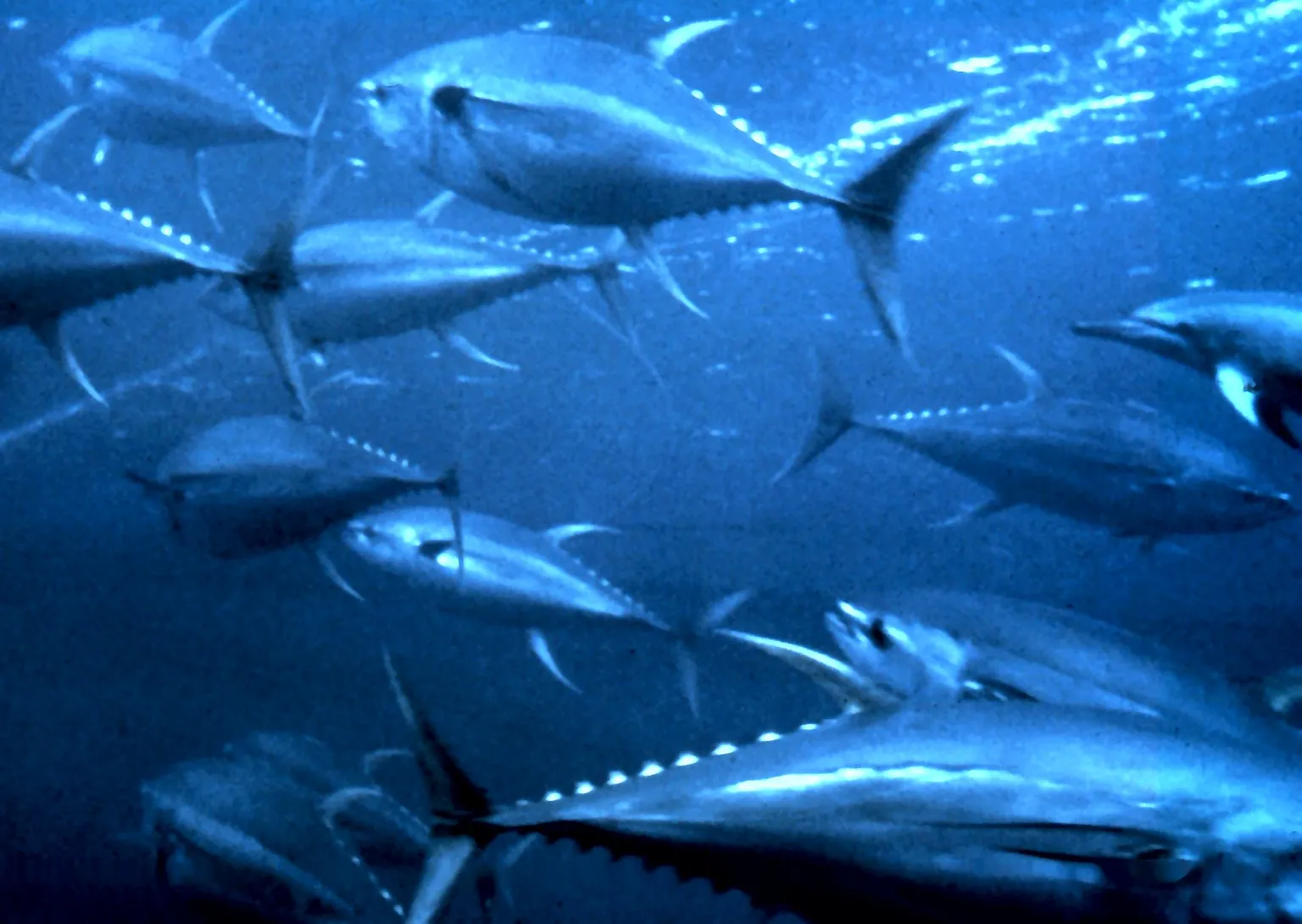
A yellowfin tuna can reach 400 pounds. It will be dead of old age at six or seven.
Hold those two numbers together and most of what is strange about this fish makes sense — including why finding them is a search for floating rubbish rather than for fish.
A fish on fast-forward
| Maximum size | 6 feet, 400 pounds |
| Lifespan | 6 to 7 years |
| Able to reproduce | Age 2 |
| Spawning frequency | Nearly every day, once mature |
| Eggs | Millions, each time |
| Preferred temperature | 64 – 88°F |
NOAA's own phrase is "a somewhat short life span of 6 to 7 years", which rather undersells what it implies. Four hundred pounds, from an egg, inside six years.
That output is also why the stocks hold up. Both Pacific stocks NOAA assesses — Eastern Pacific and Central and Western Pacific — are not overfished and not subject to overfishing. A species that matures at two and spawns daily can absorb pressure that would flatten a slow grower like a red drum, which lives past forty.
It is the same strategy as mahi mahi, taken further.
The actual technique: find the structure
Here is the part that matters on the water.
NOAA records yellowfin gathering around drifting flotsam, fish aggregating devices, and around dolphins and other large marine animals.
Open blue water is empty. Anything that interrupts it is not. A board, a pallet, a lost buoy, a weed line, a current edge — it collects small bait in its shadow, and bait collects tuna. So the search is for the object, not for the fish.
- Weed lines and flotsam — run the edges, not across them
- Temperature breaks, where water of different temperatures meets and debris collects
- Working birds, which are visible from far further away than the fish
- Porpoise — a pod of dolphins is actively finding and herding bait, and yellowfin follow. "Fishing the porpoise" is an old offshore habit for a sound reason.
A day of running between pieces of structure will beat a day of trolling in a straight line through empty water.
Our live conditions tool shows current water temperature at the nearest NOAA station, which is the other half of the problem: that 64 to 88°F band is what decides how far offshore you need to go, and when.
Telling it from a bigeye
The confusion is real and it matters, because bigeye are managed separately.
A mature yellowfin grows long, sickle-shaped second dorsal and anal fins that sweep back toward the tail, both bright yellow, with a row of small yellow finlets behind them and a golden stripe down the flank. A bigeye has a noticeably larger eye and keeps those fins short.
On a big fish it is obvious. On a small one it is genuinely difficult, and biologists separate them on internal anatomy rather than on deck — so if you need certainty for a regulated catch, ask rather than guess.
Tackle
The specifics vary by how you are fishing, but one thing does not:
The drag has to start smoothly. A yellowfin's first run is long and fast, and the failure mode is always the same — a drag that sticks for a moment before it releases sends a shock to the leader knot, and the fish is gone in the first ten seconds. That initial stick, not the maximum figure on the box, is what separates a good reel from a bad one. Our spinning reel guide makes the same argument at a smaller scale.
Beyond that:
- Trolling to locate — skirted lures, spreader bars
- Live bait once you are on a school, which is the most effective method where bait is available
- Chunking at anchor or on a drift
- Vertical jigs when they are deep and will not come up
Braid with a fluorocarbon leader heavy enough to survive the fight and the boat. Yellowfin are not toothy in the way a bluefish is, but they are fast, they run under the hull, and everything gets tested.
The rules, and why this page does not list them
NOAA's species page gives no federal size limit. It notes that recreational anglers off California need a licence and that daily bag limits are in place, and that off Hawaii and the US Pacific Island territories there are no federal recreational regulations, though local rules may apply.
Tuna are also managed internationally, by regional fishery management organisations, which is why the rules for the same fish differ by ocean and change more often than most. Take the current numbers from the agency for the water you are fishing, not from any article.
Related
- Yellowfin tuna — identification, range and diet
- Mahi mahi — the other fast-living fish that holds to floating weed
- Bull redfish — the opposite strategy: forty years, and protected for it
- Top 5 spinning reels — why the start of the drag is the thing that matters
- Live fishing conditions — water temperature, for finding the break
Sources
- Pacific Yellowfin Tuna — NOAA Fisheries — that yellowfin grow up to 6 feet long and 400 pounds and have a somewhat short life span of 6 to 7 years; that most are able to reproduce when they reach age 2, after which females can spawn nearly every day, releasing millions of eggs each time; that adults feed near the top of the food chain on fish, squid and crustaceans, and are preyed on by marine mammals, billfish and sharks, while young fish are taken by fish, seabirds and dolphins; that young tuna stay in surface waters while older fish are often found in deeper water, preferring temperatures between 64 and 88°F; that they gather around drifting flotsam, fish aggregating devices, dolphins and other large marine animals; that the Eastern Pacific stock is not overfished and not subject to overfishing on a 2023 stock assessment and the Central and Western Pacific stock likewise on a 2020 assessment; and that recreational anglers off California must be licensed with daily bag limits in place, while off Hawaii and the US Pacific Island territories there are no federal recreational regulations although local rules may apply.
Frequently asked questions
- How do you find yellowfin tuna?
- By finding something else first. NOAA notes they gather around drifting flotsam, fish aggregating devices, and around dolphins and other large marine animals. Empty blue water holds nothing. A weed line, a floating pallet, a buoy or a working pod of porpoise concentrates bait, and the bait is what holds the tuna.
- How big do yellowfin tuna get?
- Up to 6 feet and 400 pounds, per NOAA Fisheries — reached within a lifespan of only 6 to 7 years. The growth rate is the remarkable part, not the maximum.
- What water temperature do yellowfin prefer?
- 64 to 88°F. That band decides how close to shore they come and when, which is why offshore crews plan around sea surface temperature charts and temperature breaks rather than around dates.
- How do you tell a yellowfin from a bigeye tuna?
- A mature yellowfin grows long sickle-shaped second dorsal and anal fins that sweep back toward the tail, both bright yellow. A bigeye has a visibly larger eye and keeps shorter fins. On small fish the two are genuinely difficult to separate on deck.
- Why do tuna follow dolphins?
- Both are hunting the same bait, and the dolphins are better at finding and herding it. NOAA lists dolphins and other large marine animals among the things yellowfin associate with. For an angler the practical consequence is that a visible pod of porpoise is a search result.
- Are yellowfin tuna overfished?
- Not in the Pacific. NOAA reports the Eastern Pacific stock as not overfished and not subject to overfishing on a 2023 assessment, and the Central and Western Pacific stock the same on a 2020 assessment.
- Is there a bag limit for yellowfin tuna?
- It depends on the water. NOAA's page lists no federal size limit, says recreational anglers off California need a licence and that daily bag limits apply, and states that off Hawaii and the US Pacific Island territories there are no federal recreational regulations although local rules may apply. Check your agency.
- What tackle do you need for yellowfin?
- Heavier than you think, and a drag that starts smoothly. A yellowfin's first run is long and fast, and a drag that sticks before it moves is what parts leaders. Beyond that the method follows the situation: trolling to find them, then live bait, chunking or a jig once you are on a school.