When Do Brown Trout Spawn in Montana?
Montana brown trout spawn from October into December, triggered at 42–48°F. But timing is only half of what you need — parts of the Big Hole and Beaverhead close entirely during the spawn.
Published
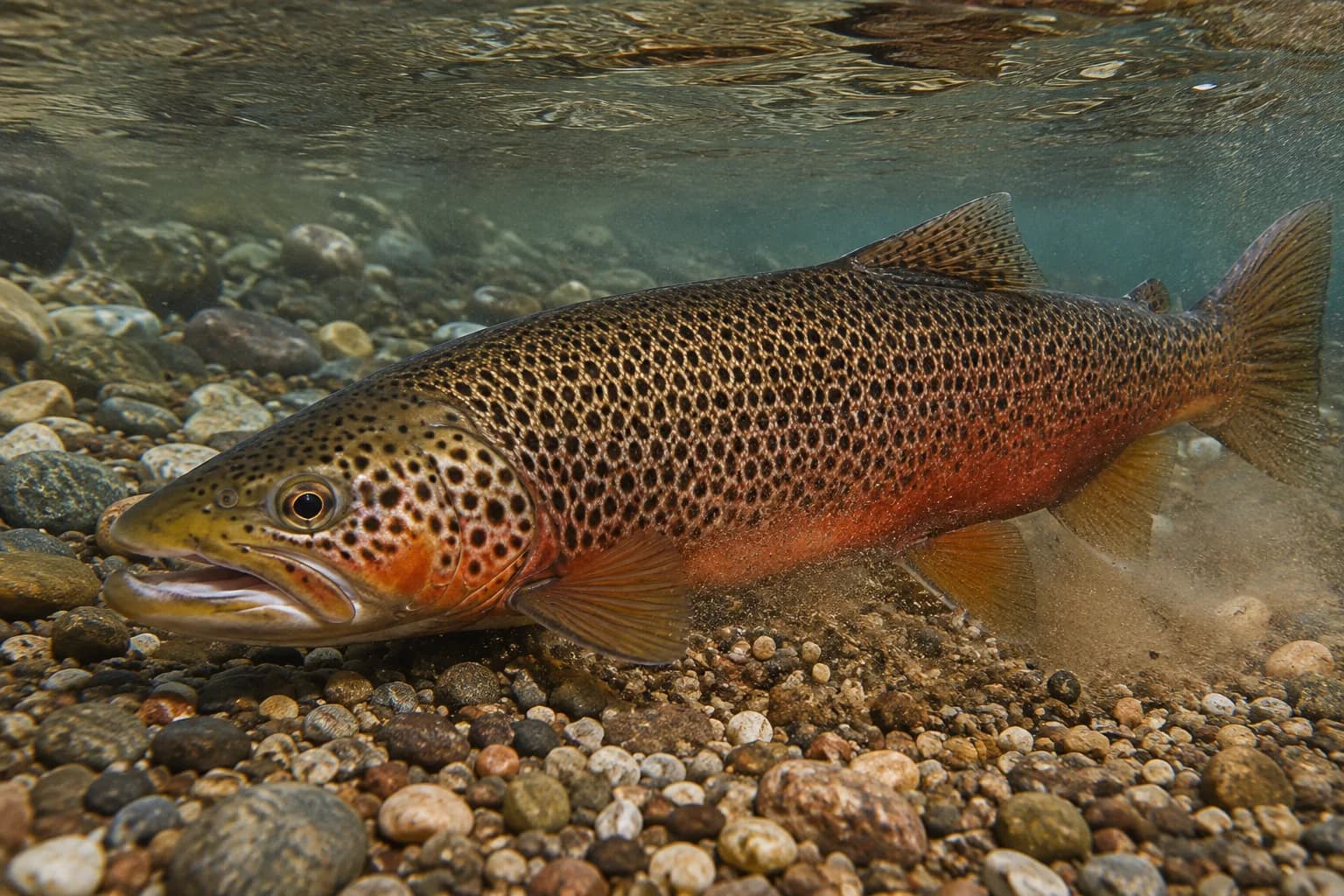
Montana brown trout spawn from October into December, with the peak falling between late October and mid-November. Montana FWP's field guide lists the species as spawning October to December. The trigger is water temperature — redds go in at 42–48°F (6–9°C).
But in Montana, knowing the date is only half the job. Parts of two major rivers close completely during the spawn, and that is the part most guides leave out.
Check the closures before you plan anything
Trout abundance in several reaches of the Big Hole, Beaverhead and Ruby rivers has declined steadily since 2011 and now sits at or near historical lows. In response, the Montana Fish and Wildlife Commission adopted emergency restrictions in June 2023, including full spawning-season closures:
| River | Closed reach | Closed dates |
|---|---|---|
| Beaverhead | Clark Canyon Dam → Pipe Organ Bridge | Nov 1 → third Saturday in May |
| Big Hole | BLM Maiden Rock → Brownes Bridge FAS | Nov 1 → third Saturday in May |
Two things to understand about this table:
It is a snapshot, not a permanent rule. These came in as emergency regulations and Montana has been actively adjusting them — sections have reopened, restrictions have been eased and re-tightened. Check the current FWP regulations for your specific reach before you drive. A closure map from a blog post is not a legal document.
The Madison was proposed but not adopted. FWP floated a September 30 → third Saturday in May closure across a wider list — Madison, Ruby, Boulder, Shields, upper Yellowstone, upper Stillwater — and that broader version did not go through. Do not assume the Madison follows the Big Hole's rules; it does not.
The biology: what actually triggers it
Two signals working together.
Falling water temperature. Browns start moving toward spawning water as the river drops through 45–50°F, and cut redds at 42–48°F. This is the number you can measure, and it should decide your week.
Shortening daylight. Photoperiod sets the physiological clock, which is why the spawn happens every autumn regardless of whether it was a warm year. Daylight picks the season; temperature picks the week.
FWP notes one consequence worth knowing: because brown trout spawn and incubate in autumn and winter, their eggs sit in the gravel outside the irrigation season — an advantage in drainages where summer withdrawals hit other species harder.
Browns will also move a fair distance to spawn, running upstream or turning into tributaries to find the right gravel. Eggs hatch the following spring, roughly February through April.
Timing by elevation
In Michigan the variable is latitude. In Montana it is elevation — a high mountain drainage and a valley river at the same latitude can be a month apart.
| Water type | Example | Redds start | Peak |
|---|---|---|---|
| High-elevation freestone | Upper Gallatin, upper Yellowstone headwaters | Early-to-mid October | Late October |
| Valley freestone | Big Hole, lower Yellowstone | Mid-to-late October | Early November |
| Tailwaters | Bighorn, Missouri below Holter, Beaverhead | Late October–November | Mid-to-late November |
Tailwaters run late, and this is the single most useful thing on this page. A bottom-release dam draws water from deep in the reservoir, so the river below it holds a far more stable temperature than a freestone that tracks the air. That delays the spawn, stretches it out, and makes it less predictable from a calendar. On the Bighorn or the Missouri, a thermometer is not a nice-to-have — it is the only reliable signal.
This table is a model, not a measurement. It applies the 42–48°F threshold to how different Montana water types cool in autumn. Treat it as a starting point and confirm on the water.
Fishing it responsibly
Montana's regulatory posture makes the ethics here concrete rather than abstract: the state has closed water specifically because of pressure on spawning fish and declining abundance. Fishing carelessly through a spawn in Montana is not a grey area.
Do not wade through redds. A redd is a clean, pale, oval patch of gravel, obviously brighter than the streambed around it — the digging strips off algae and silt. Look for them at pool tail-outs where flow accelerates over clean gravel. Eggs stay in that gravel from autumn until spring, and one boot destroys a nest.
Leave fish that are actively on redds. They are not feeding, and hooking them is neither sport nor good for a fishery already under strain.
Pre-spawn — the aggressive window (late September to mid-October)
October and November are when brown trout turn aggressive ahead of spawning, and the pre-spawn is the best fishing of the cycle.
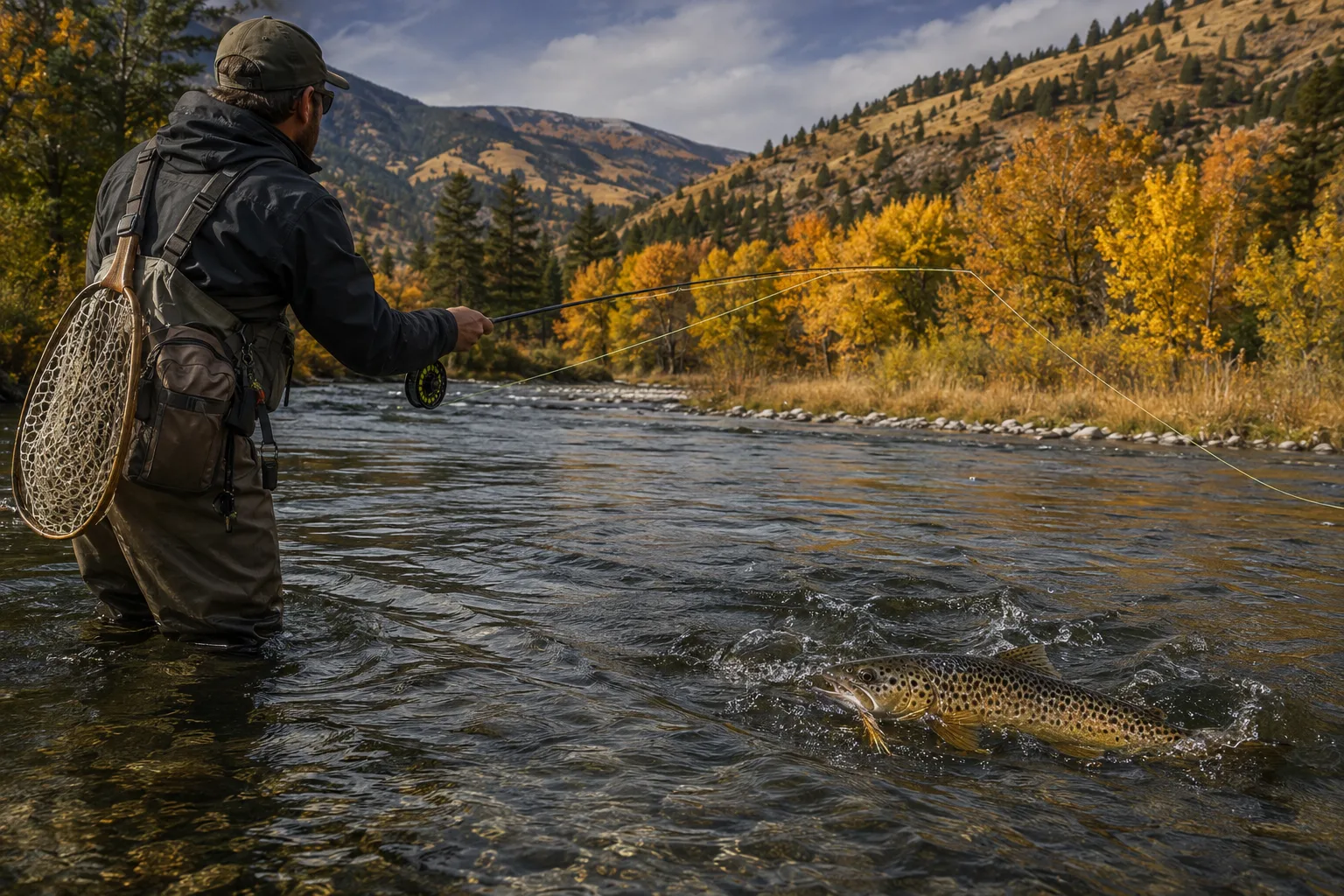
- Streamers, fished across and down on a swing.
- Deep holding water: pools, undercut banks, log jams.
- Low light matters more than usual — first and last hour.
- Big fish are territorial now and will chase something they have no intention of eating.
During the spawn — fish below the gravel
Fish the runs downstream of redds. Trout and whitefish stack there to eat drifting eggs, which is productive, legitimate, and better fishing than bothering spawners.
- Egg patterns and small nymphs, dead-drifted.
- Work the seam where a tail-out drops into the next pool.
Post-spawn — the overlooked window (late November into winter)
Browns survive spawning and come off it thin and hungry.
- They drop into slow, deep water to recover.
- Slow everything down — dead-drift, minimal action.
- Fish the warmest part of the day, not dawn.
- Angling pressure collapses after November while the fish keep eating.
Sources
- Montana Field Guide — Brown Trout, Montana FWP
- Emergency Fishing Restrictions Adopted For Big Hole, Beaverhead And Ruby Rivers — Montana FWP
- FWP's Response To Trout Declines In Big Hole, Beaverhead And Ruby Rivers — Montana FWP
- FWP Seeks Input On Proposed Brown Trout Fishing Regulation Changes — Montana FWP
- Restrictions & Closures — Montana FWP
Closure details reflect regulations adopted in 2023 and are provided for orientation only — Montana adjusts these rules between seasons. Always confirm against the current FWP regulations for the specific reach. The elevation timing table is modelled from the 42–48°F spawning threshold, not measured.
Frequently asked questions
- When do brown trout spawn in Montana?
- October through December, peaking late October to mid-November. Montana FWP's own field guide lists the species as spawning October to December. Higher-elevation water cools first and spawns first.
- What water temperature triggers the brown trout spawn?
- 42–48°F (6–9°C). Fish begin moving toward spawning water as temperatures fall through 45–50°F, and shortening daylight sets the seasonal clock.
- Are Montana rivers closed during the brown trout spawn?
- Some are. Following trout declines, the Montana Fish and Wildlife Commission adopted closures in 2023 covering a stretch of the Beaverhead from Clark Canyon Dam to Pipe Organ Bridge and a stretch of the Big Hole from BLM Maiden Rock to Brownes Bridge, each closed from November 1 to the third Saturday in May. Rules change year to year, so always check the current FWP regulations for the specific reach before you go.
- Why are Montana brown trout numbers declining?
- Trout abundance in several reaches of the Big Hole, Beaverhead and Ruby rivers has declined steadily since 2011 and sits at or near historical lows. FWP has responded with emergency restrictions, including spawning closures and harvest limits, while investigating the causes.
- Do brown trout die after spawning?
- No. Unlike Pacific salmon, brown trout survive spawning and repeat it in later seasons. Post-spawn fish are thin and hungry, and they feed through winter.
Gear for this
 AccessoriesCheck price on Amazon
Stream & Lake Water Thermometer
The one piece of kit every spawn article on this site tells you to carry.
 LuresCheck price on Amazon
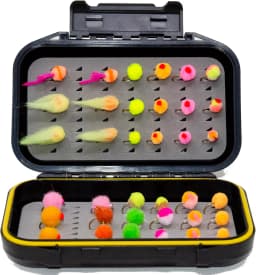
Egg Patterns & Beads
The presentation every spawn article here points you at — fished below the redds, not on them.
- Check price on Amazon
ChronicAnglers is reader-supported. When you buy through links on our site, we may earn an affiliate commission at no extra cost to you.