When Do Brown Trout Spawn in Michigan?
Michigan's brown trout run starts in September, but the actual spawn doesn't happen until water drops to 42–48°F — usually late October through November. Here's the difference, and why it matters.
Published
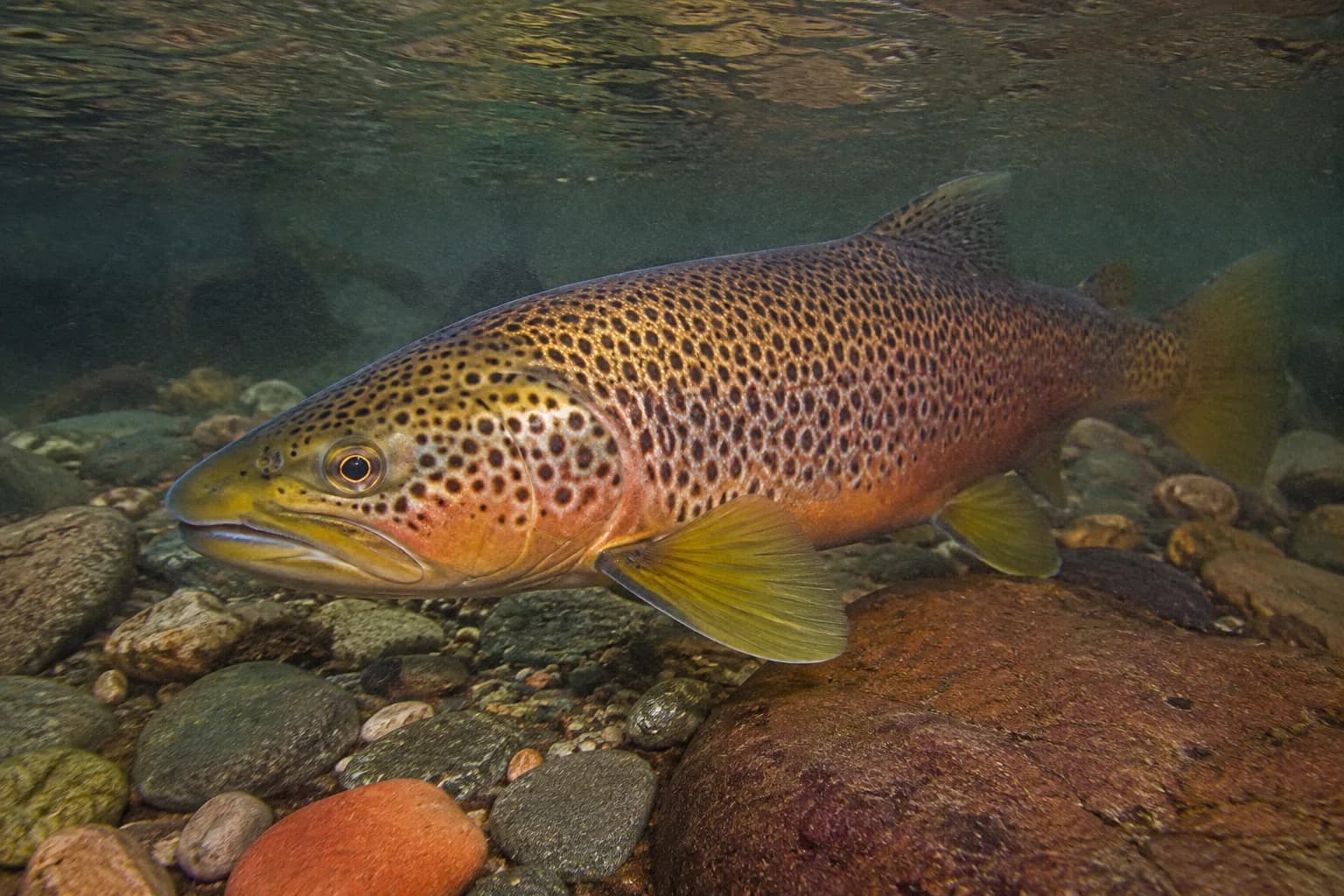
Michigan brown trout spawn from late October through November, peaking in the first two weeks of November. The trigger is water temperature: redd construction begins when the river drops to 42–48°F (6–9°C). Fish enter the rivers earlier — that run is not the spawn.
That gap is where most anglers get it wrong, so it is worth being precise about.
The run and the spawn are two different events
You will read on state and guide websites that Michigan brown trout "spawn in tributary streams in September and October." That describes the migration, not the spawn.
Here is the actual sequence:
- Late summer — Lake-run browns stage off river mouths and piers, waiting on flow and temperature.
- September–October — Fish push upstream. This is the run. It is highly visible, it is when tributary fishing turns on, and it is what most reports are describing.
- Late October–November — Water finally drops through 48°F. Now the females start cutting redds. Eggs go in the gravel.
- December–April — Eggs incubate in the gravel. At around 50°F they hatch in roughly 50 days; in colder Michigan water, expect fry emerging February through April.
A brown trout sitting in the Pere Marquette on October 5th is a migrating fish, not a spawning one. It will eat. It will chase. Six weeks later, that same fish is on gravel and behaving completely differently.
What actually triggers it
Two signals, working together:
Falling water temperature. Browns begin moving as water falls through the 45–50°F range, and spawn at 42–48°F. This is the variable you can measure, and it is the one that should decide when you go.
Shortening daylight. Photoperiod sets the physiological clock — it is why brown trout spawn in autumn every year regardless of whether it is a warm one. Temperature decides the exact week; daylight decides the season.
This is why a thermometer beats a calendar. A warm, dry October pushes the whole thing back ten days. A hard cold snap in the third week of October can start it early.
Timing by region
Michigan is 400 miles tall, and the spawn does not happen everywhere at once. The threshold is fixed at 42–48°F; only the date it arrives changes.
| Region | Rivers | Redds start | Peak |
|---|---|---|---|
| Upper Peninsula | Two Hearted, Fox, Ontonagon | Mid-October | Late October |
| Northern Lower Peninsula | Au Sable, Manistee, Boardman | Late October | Early November |
| Southern Michigan | Rogue, Huron, spring creeks | Early November | Mid-to-late November |
Two caveats worth taking seriously:
Spring-fed water runs late. Groundwater-fed streams hold their temperature far longer than freestone rivers and cool slowly. A spring creek in the southern half of the state can still be above threshold when a nearby freestone river is already covered in redds. The Au Sable's spring-influenced reaches routinely lag the surrounding water.
This table is a model, not a measurement. It is derived from the temperature threshold applied to Michigan's fall cooling pattern. Treat it as a starting point and confirm with a thermometer or a USGS gauge — several Michigan rivers report water temperature in real time, for free.
For calibration: a peer-reviewed redd survey on Spearfish Creek, South Dakota — roughly the same latitude as northern Michigan — recorded the first redds on October 15, a sharp peak in the first week of November, and no new redds after November 12. Michigan's northern rivers track that window closely.
How to find redds — and why it matters
A redd is a clean, pale, oval patch of gravel, noticeably brighter than the streambed around it. The female's digging strips off algae and silt, so it looks scrubbed. In low autumn water they are obvious from the bank once you know the shape.
Look at pool tail-outs, where flow accelerates over clean gravel before dropping into the next run. That is the classic spot.
Then there is the detail almost nobody publishes. The Spearfish Creek survey found that redd locations had measurably warmer water than the rest of the channel — a small but statistically significant difference consistent with groundwater upwelling. Redds also sat on smaller substrate with higher current velocity.
Practically: find where cold-season groundwater is pushing up through the gravel, and you have found the spawning water. In late fall those seeps often show as the last unfrozen, ice-free patches along the margins.
Do not wade through redds. Eggs sit in the gravel from November until fry emerge in spring, and a boot crushes an entire nest. Walk around pale gravel. This is not just etiquette — Michigan's brown trout fishery depends heavily on natural reproduction, and a redd is next season's fish.
How to fish each phase
Pre-spawn — the run (September to mid-October)
The best fishing of the whole cycle. Fish are in the river, aggressive, feeding hard, and not yet locked onto gravel.
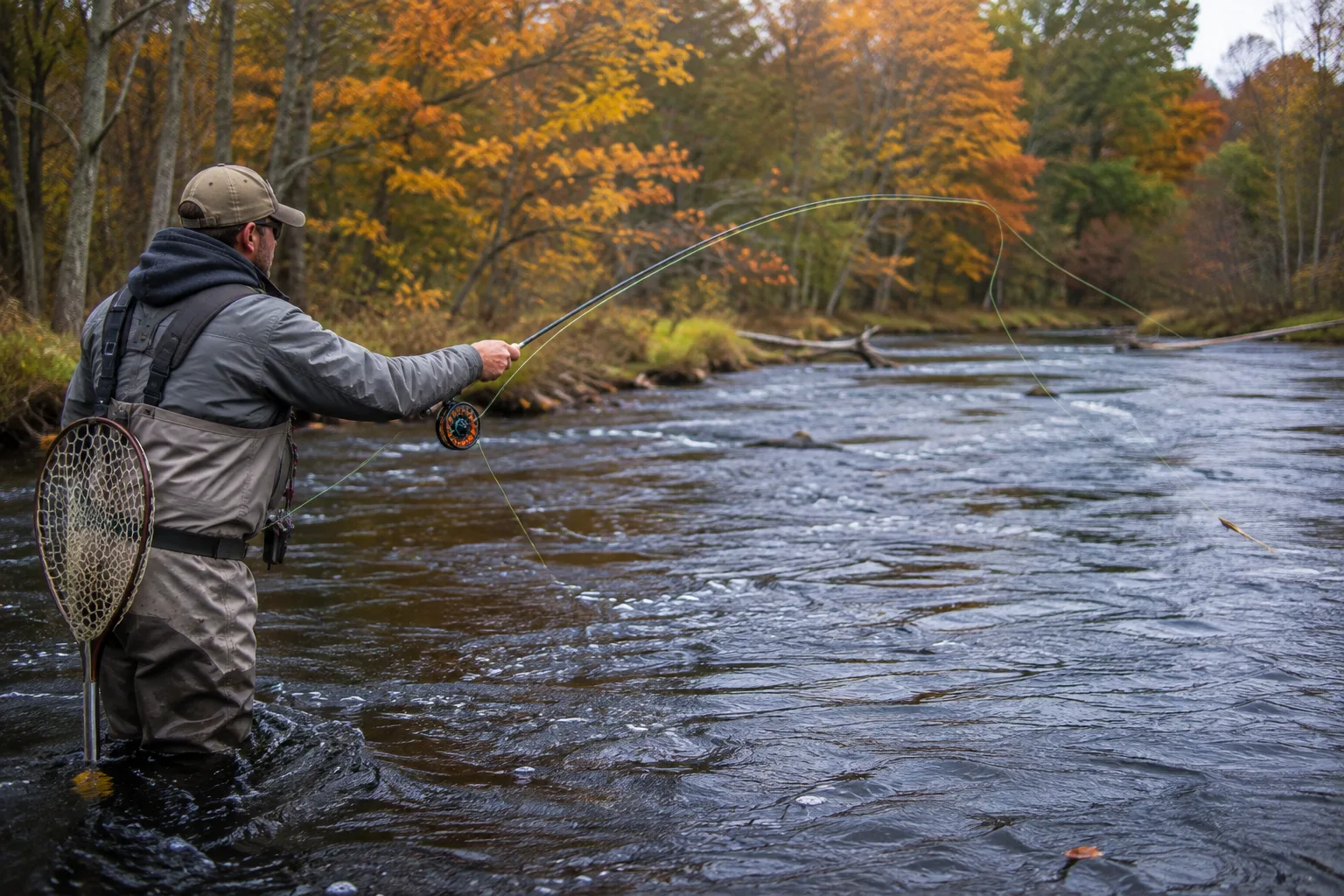
- Target deep holding water: pools, undercut banks, log jams.
- Streamers on a swing account for most big fish this time of year. Fish them across and down.
- Big browns move at low light. First and last hour, or after dark.
- Rising water after rain pulls a fresh push of fish upstream — go the day the river starts dropping and clearing.
Spawn — redds and gravel (late October to November)
The ethical answer: leave fish that are actively on redds alone. They are not feeding, catching them is not sport, and the pressure damages the fishery.
Fish the water below the redds instead. Trout, steelhead and whitefish stack downstream to eat drifting eggs, and that is legitimate, productive, and genuinely better fishing than harassing spawners.
- Egg patterns and small nymphs, dead-drifted through the run below the gravel.
- Concentrate on the seam where the tail-out drops into the next pool.
Post-spawn — recovery (late November into winter)
Browns do not die after spawning — unlike Pacific salmon, they recover and spawn again in following years. Post-spawn fish are thin, tired, and hungry.
- They drop back into slow, deep water to recover.
- Slow your presentation right down. Dead-drift, minimal action.
- Warmest part of the day now, not dawn.
- This is an overlooked window. Pressure collapses after November and the fish still eat.
Is it actually a brown trout?
Worth checking, because in Michigan this genuinely trips people up. Steelhead run the same rivers in the same autumn months, so a fish on gravel in a Michigan tributary in November is not automatically a brown — and the two behave completely differently through the season.
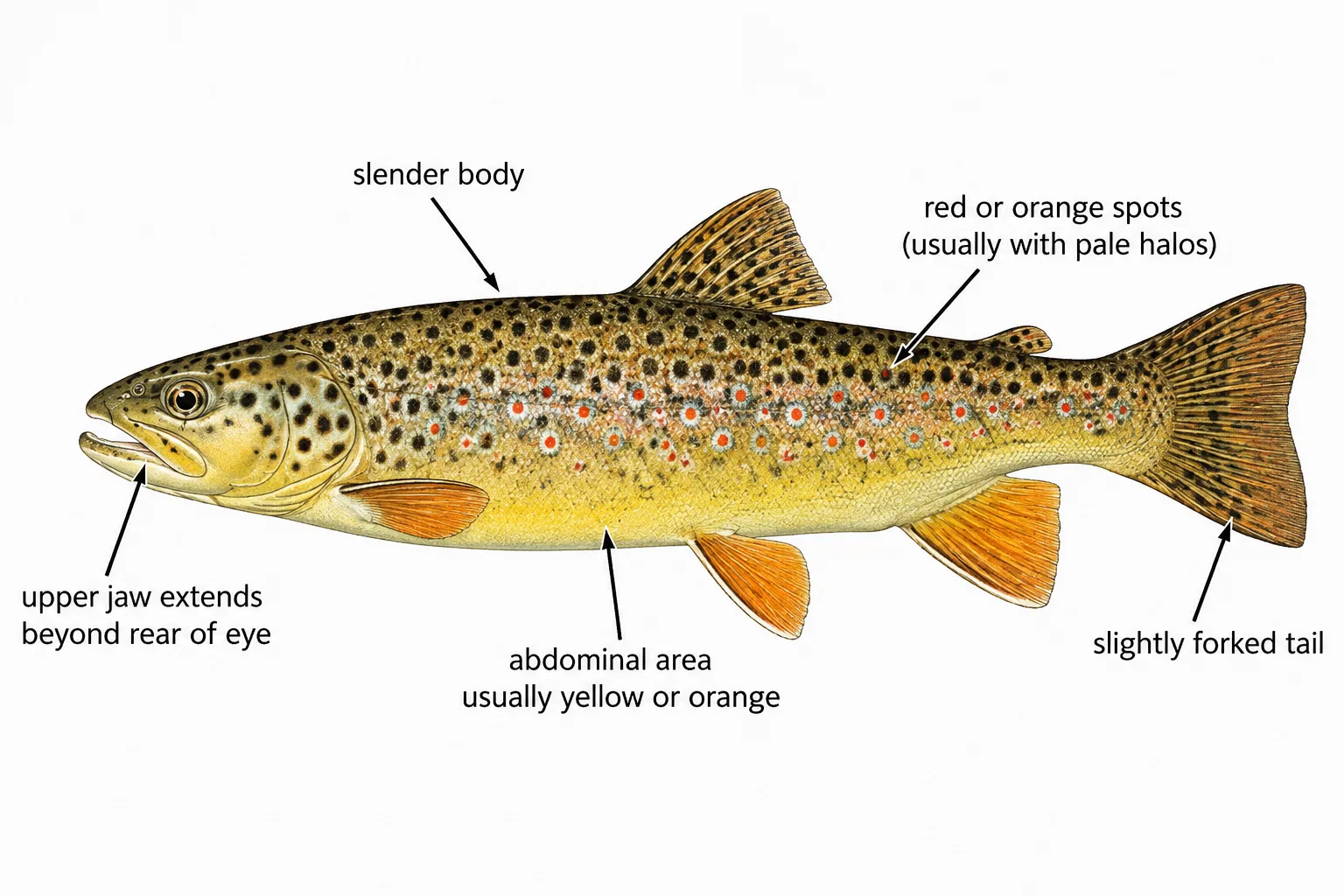
The one mark that settles it: red or orange spots surrounded by pale halos, scattered along the flank. No other trout in Michigan water has them.
| Brown trout | Rainbow / steelhead | |
|---|---|---|
| Spots | Black and red-orange, with pale halos | Black only, no halos |
| Side | Golden-brown to bronze, yellow-orange belly | Pink or red stripe along the lateral line |
| Tail | Few or no spots | Heavily spotted, spots radiating in rows |
| Jaw | Upper jaw extends past the rear of the eye | Jaw shorter, does not reach past the eye |
| Spawns | Autumn (this article) | Spring |
If it has a pink stripe and a heavily spotted tail, it is a rainbow or a steelhead, and its spawn is five months away.
Sources
- Michigan DNR — Brown Trout
- Montana Field Guide — Brown Trout, Montana FWP
- Brown Trout Spawn Timing, Redd Locations, and Stream Characteristics in Spearfish Creek, South Dakota (2020)
- Vermont Fish & Wildlife — Brown Trout
Regional timing table is modelled from the 42–48°F spawning threshold applied to Michigan's autumn cooling pattern, calibrated against the Spearfish Creek redd survey at comparable latitude. Confirm with a thermometer or USGS gauge before planning a trip.
Frequently asked questions
- Do brown trout spawn in spring or fall in Michigan?
- Fall. Brown trout and brook trout are autumn spawners; rainbow trout and steelhead spawn in spring. If you are seeing trout on gravel in April in Michigan, those are rainbows or steelhead, not browns.
- What water temperature do brown trout spawn at?
- 42–48°F (6–9°C). They begin migrating as water falls through 45–50°F.
- Can you fish for brown trout during the spawn in Michigan?
- Seasons and regulations vary by river and by reach — some Michigan waters close, others stay open year-round with gear restrictions. Check the current Michigan DNR Fishing Guide for the specific water before you go. Regardless of what is legal, fishing the run below the redds rather than the redds themselves is the standard among Michigan anglers.
- Do brown trout die after spawning?
- No. They recover and spawn in multiple seasons. This is a common confusion with Pacific salmon, which do die after spawning.
- When do brown trout eggs hatch in Michigan?
- Eggs incubate in the gravel over winter and hatch in spring — roughly February through April, depending on water temperature. At 50°F incubation takes about 50 days; colder water extends it considerably.
Gear for this
 AccessoriesCheck price on Amazon
Stream & Lake Water Thermometer
The one piece of kit every spawn article on this site tells you to carry.
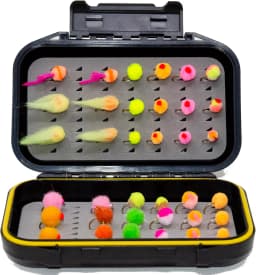 LuresCheck price on Amazon
Egg Patterns & Beads
The presentation every spawn article here points you at — fished below the redds, not on them.
- Check price on Amazon
ChronicAnglers is reader-supported. When you buy through links on our site, we may earn an affiliate commission at no extra cost to you.
Explore related
- SpeciesBrown troutIdentification, range, diet, and verified spawning window.
- UtahWhen Do Brown Trout Spawn in Utah?
- WisconsinWhen Do Brown Trout Spawn in Wisconsin?
- ColoradoWhen Do Brown Trout Spawn in Colorado?
- MontanaWhen Do Brown Trout Spawn in Montana?
- Also in MichiganWhen Do Bluegill Spawn in Michigan?
- Also in MichiganWhen Do Brook Trout Spawn in Michigan?
- Also in MichiganWhen Do Crappie Spawn in Michigan?
- Also in MichiganWhen Do Steelhead Spawn in Michigan?
- Also in MichiganWhen Do Walleye Spawn in Michigan?