When Do Crappie Spawn in Michigan?
Michigan crappie spawn from May into June. The number that actually matters isn't the date but the water clarity, which sets how deep the beds are — anywhere from one foot to twenty.
Published
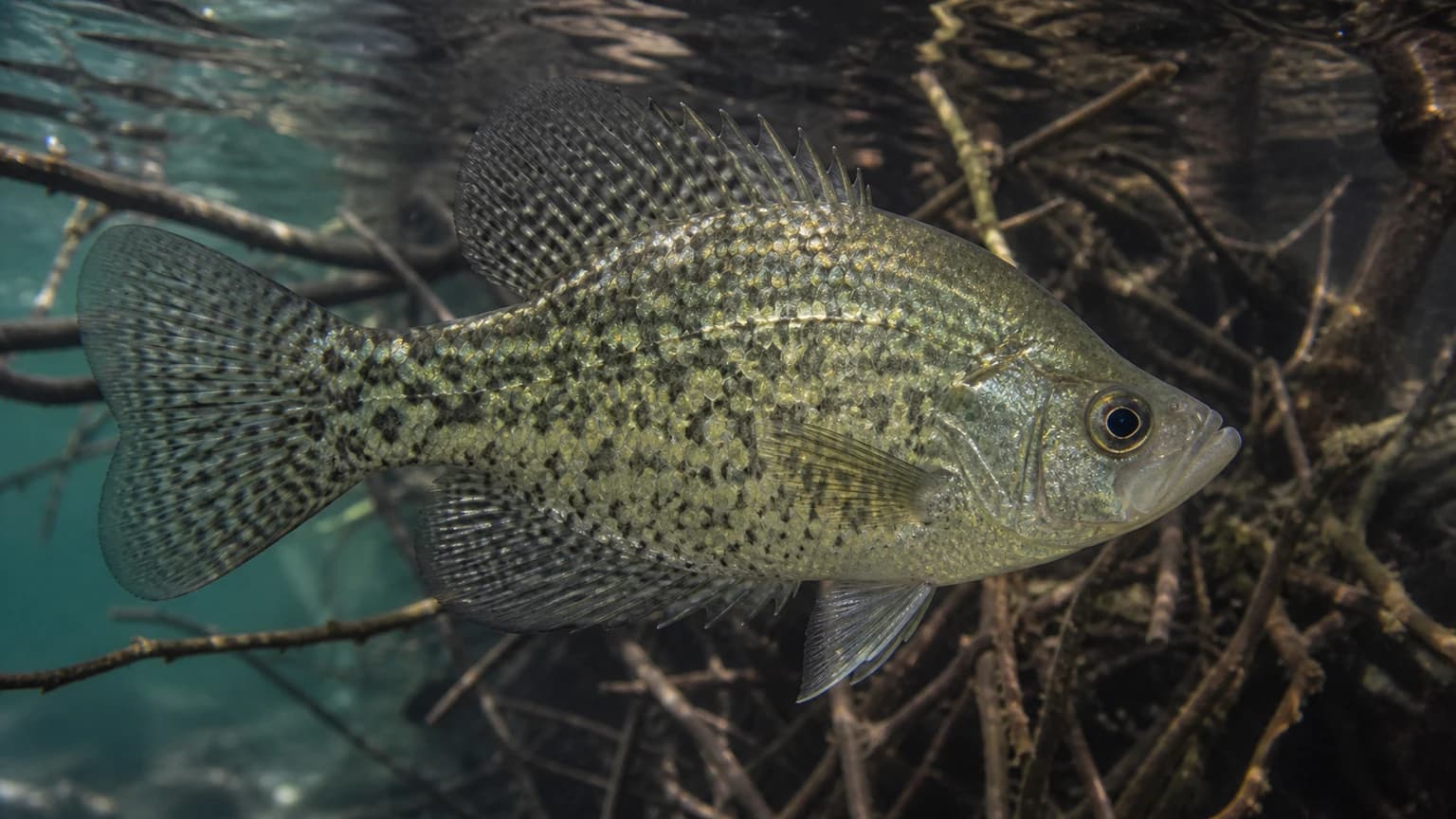
Michigan crappie spawn from May into June, with the Upper Peninsula running two to three weeks behind the south. But the more useful question is not when — it is how deep, and the answer is set by water clarity.
Clarity sets the depth, not the calendar
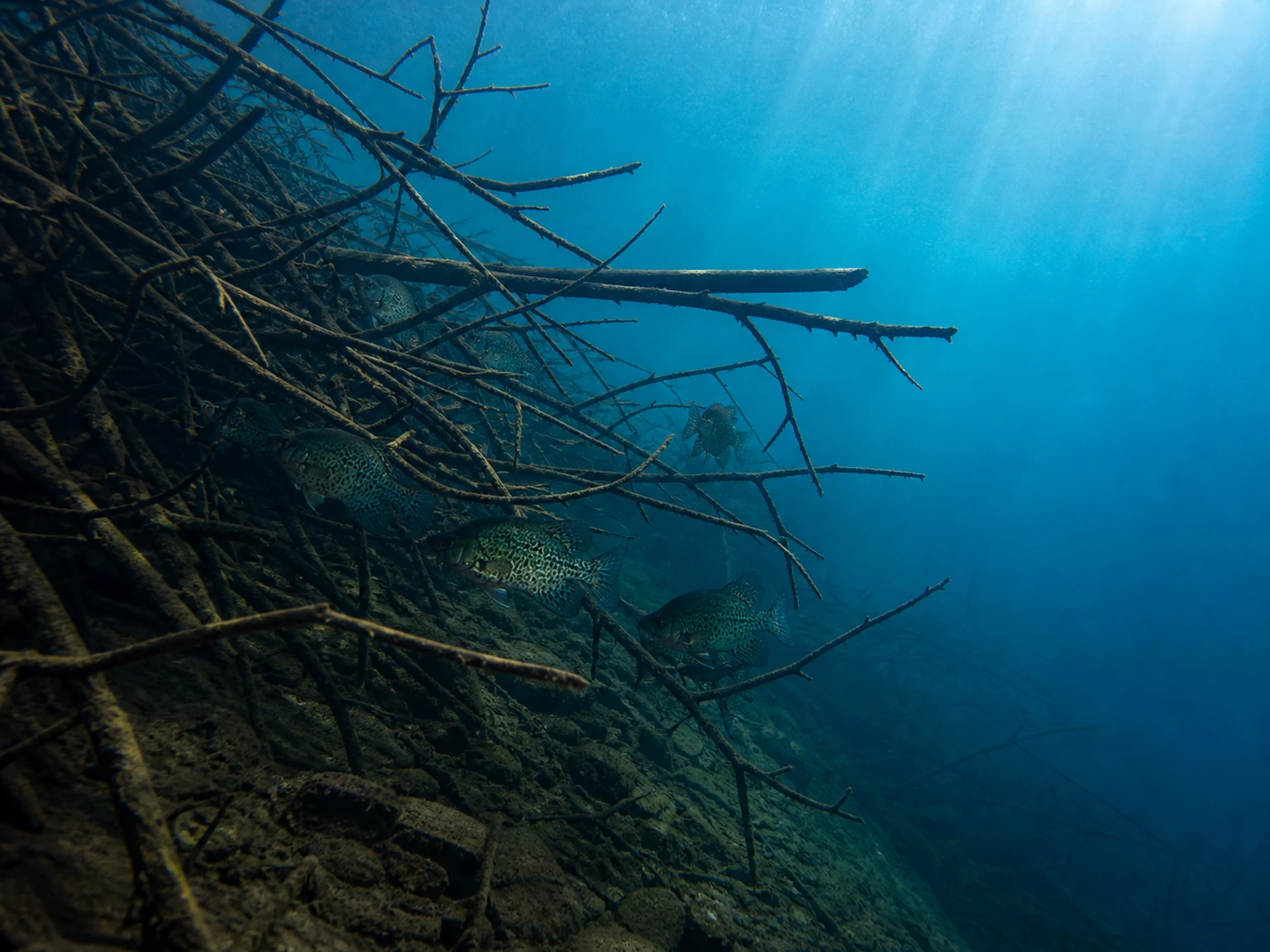
Missouri's conservation department states it plainly:
"The depth at which crappie spawn depends on water clarity. In stained or muddy water, they may spawn as shallow as 1 or 2 feet. In exceptionally clear water, they may spawn as deep as 20 feet or more."
Ohio DNR gives one to five feet as typical for black crappie nests. Both are right, because they are describing different water.
Twenty feet is the figure that changes how you fish. If you are working the shoreline of a clear Michigan inland lake in late May, finding nothing, and concluding the spawn has not started — it may well have started ten feet below where you are looking.
The working rule for Michigan:
- Stained water — river backwaters, shallow fertile lakes, the drowned river mouths. 1 to 3 feet, tight to the bank and tight to cover.
- Moderately clear — the classic 3 to 6 feet.
- Very clear inland lakes — go deeper than feels right. Brush piles, standing timber and weed edges well off the bank.
Michigan has all three in abundance, sometimes within a few miles of each other.
The temperature figures do not agree, and that is not your fault
If you have chased conflicting numbers for the crappie spawn, here is why:
| Agency | Published spawning temperature |
|---|---|
| Indiana DNR | ~55°F |
| Missouri Dept of Conservation | ~55°F |
| Tennessee (TWRA) | White crappie 60–65°F; black crappie 62–68°F |
| Minnesota DNR | Mid-60s |
| Wisconsin DNR | 64–68°F favourable, black crappie |
Thirteen degrees of spread between state fisheries agencies. Two things account for most of it: the low figures describe onset and the high ones describe the peak, and southern agencies report lower onset numbers than northern ones.
Michigan sits at Wisconsin's and Minnesota's latitude, so their figures are the closer guide: start checking in the mid-to-upper 50s, expect the real thing in the low-to-mid 60s.
One correction worth carrying: the common angling claim that black crappie spawn first and white crappie a degree or two warmer is backwards by Tennessee's figures, which put white at 60–65°F and black at 62–68°F.
Timing across Michigan
| Region | Spawning |
|---|---|
| Southern Lower Peninsula | Early-to-mid May |
| Northern Lower Peninsula | Mid-to-late May |
| Upper Peninsula | Late May into June |
This table is modelled, not measured. No Michigan agency source with a per-region crappie breakdown was available; the rows apply the low-to-mid-60s peak range to Michigan's normal spring warming, anchored on Wisconsin DNR's May–June window at comparable latitude.
And the caveat that matters: Wisconsin DNR notes that in a colder season, spawning at that latitude may be delayed until July. A cold, late spring does not just shift the calendar a week — it can push the whole thing a month.
What the nest looks like
The male does all of it. He sweeps a round nest into sand or fine gravel, in and around brush, rocks or vegetation, then guards the nest and defends the young until they start to feed.
Nests are usually built in loose colonies, which is why crappie fishing flips from nothing to everything in a few feet of boat movement. Find one bed and you have usually found twenty.
The guarding behaviour is also why bedding crappie are so easy: a male on a nest strikes almost anything that enters his space whether he is hungry or not.
Black or white crappie?
Michigan holds both. Count the dorsal spines — it is the only test that always works.
| Black crappie | White crappie | |
|---|---|---|
| Dorsal spines | 7 or 8 | 5 or 6 |
| Markings | Irregular scattered speckling | Faint vertical bars |
| Water preference | Clearer water, more vegetation | Tolerates silt and murk better |
Black crappie are less tolerant of silt and murky water. So in Michigan's clear inland lakes with good weed growth you are likely on black crappie — and likely deeper than you expect.
Fishing the phases
Pre-spawn (upper 40s to mid-50s). Fish stage on the first drop outside the flats: creek channel bends, the ends of points, deeper brush. The best window of the year for size, and badly underfished because everyone waits for the shallow bite. Vertical jig the brush, or suspend a small jig under a float over it.
Spawn (low-to-mid 60s). Shallow and on nests, at whatever depth the clarity dictates. A 1/16 oz jig or a small minnow under a float, worked slowly past cover. Set the hook softly — the mouth membrane is thin enough to earn them the name papermouth, and a hard hookset pulls straight out.
Post-spawn. Fish pull off the beds to the first structure and suspend. A frustrating fortnight, then very good fishing through early summer.
Check the current Michigan fishing regulations for panfish limits on the water you are fishing.
Keeping them
Crappie are excellent eating and populations generally support harvest. But a male on a nest will not leave it, which makes a bed easy to strip in an afternoon — and those are exactly the fish guarding that year's young.
Take a meal, not the colony.
Related
- When do bluegill spawn in Michigan? — the same clarity-sets-depth rule, and an overlapping season.
Sources
- Crappie: Tips For Fishing — Missouri Department of Conservation — the spawn generally occurring at 55°F; depth by clarity, from one or two feet in stained water to twenty feet or more in exceptionally clear water; pea gravel banks, rocks, woody debris and vegetation.
- Black crappie — Fishes of Wisconsin, Wisconsin DNR — spawning in May and June, delayed until July in a colder season; favourable temperatures of 64–68°F; the male sweeping a nest in sand or fine gravel and guarding the nest and young until they start to feed.
- Black Crappie — Ohio Department of Natural Resources — nests fanned in and around brush, rocks or vegetation in one to five feet of water; 5,000 to 30,000 eggs; black crappie preferring clearer water and being less tolerant of silt and murk.
- Crappie biology and identification — Minnesota DNR — spawning in May and June in mid-60s water.
No Michigan agency source with crappie-specific spawning figures was readable in this pass (michigan.gov returns 403 to automated fetches), so the temperature and behaviour figures above come from neighbouring states' agencies at comparable latitude, and the regional table is modelled. Carry a thermometer.
Frequently asked questions
- When do crappie spawn in Michigan?
- May into June across most of the state, later in the Upper Peninsula. Neighbouring Wisconsin's DNR gives May and June for black crappie, delayed into July in a cold season, and Minnesota DNR gives May and June — Michigan sits between them.
- What water temperature do crappie spawn at in Michigan?
- Agencies disagree by about thirteen degrees. Wisconsin DNR gives 64–68°F as favourable and Minnesota DNR says the mid-60s, while Indiana and Missouri both give about 55°F. The low figures describe onset and the high ones the peak. For Michigan, start looking in the mid-to-upper 50s and expect the real thing in the low-to-mid 60s.
- How deep do crappie spawn?
- It depends entirely on water clarity. Missouri's agency records crappie spawning as shallow as one or two feet in stained or muddy water and as deep as twenty feet or more in exceptionally clear water. Ohio DNR gives one to five feet as typical.
- Do crappie spawn in the Upper Peninsula later than the Lower?
- Yes. Crappie spawning keys off water temperature, so the southern Lower Peninsula warms first and the Upper Peninsula runs two to three weeks behind. In a cold year, Wisconsin DNR notes spawning at that latitude can be delayed into July.
- Do crappie guard their nests?
- Yes. The male sweeps a round nest in sand or fine gravel and guards both the nest and the young until they start to feed. That is why bedding males strike almost anything entering their space.
Gear for this
 AccessoriesCheck price on Amazon
Stream & Lake Water Thermometer
The one piece of kit every spawn article on this site tells you to carry.
- Check price on Amazon
- Check price on Amazon

- Check price on Amazon
ChronicAnglers is reader-supported. When you buy through links on our site, we may earn an affiliate commission at no extra cost to you.
Explore related
- SpeciesCrappieIdentification, range, diet, and verified spawning window.
- OhioWhen Do Crappie Spawn in Ohio?
- Also in MichiganWhen Do Bluegill Spawn in Michigan?
- Also in MichiganWhen Do Brook Trout Spawn in Michigan?
- Also in MichiganWhen Do Steelhead Spawn in Michigan?
- Also in MichiganWhen Do Walleye Spawn in Michigan?
- Also in MichiganWhen Do Brown Trout Spawn in Michigan?